
SUMMER 2026
Collateral of the Permanent War
How 'national security' made communities and ecosystems disposable
By Darakshan Raja
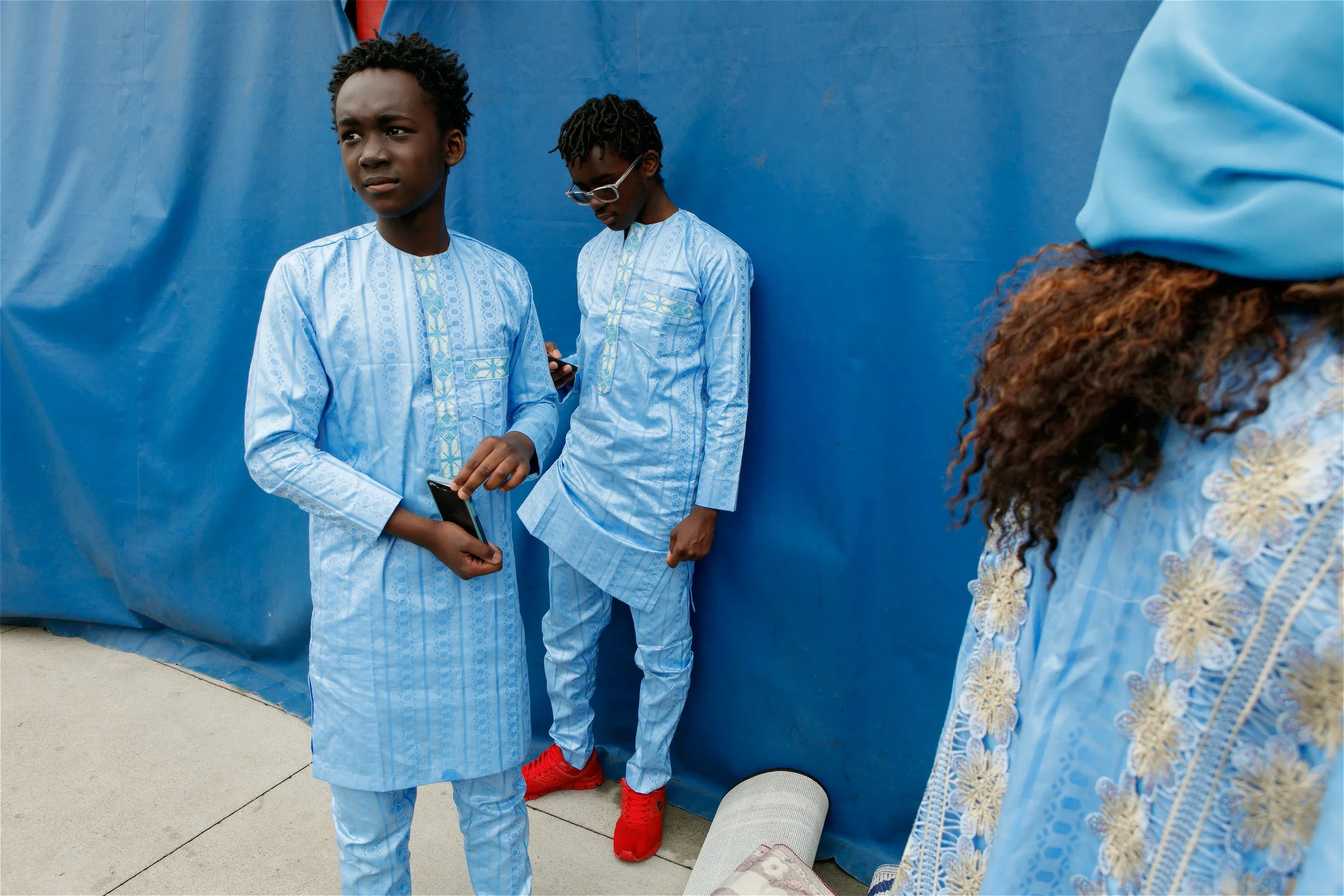
Eid day | American Muslim Experience documentary. Eid (Muslim holiday) in Reading, PA. After the prayer, two young men in traditional outfits at the First Energy Stadium. Photography by Syed Yaqeen.
This story was produced by Counterstream Media and co-published with Nonprofit Quarterly as part of the #WeTheCivic national narrative intervention.
THE PERMANENT WAR BEGINS
I was in junior high school in the Bronx when the planes hit the Twin Towers. When the towers fell, something shifted overnight. As the smoke settled over lower Manhattan, another reality settled over neighborhoods like mine.
That evening, President George W. Bush declared the United States at war, proclaiming that this was not just any war, but a “monumental struggle between good and evil.” Within days, the U.S. government launched the so-called "Global War on Terror.” Its foundations had been built over decades through counterterrorism policies under the Reagan administration, and lobbying campaigns that deployed Islamophobia to construct Muslims as America's main enemy after the Cold War. While bombs soon fell thousands of miles away in Afghanistan and Iraq, another war quietly unfolded here at home.
“Nearly twenty-five years later, I have come to believe the War on Terror’s most enduring legacy is the institutionalization of a politics of disposability, a way of governing that treats certain communities, and eventually the environments that sustain them, as acceptable collateral in the name of national security.”
This new permanent state of war institutionalized a system of governance that rendered entire communities and ecosystems as disposable. Whether directed at neighborhoods in the Bronx or Iraq and Afghanistan, the underlying logic treated certain people and places as expendable. Nearly twenty-five years later, I have come to believe the War on Terror's most enduring legacy is the institutionalization of a politics of disposability, a way of governing that treats certain communities, and eventually the environments that sustain them, as acceptable collateral in the name of national security.
Before 9/11, I already knew what it meant to grow up in a hyper-criminalized, working-class neighborhood. The Bronx was often treated as a place to be policed rather than invested in, discarded rather than understood. Poverty, violence, over policing, and the indignities of navigating America's immigration system were simply part of everyday life.
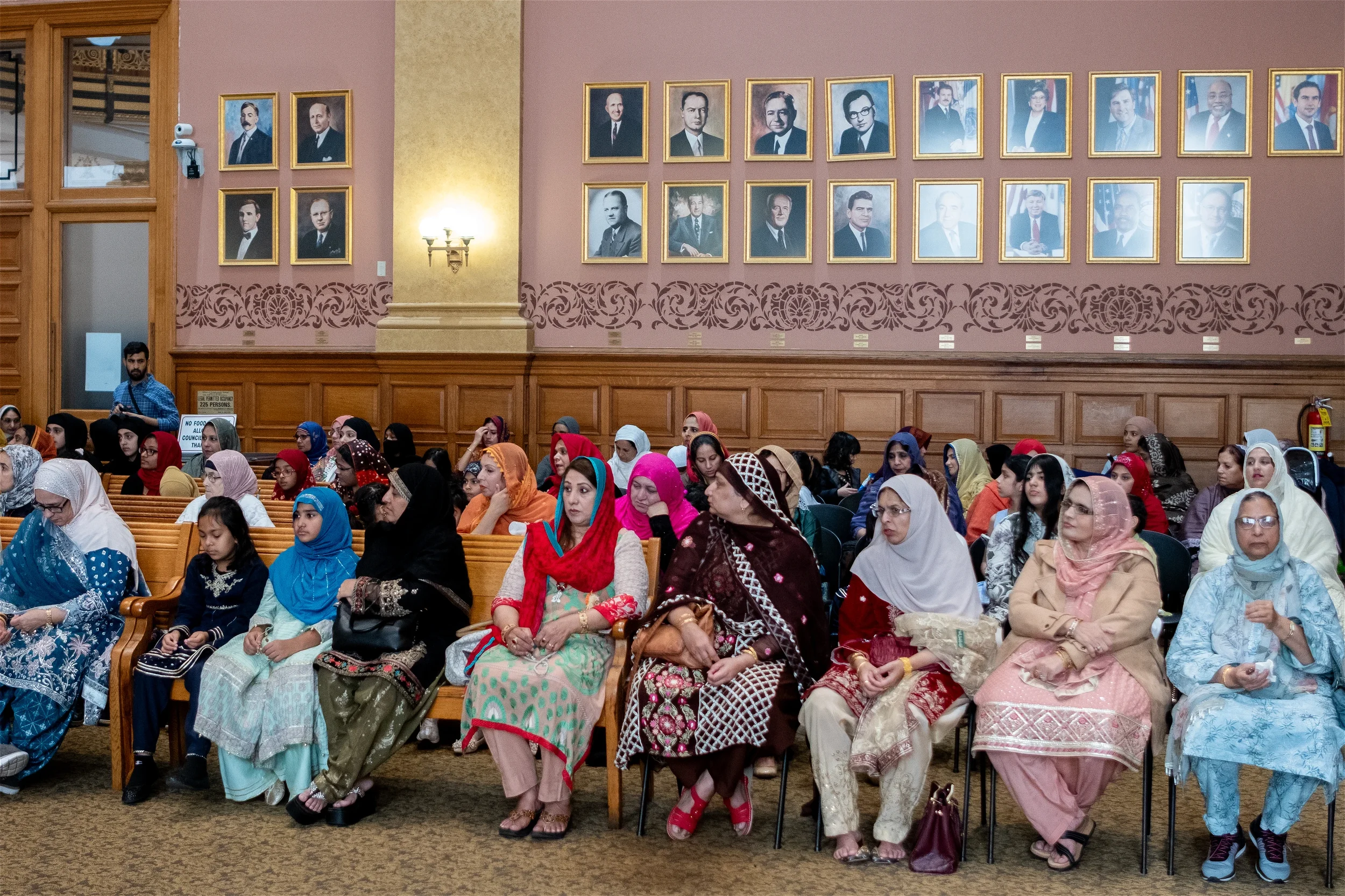
City Hall, Jersey City | American Muslim Experience documentary
Muslim women in the Council Chambers at the City Hall of Jersey City. They were listening to the local politicians and religious scholars at a gathering celebrating holiday. Photography by Syed Yaqeen.
Immediately after 9/11, working-class Muslim immigrant communities in the Bronx became collateral in the construction of a national security apparatus that required visible enemies both at home and abroad to justify its expansion. The U.S. government needed a scapegoat. Our lives became political currency, used to justify endless war, advance the careers of politicians, enrich war profiteers, and satisfy a national demand for vengeance.
“You learn to carry two truths and live in two states at once: the grief of watching your world unravel, and the resilience required to keep surviving, despite witnessing the dismantling of a community.”
There is something profoundly disorienting about growing up on the margins, only to learn that a moment of national crisis can redraw those margins, leaving you stranded beyond them in an unfamiliar territory. It is even more disorienting to spend your childhood within a community only to watch it fracture in the face of public silence and the absence of meaningful solidarity from the broader society. You learn to carry two truths and live in two states at once: the grief of watching your world unravel, and the resilience required to keep surviving, despite witnessing the dismantling of a community.
That kind of othering changes how a young person understands belonging.
Hardship was not uncommon in the Bronx. Family separation, incarceration, eviction, and poverty were stories nearly everyone carried. Yet as struggle shaped our lives, so too did community.
THE INFILTRATION OF COMMUNITY LIFE
The neighborhood functioned as an ecosystem of community and care. In a state of government abandonment, these community ecosystems showed up. The local mosque was where people solved problems together, welcomed newly arrived immigrants, raised money for families in crisis, and helped neighbors navigate unfamiliar institutions. The grocery store owner wasn't simply selling food. He helped refugee and immigrant families find work, connected them with food assistance, lent money when parents came up short before payday, and introduced newcomers to the mosque down the street. Taxi drivers gathered outside exchanging news from home. Women on the block watched over kids who weren't their own.
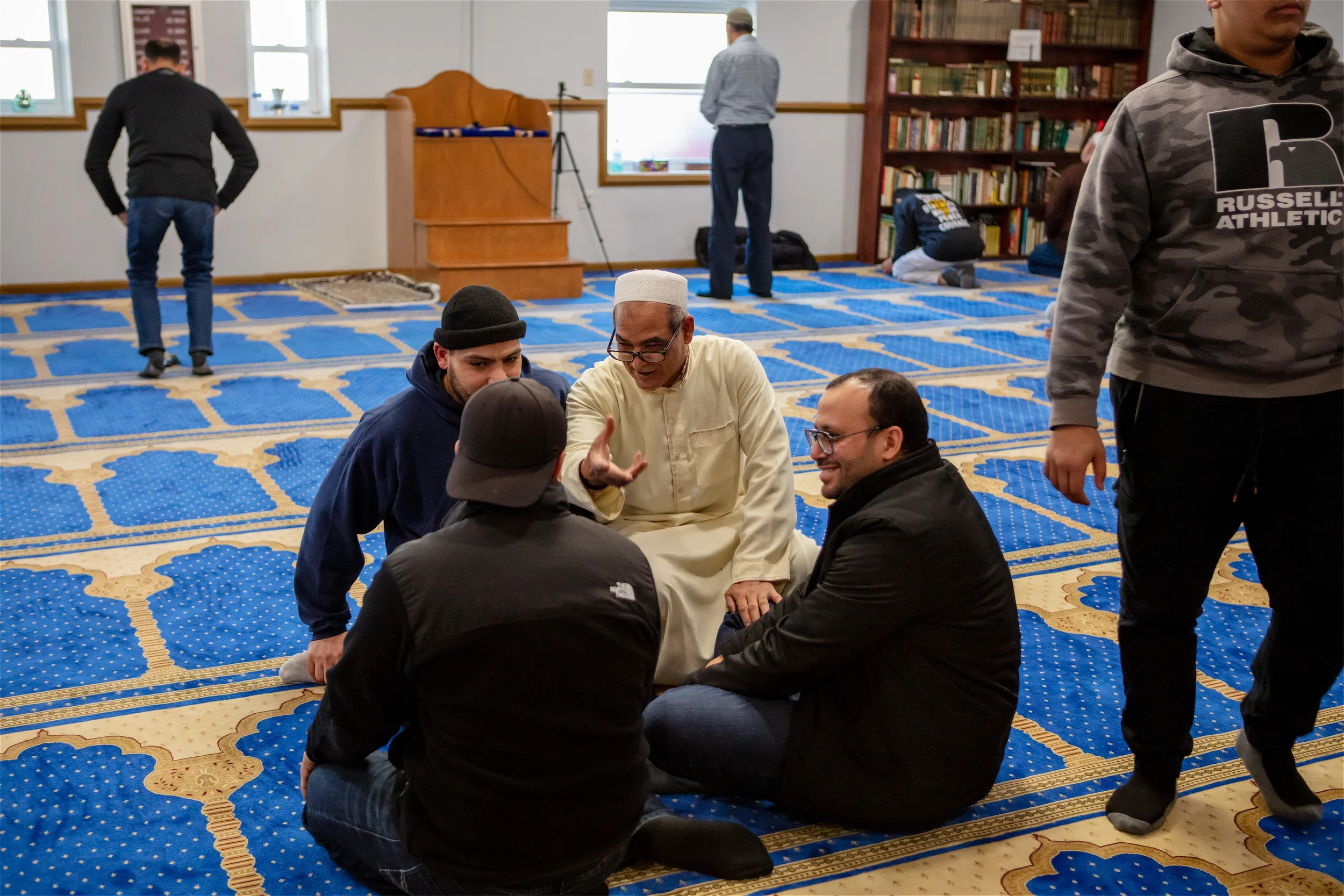
after Jummah conversation | American Muslim Experience documentary
Imam in the beige thobe, speaking to a few of the Friday prayer attendees. Members of this small masjid are like a close-knit family, sharing life updates. Photography by Syed Yaqeen.
Even with all of the imperfections and challenges that come with community, these community members represented institutional pillars. They formed a community ecosystem that made survival and belonging possible.
That ecosystem was dismantled in front of me post - 9/11.
The same mosque that had served as a refuge became a site of surveillance. The same stores where neighbors once gathered were now watched by law enforcement. Ordinary conversations suddenly carried political risk. Precisely when community was needed most, the state sought to dismantle connection through a strategic campaign of surveillance, policing, and othering.
These policies stretched from the National Security Entry-Exit Registration System (NSEERS), which required thousands of nationals from 25 countries—predominantly Muslim countries—to register with the federal government under the presumption of suspicion, to aggressive immigration enforcement that relied on racial and religious profiling. In New York City, the NYPD Intelligence Division mapped Muslim neighborhoods, monitored mosques, restaurants, businesses, and student organizations, and treated the routines of everyday life as objects of intelligence gathering despite no evidence of criminal wrongdoing. At the same time, hundreds of Muslim, Arab, and South Asian men were swept into immigration detention, held for months after their immigration cases had been resolved, and, in many cases, confined in the Administrative Maximum Special Housing Unit (ADMAX SHU), where they endured prolonged solitary confinement with the lights left on twenty-four hours a day.
“My classmates and I belonged to what scholars have called the “9/11 generation,” whose political consciousness was forged in the shadow of the surveillance, policing, and state violence that followed September 11.”
It took me years to understand that I had not simply witnessed the disruption of one neighborhood. It was not until college, as a student at CUNY John Jay College of Criminal Justice, that I had the opportunity to study the policies that had reshaped my childhood and reverberated across the globe. My classmates and I belonged to what scholars have called the "9/11 generation," whose political consciousness was forged in the shadow of the surveillance, policing, and state violence that followed September 11. That realization transformed me into a student organizer, only to discover that the same surveillance apparatus that had dismantled my community after 9/11 had also reached my own campus.
While post 9/11, Islamophobia was a common experience on college campuses for Muslim students all across the country, in 2012, the Associated Press revealed that NYPD had sent an informant, Shamiur Rahman, who had been assigned to infiltrate the Muslim Student Association at John Jay College of Criminal Justice. For many of us from working-class backgrounds, John Jay was a pathway out of poverty and a place where we made sense of the structural violence that had shaped our childhoods. We found others who carried similar stories and built the relationships and political imagination necessary to organize for a different future. Yet the very institution where we sought education, belonging, and economic mobility had itself become a conduit for state surveillance.
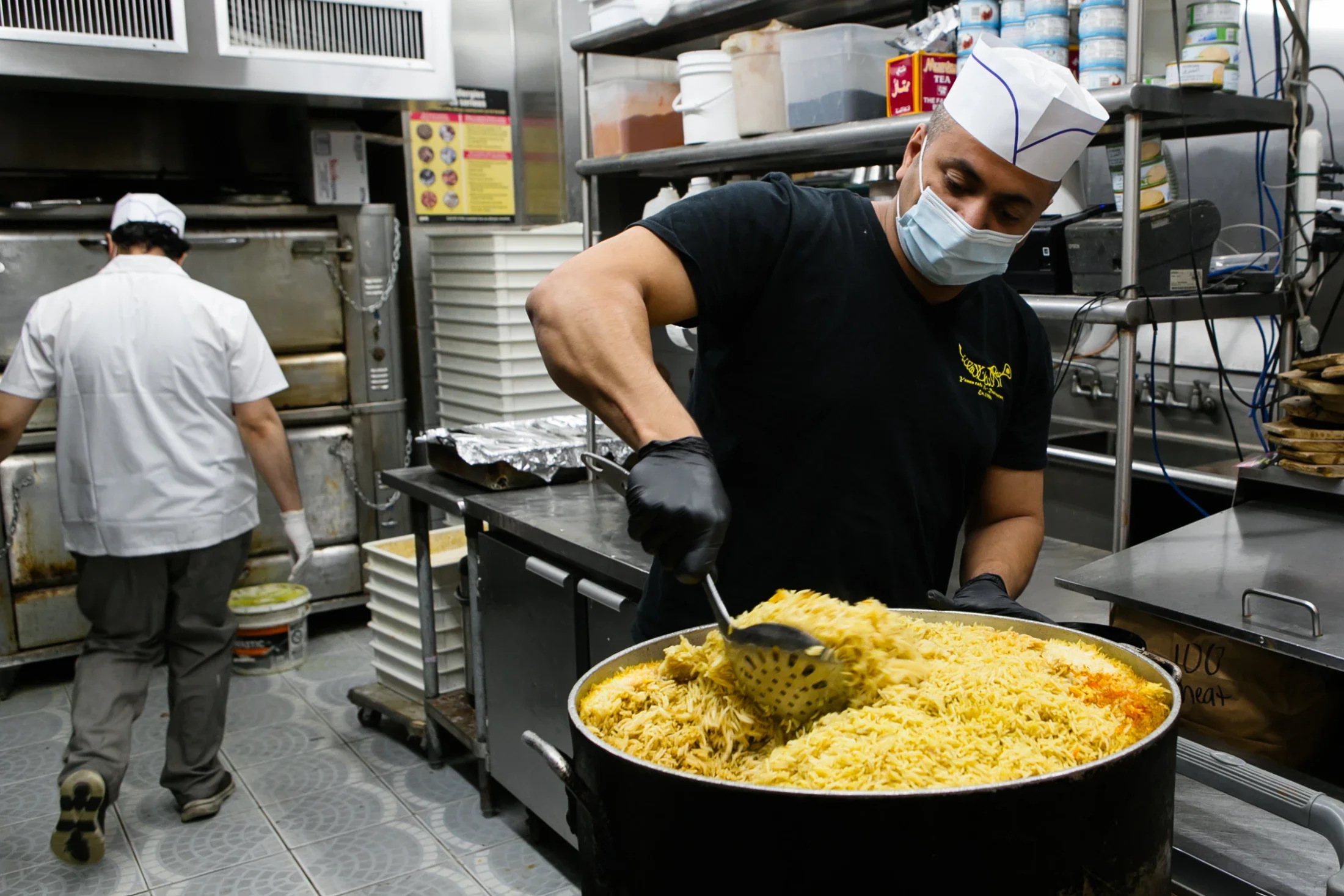
meals for first responders | American Muslim Experience documentary.
March 2020, Endeavor Captain Akram Nassir opened up his family owned restaurant Yemen Cafe in Bay Ridge Brooklyn for the purpose of donating meals. Nassir and his restaurant employees cooked and delivered about 350 meals per day to local hospitals, fire and police departments. Photography by Syed Yaqeen.
While many rightly understood these revelations as a chilling assault on free speech and political association, that framing captures only part of the harm. The deeper injury was that some of the most marginalized working-class Muslim students, many of whom had already come of age under the shadow of the War on Terror, witnessed state violence against their families and communities, or fled it altogether, were subjected once again to state surveillance in the very institution where they sought safety, opportunity, and even pathways to justice. The effect was not simply to chill speech, but to retraumatize a generation whose lives had already been shaped by the very apparatus they had come to college hoping to understand and transform.
Moving through the weight of these experiences, I understood that the state's project was never simply to police individuals: it was to consistently fracture the spaces where marginalized communities gathered to learn, belong, build power, and imagine different futures.
That realization became the foundation of my own organizing. What began as an effort to understand the dismantling of my own community ultimately changed how I understood the War on Terror itself. I came to see that the surveillance of neighborhoods in the Bronx and the destruction of ecosystems abroad were not separate consequences of the same war. They were manifestations of the same governing logic.
It is a global blueprint of disposability in which national security becomes the justification for rendering children, families, communities, students, and even the air and water that sustain life as acceptable collateral.
“NATIONAL SECURITY” AS JUSTIFICATION FOR ECOLOGICAL DESTRUCTION
Recognizing that pattern forced me to ask a different question: if communities could be treated as disposable in the name of national security, what happened to the environments that sustained them? How deep did the harm go?
The environmental devastation of the War on Terror is a direct expression of the same politics of disposability that fractured Muslim communities at home. Once national security became a governing logic that rendered certain communities expendable, it also rendered the land, water, air, and infrastructure that sustained them expendable. Violence against communities and violence against ecosystems became mutually reinforcing expressions of the same political project.
The scale of that destruction is staggering. According to the Watson Institute at Brown University, the U.S. military emitted 1.2 billion metric tons of greenhouse gases between 2001 and 2017, making it the world’s single largest institutional consumer of petroleum. As the Climate Justice Coalition has argued, the broader architecture of the War on Terror reinforces a fossil fuel-dependent global order in which military confrontation secures oil reserves, maritime chokepoints, and energy infrastructure under the banner of "energy security." These responses risk locking countries into long-term fossil fuel dependence, undermining the possibility of a transition to just energy sources in the future.
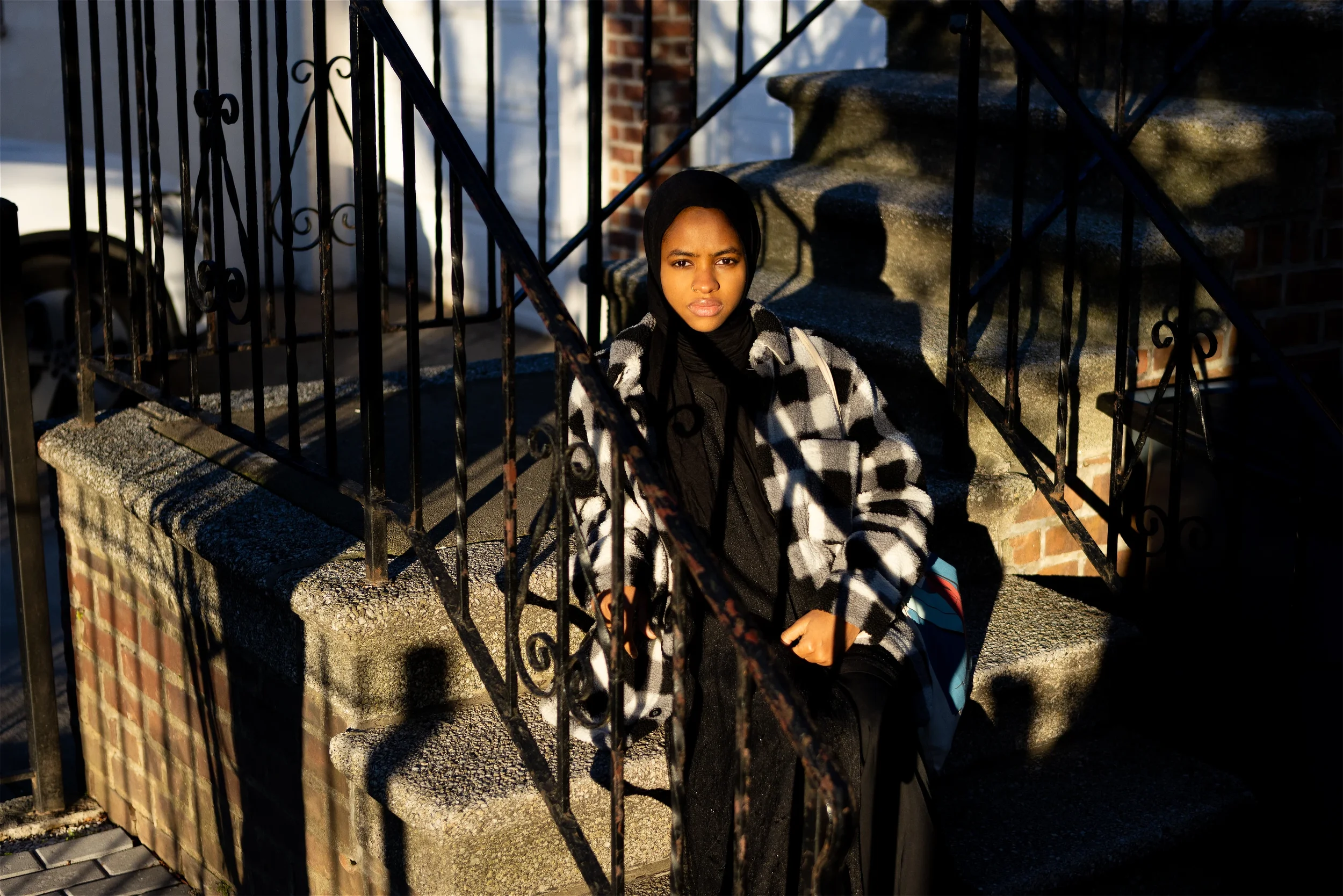
Environmental justice | American Muslim Experience documentary
Kadjahtou, outside in the stoop of her Bronx house. She started a Muslim-led environmental justice resource center and is currently working on starting a non-profit to help deal with the massive amounts of "fast-fashion" clothes that ends up in the trash. Photography by Syed Yaqeen.
Moreover, one of the first targets of war is access to the foundation of life—clean water. During the occupation of Iraq, the UNEP found substantial damage to water purification systems, sewage treatment plants, and waste collection infrastructure, leaving communities without clean water and dramatically increasing the spread of disease. The targeting of chemical plants produced toxic releases, and oil fires ignited during military operations polluted the air and contaminated groundwater.
Afghanistan suffered similar consequences. Open-air burn pits used by the army to dispose of waste exposed civilians to carcinogenic toxins. The resulting fumes have led to increases in cancer rates for both veterans and locals. Furthermore, the use of munitions, drones, and aerial assaults disrupts wildlife ecosystems, leading to habitat destruction and biodiversity loss. These are not isolated environmental harms. They reveal how the same politics of disposability that rendered certain communities expendable also rendered expendable the ecosystems upon which those communities depended.
ECOCIDE & AMERICAN IMPERIALISM
In June 2021, the Independent Expert Panel for the Legal Definition of Ecocide defined ecocide as “unlawful or wanton acts committed with knowledge that there is a substantial likelihood of severe and either widespread or long-term damage to the environment being caused by those acts.” The concept offers a language for understanding environmental destruction not as an unfortunate byproduct of war, but as a foreseeable consequence of political decisions.Despite the existence of troves of data that war and the War on Terror are complicit in committing ecocide, numerous governments use national security as a pretext to avoid accountability for these harms.
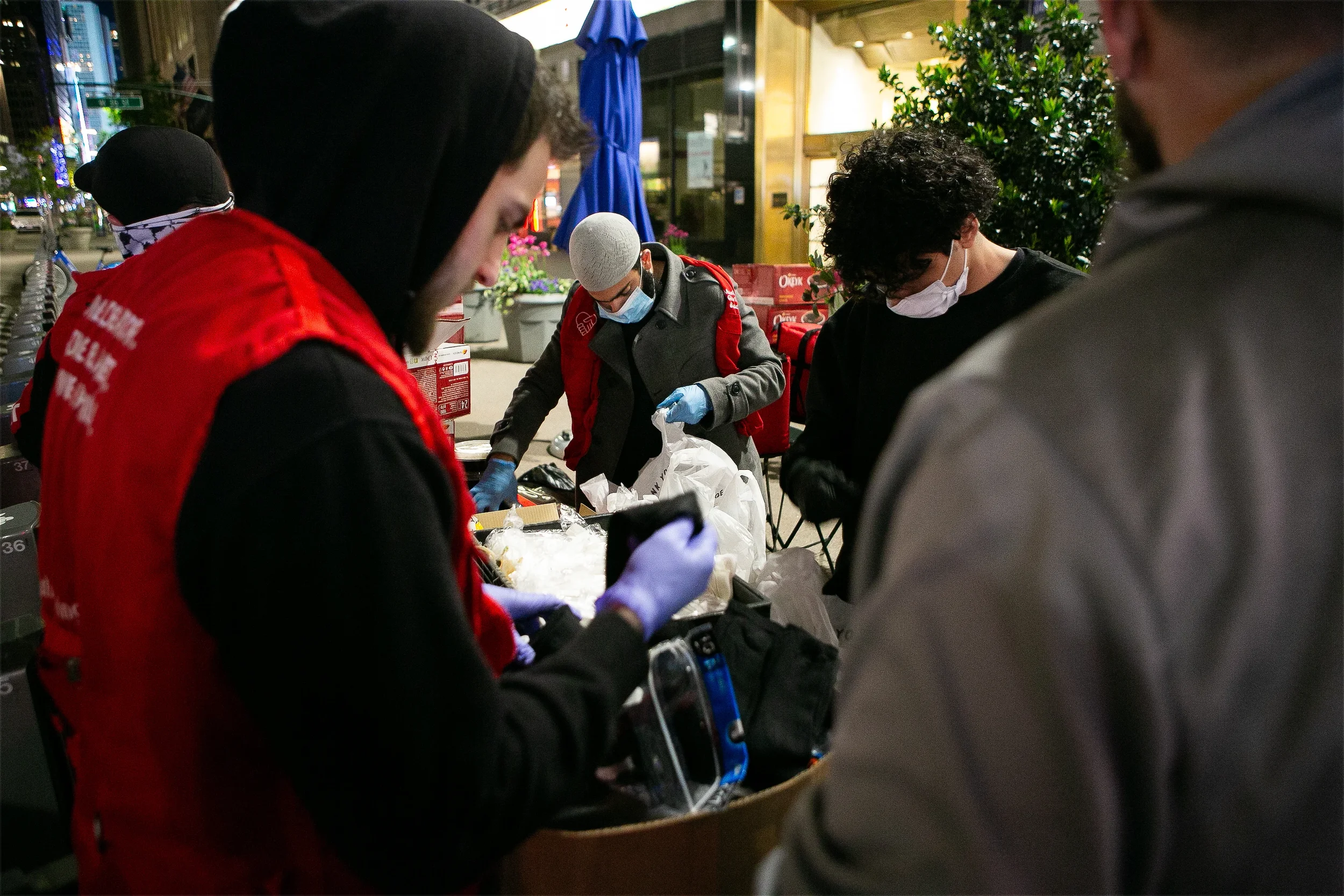
Giving back | American Muslim Experience documentary
Volunteers with "Muslims Giving Back" packing and distributing food and other essentials to the unhoused. The non-profit started post 9/11 in an effort of change the narrative on what Muslims are all about. Photography by Syed Yaqeen.
For example, governments have repeatedly invoked national security to exempt military activities from environmental accountability. In the United States, national security was used as a justification to waive more than a dozen environmental laws to accelerate construction of the U.S.–Mexico border wall, despite documented harm to protected ecosystems and wildlife corridors. Globally, national security has enabled the U.S. military to avoid meaningful climate accountability. During the Kyoto Protocol negotiations, the United States successfully advocated for exemptions covering emissions from multilateral military operations and international bunker fuels, reinforcing the idea that military activities should remain outside ordinary climate governance. As a result, one of the world's largest institutional emitters has largely escaped transparency and accountability.
As this apparatus has continued to expand from the Bush Administration to the Obama, Biden and now the Trump Administration, I am left asking the same questions that first emerged as a teenager.
For twenty-five years, the United States has invested trillions of dollars in militarization, surveillance, detention, policing, and endless war. Yet despite these extraordinary investments, many of the conditions that actually allow our people and planet to flourish have grown increasingly fragile.
BEYOND ‘SECURITY’ AND TOWARD LIBERATION
Since the founding of the so-called United States, our politics have been organized around the language of threat, surveillance, militarization, and exceptional state power. This only intensified in the wake of 9/11.
But we should ask whether that framework has ever truly delivered what people seek most. What if our collective future were instead organized around community care, power, stewardship, trust, democratic governance, dignity, justice, and freedom?
As Founding Executive Director of Muslims for Just Futures (MJF), we are helming a project called The Next 25: Futures Free of State Terror. It’s a bold and multigenerational initiative that asks what it will take to move beyond the first twenty-five years of the War on Terror and build the next twenty-five around justice, care, and collective power. We begin with a different premise of asking movement leaders and stakeholders what it would take to build futures free from surveillance, deportation, and state terror. The last twenty-five years have seen a minimum of eight trillion dollars wasted on this apparatus, tying our futures to more extraction and violence. Through the Next 25: Futures Free of State Terror, we are working to identify the scale of strategies, investment, capital and infrastructure needed to divest from systems of state terror and invest instead in the power-building ecosystems that will sustain and underwrite liberated futures for generations to come.
If the last twenty-five years have taught us anything, it is that a politics organized around “security” can become a justification for sacrificing the very communities and environments it claims to protect.
The question we are left with is this: after twenty-five years of treating entire communities and ecosystems as collateral, who has the state's vision of security actually kept safe?
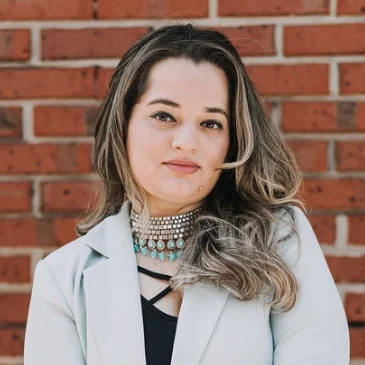
Darakshan Raja is the founding executive director of Muslims for Just Futures, an organization that deploys a divest, contest, and reinvest framework to address the impacts of Islamophobia and the War on Terror. This work is part of the organization’s Capital for Just Futures effort to develop a 25-year investment prospectus focused on freeing communities from the lasting impacts of state terror and systemic disinvestment.
Storytelling that challenges America’s colonial roots
Peace & Riot brings you stories from the frontlines.
From the activists who pioneered the modern environmental justice movement, to the Indigenous organizers defending their sacred lands, to the agricultural laborers fighting for dignity—we’re a home for the people and movements that have always pushed this country closer to its ideals.
Keep our work alive with a donation of any size.