
SPRING 2026
How AI Fracks Our Minds
AI is an attention and environmental disaster
By D. Graham Burnett & Peter Schmidt

Chicago, 2017. Arielle Bobb-Willis. This issue’s photographs were chosen for their artistry, human perspective, and emotional depth. While AI can try to mimic and steal their appearance, it cannot replicate lived experience, intuition, or the human truths that make them meaningful. Learn more about this issue’s featured photographer here.
Perhaps you’ve seen the joke circulating online. The first line of text is a playful prompt for an AI program like ChatGPT: something like Draw me a Weimaraner that looks like it’s made of pizza—and make it a Green Bay Packers fan. The second line acknowledges the steep environmental costs of this silly request: There goes another ten acres of old-growth rainforest. With the internet’s characteristically dark humor, this meme wrings a bleak guffaw from twisting together the seemingly immaterial “content” (that saps our attention for hours on end) and the material costs of the machines (that compromise our minds and our time). We have built a multi-trillion-dollar digital system that—if we were to analyze it in terms of global inputs and outputs—takes about 40 billion barrels of crude oil each year and converts it into something like a metric ton of human dopamine. How fitting that we have an internet meme to help illustrate AI’s central role in the convergence of two of the defining crises of the twenty-first century: the exploitation of human attention and the natural environment—of our inner and outer worlds.
We write as members of a coalition of attention activists known as the Friends of Attention that has spent years thinking about and responding to the rise of attention capture technologies as an issue of political and environmental justice. These technologies, and the complex assemblage of automated markets and corporations that surround them, are sometimes referred to as the “attention economy.” But we prefer more honest language: the profit model of AI-powered platforms like Instagram and TikTok is a form of human fracking.
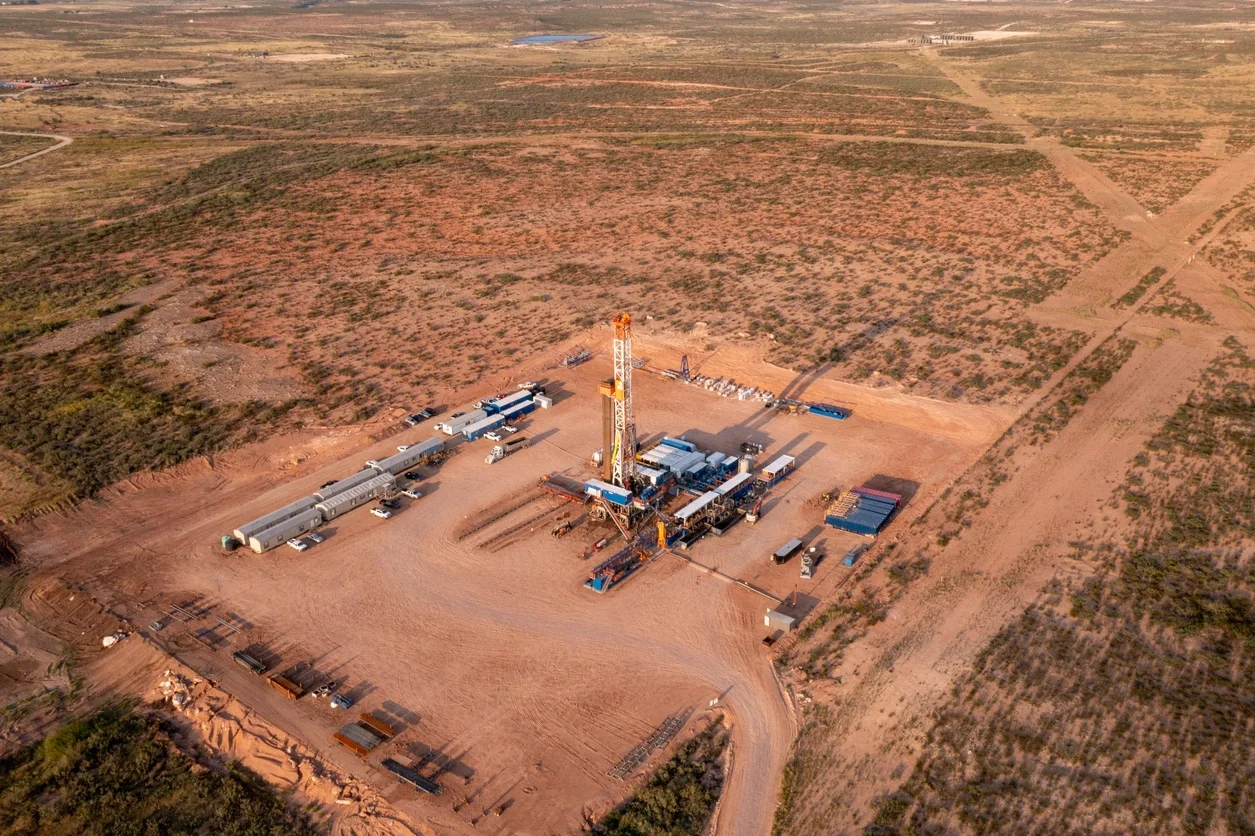
Aerial view of hydraulic fracking operations in New Mexico.
Human fracking is an analogy to hydraulic fracking—the process by which oil companies pump huge quantities of high-pressure toxic detergent into deep shale deposits to crack up tectonic structures and force a monetizable spume of hydrocarbons to the surface.
“Tech companies do the same thing, except instead of extracting hidden profits from the deep earth, they extract hidden profits from our very consciousness: in the form of human attention.”
Tech companies do the same thing, except instead of extracting hidden profits from the deep earth, they extract hidden profits from our very consciousness: in the form of human attention. The psychic equivalent of the hydraulic frackers’ toxic detergent is the colorful jet of hyper-stimulating, sometimes titillating, sometimes infuriating “content” blasted out of our screens for hours at a time.
Hydraulic fracking pollutes groundwater and causes micro-earthquakes; human fracking pollutes our inner world and destabilizes our sense of reality. Both operations are hugely profitable for corporations and hugely harmful for the rest of us. Spiking rates of mental illness among adolescents are, in view of these parallels, the psychic equivalent of spiking cancer rates in overburdened neighborhoods affected by industrial pollution.
TWIN CRISES
These incursions on our psychic and environmental worlds don’t just obey similar logics; they’re also materially connected. Nothing makes this connection clearer than the proliferating harms wrought by AI.
The computational sophistication of AI machines, after all, is what powers the algorithms that frack our minds. The physical demands of these machines, which require enormous quantities of water, energy, and land, are polluting communities across the country—especially low-income communities of color. This problem is a tragedy, but it is also an opportunity: to recognize that the attentional and environmental crises are intertwined in their history and impacts, and to devise forms of political activism that tackle the crises of our internal and external environments all at once. By bringing to life the deep links between the ecological structures that sustain our material life and the psychic spaces that make our shared life meaningful, we stand to rediscover the “mental” stakes of “environmental justice.”
AI is an environmental justice disaster. Consider journalist Nasser Eledroos’ reporting from the historically Black Boxtown neighborhood in South Memphis, Tennessee, where 33 gas-powered turbines installed by Elon Musk’s xAI are releasing an estimated 1,200 to 2,000 tons of nitrogen oxides annually. In a neighborhood where industrial pollution is already linked to cancer rates at four times the national average, these data centers mark a new chapter in the historic exploitation of low-income communities of color. In states like South Carolina, where Black people spend a higher proportion of their income on energy bills, officials predict that data centers will drive 70% of the state’s energy use increases. These are examples of the AI boom’s hidden costs, and, against claims that AI can solve racial bias, an affirmation that AI 's harms (including newly sophisticated surveillance technologies and unemployment) will inflict outsize harms on communities of color in the US and across the Global South.
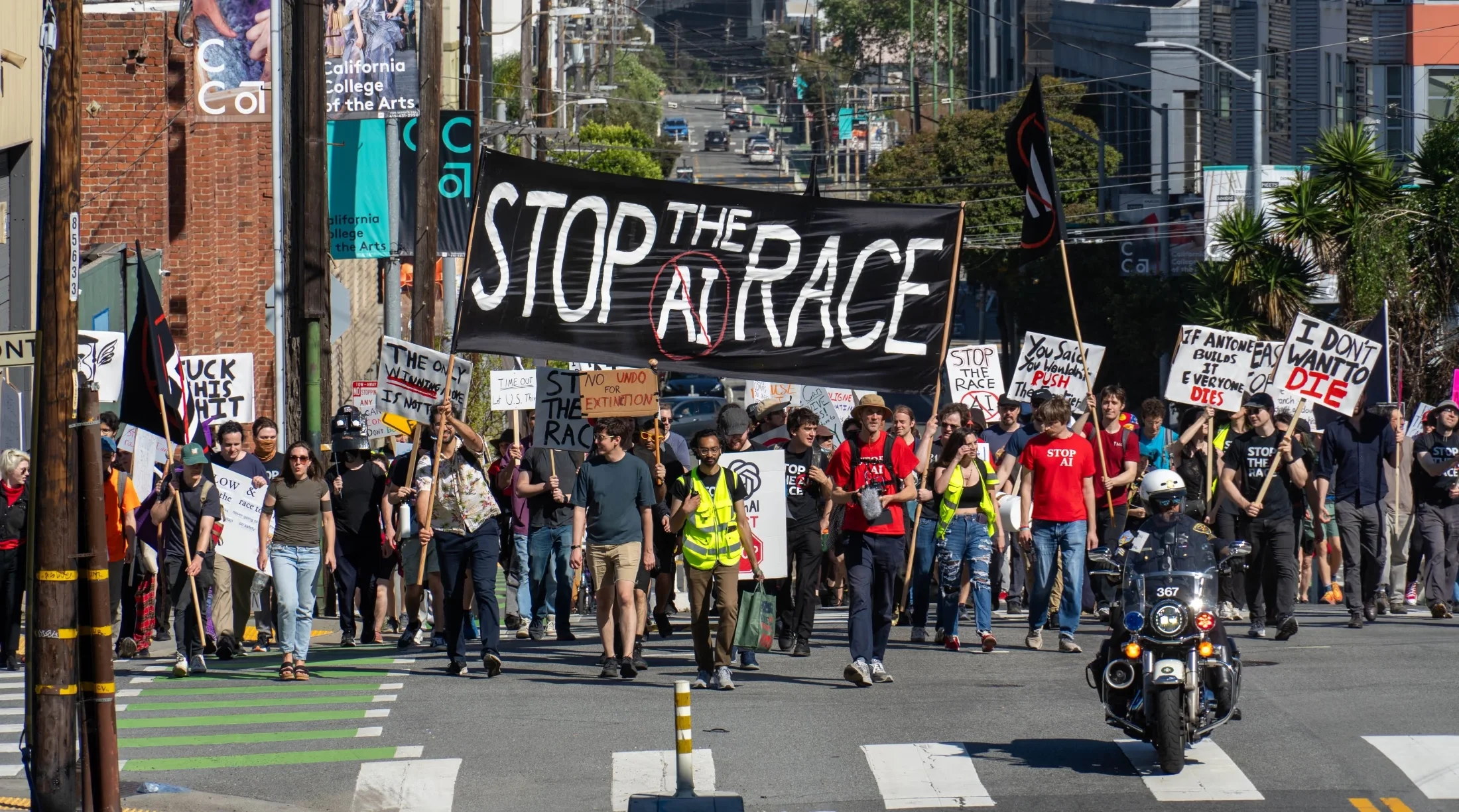
On March 21, 2026, concerned citizens marched from Anthropic’s San Francisco office to OpenAI’s to xAI’s to demand a stop to the AI race.
AI is also an attentional disaster. Former Google ad-strategist (turned philosopher-critic of the human frackers) James Williams has called AI the “killer app” for the attention economy. The algorithms that drive addictive feeds, the sophisticated psy-ops of “dark pattern” UI/UX, the goading of our vulnerabilities (gleaned from non-stop surveillance of our every word and move)—all of this is powered by AI technologies. In the end, though, the underlying business models are pretty simple: sell people stuff (retail); sell the eyeballs of the people to the companies that want to sell them the stuff (advertising); where possible, directly take the money from the people, while trying to steer clear of the law (financial flim-flam, online betting, prediction markets, etc.). All of these require time on device—and that means getting your AI hooks into as many eyeballs as possible.
So long as our attention is fractured and polluted by Big Tech, building a mass movement disciplined and broad enough to secure transformational wins for environmental justice will be well-near impossible.
“The insidious workings of slow violence derive largely from the unequal attention given to spectacular and unspectacular time.”
But as a more recent generation of activists, writers, and Indigenous thinkers have pointed out, the unique challenges facing environmental justice activists have everything to do with attention. Scholar Rob Nixon writes about environmental racism in terms of what he calls slow violence. It is especially difficult, he observes, to call attention to “disasters that are slow moving and long in the making, disasters that are anonymous and that star nobody, disasters that are attritional and of indifferent interest to the sensation-driven technologies of our image-world[.]” These difficulties are exacerbated by a contemporary culture of digital stimulation. “The insidious workings of slow violence derive largely from the unequal attention given to spectacular and unspectacular time.” Keeping our attention on the slow violence of environmental injustice requires special commitments—and true solidarity in attention activism.
WE HAVE WHAT WE NEED
In the face of these mounting and harrowing harms, activist practices from the growing attention liberation movement constitute a valuable set of tools to fight for environmental justice. A central technique in attention activism is the “attention practice,” which simply means a conscious use of attention as a way of deepening one’s connection to the world and other people. There are countless examples of attention practices that humans have long used to make a home in the natural world: agricultural methods, weather prediction and plant cultivation techniques, forms of “wayfinding,” animal husbandry, fire-detection systems, and more. In the context of the rapid rise of human fracking, we need active and collective efforts to gather and animate these traditional practices of attention to the planet. Any time humans have made their natural environment livable and meaningful they have used attention practices. We need them now, more than ever.
In our attention activist community—at the non-profit Strother School of Radical Attention, a teaching and learning initiative for attention activists in Brooklyn, and with allies around the world—attention practices have become a form of environmental activism. Group initiatives attending to New York’s urban creatures, to the animate possibilities of plants, rocks and smoke, to forms of community solidarity in the face of disasters, and to the changing climate have proven valuable experiments in reimagining and rebuilding our relationship to the non-human world. Attention, after all, is the stuff of relationships.

Freedom Farm Cooperative founder Fannie Lou Hamer in 1964.
“We must now draw on these and other forefighters in environmental activism as we push forward to realize that human attention is as central to our lives together as water—and we cannot let it be taken from us or despoiled by bad actors.”
During the 1960s and 1970s, a diverse coalition of activists pushed for environmental change in the language of justice. New communities emerged: Fannie Lou Hamer and her collaborators created the Freedom Farm as a new kind of sanctuary and model for sustainable, fair, and engaged life on earth. In urban spaces, too, leaders tied poverty and pollution to law and disenfranchisement. We must now draw on these and other forefighters in environmental activism as we push forward to realize that human attention is as central to our lives together as water—and we cannot let it be taken from us or despoiled by bad actors. Indigenous stewardship and traditions powerfully informed those who began to use “Ecology Now!” as a rallying cry for many marching against polluters, whale-killers, loggers, and those willing to harm the earth and its creatures for short-term gains. We call now for a new battle cry in the rising movement of those coming together to push back against human attentional fracking, and the harms to our shared psycho-social environment:
“Attensity Now!”
With this call we insist on the human uses of human attention—which is to say, we insist that our shared attention is a world-making power, by which we shape the world we share. A world that burns itself out pumping dopamine hits into our addled heads? That is not our world—it is the world made by those who care neither for the earth, nor for its people. Frackers of all kinds, beware: We are coming for you!

D. Graham Burnett is the Henry Charles Lea Professor of History and History of Science at Princeton University and co-editor of Attensity! A Manifesto of the Attention Liberation Movement (Crown, 2026) as well as Twelve Theses on Attention (Princeton University Press, 2022), both with the Friends of Attention coalition — creators of the non-profit Strother School of Radical Attention in Brooklyn, which Burnett directs. He co-curated the “Practices of Attention” program at the 33rd São Paulo Biennial, and is associated with the speculative collective ESTAR(SER). In 2023, he was a visiting artist at the Academy of Fine Arts in Helsinki, Finland. Burnett writes widely on technology, culture, and media.
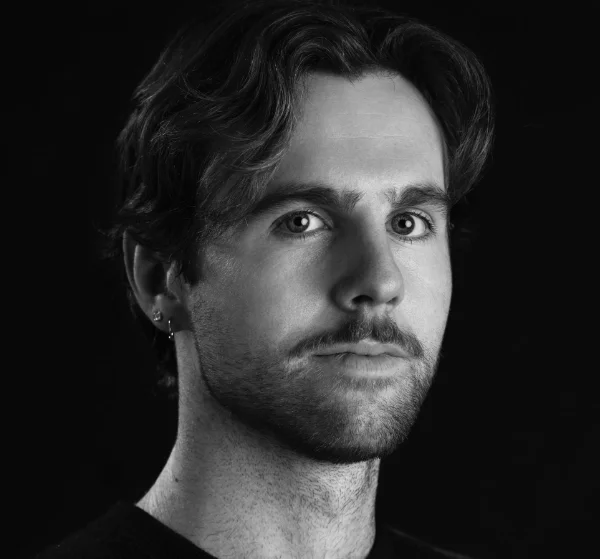
Peter Schmidt is a writer and organizer from Clayton, Missouri. His writing has appeared in Foreign Affairs, The Guardian, Le Monde, the New York Review of Architecture, and The New York Times. Since September of 2022 he has served as the Program Director and co-founder of the Strother School of Radical Attention.
Peace & Riot is made by real people — not AI.
Journalists, photographers, editors, and contributors doing original reporting from the frontlines.
That work is under threat. Newsrooms are shrinking. AI is training itself on what journalists have already built, and replacing it with something hollow.
Independent, human storytelling is being squeezed from every direction. If you value work built on lived experience, not stolen data — help keep it alive.
Donate to power more issues like this one.