
Fall/Winter 2025
When the law FALLS SHORT
A conversation with environmental lawyer Patrice Simms.

Photography by Brandon Holland.
In partnership with Shilpi Chhotray, Patrice Simms is the co-founder of Counterstream. As an environmental attorney with more than twenty-five years working in the environmental law arena, Patrice is a thought leader and strategic advisor who is committed to grounding environmental law in environmental justice. Currently, Patrice serves as the Vice President of Litigation for Healthy Communities with Earthjustice.
In this conversation with Counterstream, Patrice reflects on the role of Hurricane Katrina in catalyzing his environmental law career, the reality of disaster resilience, and the importance of creating solutions that braid together both policy and personal narrative. As Patrice shares, his impactful career has been shaped by his willingness to continually interrogate his responsibilities at any given moment. By asking himself both what is the most meaningful work to do—and what is his work to do—Patrice models how everyone can stay engaged in the lifelong work of advocating for climate justice.
COUNTERSTREAM: As the co-founder of Counterstream, you bring decades of experience in environmental law to this work. As you've shared in earlier interviews, however, the link between environmental law and environmental justice wasn't really clear to you until Hurricane Katrina. Was there a particular moment during Katrina that made you question your role as a lawyer, and the kind of impact you want to have?
PATRICE SIMMS: You know, my path into law was pretty circuitous. I studied psychology in undergrad, and spent several years working before finding my way to law school. At the time, I was working for an organization that served people with disabilities, and I was really interested in how the law could be used as a tool to drive social change. So, I decided that I would go back to law school, but definitely did not have environmental law in my mind! In fact, when I went into law school at Howard University School of Law—which is an excellent law school, and really the right fit for someone like myself —I didn't take a single environmental law class. I'm not even sure that they offered one when I was there.
“I didn’t realize it at the time, but that was a reasonably ‘sterile’ practice of law.”
I went right from law school into working for the federal Environmental Protection Agency (EPA) Office of General Counsel. That was a tremendous learning experience as a practicing lawyer, in part because one of the things that happens often in federal agencies is you jump right into doing the work. Pretty immediately, I was deep into environmental law, learning about the federal statutes that the EPA administers, and becoming—at least with respect to some aspects of those federal statutes—a real expert on various aspects of the Clean Air Act.
I didn't realize it at the time, but that was a reasonably “sterile” practice of law. It was about the language of the text and the requirements of the regulation and how you translate statutory requirements into regulatory implementation. It was a practice of law that was very much divorced from the real world impacts that the law has on people and communities. It wasn’t until I’d been practicing at the EPA for six or seven years, that the EPA started to have conversations about environmental justice in the wake of President Clinton's executive order on environmental justice. Even then, conversations on environmental justice within the agency were very conceptual, and didn’t translate into a different way of doing business.
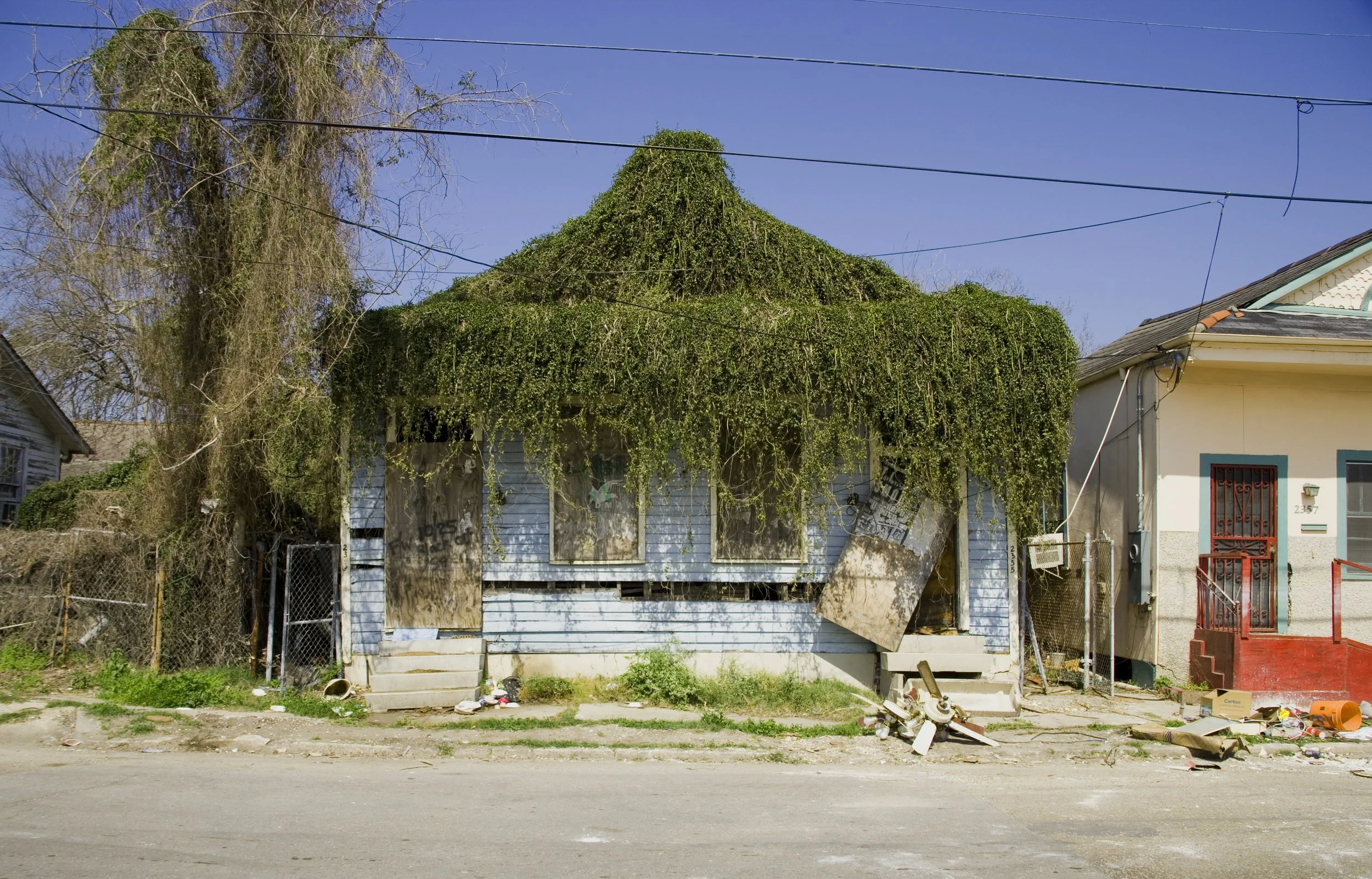
One year after Hurricane Katrina: A house in New Orleans, overgrown with cat’s claw vine. Photography by Carol M. Highsmith. America, Library of Congress, Prints and Photographs Division.
PATRICE SIMMS: I left the EPA in 2005 and went to work in the environmental nonprofit sector. I joined the Natural Resources Defense Council (NRDC) about two weeks after Hurricanes Katrina and Rita hit the Gulf Coast. One of the groups that I worked with there that was really focused on community health was eager to get involved and to figure out how to be helpful. And so, I ended up spending a lot of time in those first three or four months after Katrina hit, going back and forth to different parts of the Gulf Coast, and working with folks in places like New Orleans and Baton Rouge and Mississippi to understand the impact of hurricanes on community health.
Some of these impacts were in the immediate wake of the hurricane, but there were other issues that unfolded in the weeks and months and years after Katrina, including how to manage the massive amounts of waste that arose in the wake of the storm as well as how to rebuild communities that had been fundamentally wiped off the map. I got to know some really amazing people at that time, including environmental justice luminaries like Dr. Beverly Wright and Dr. Bob Bullard, both of whom were in that region.
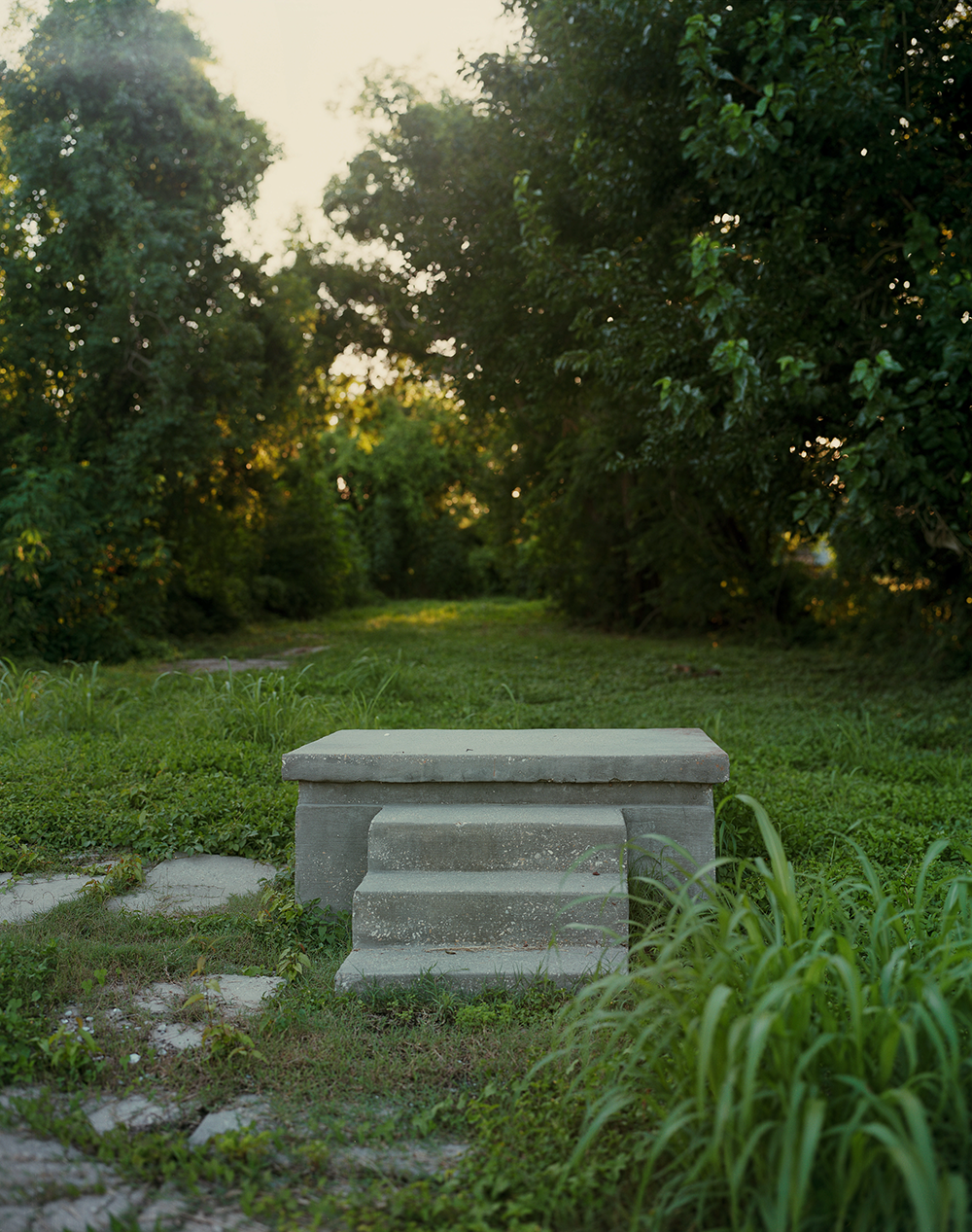
Blight and vacant lots still pervade the lower 9th ward, whose population remains a fraction of what it was before Hurricane Katrina. Photography by Brandon Holland.
PATRICE SIMMS: That experience really brought home to me the degree to which environmental law—as it’s often practiced in the conference rooms where policy is being made, in the agencies where rules are being adopted, and in the halls of congress where laws are being passed—is fundamentally divorced from the realities of people on the ground. It wasn’t a questioning of the value of environmental law, because environmental law is inherently valuable: if you don't have environmental laws, you have economic free-for-alls that will and have and do result in the sacrifice of entire communities.
So environmental law is critical, but one of the things I began to interrogate is at what point is environmental law working to really serve everyone?
And it's a question that I have, since that time in 2025, continuously asked and re-asked myself and others in order to make sure that as I chart my path through my career, through decisions and organizations and institutions and legal frameworks, that I'm doing so in a way that is conscious of the need for environmental law and environmental regulation to be informed by and responsive to, the experiences that people have on the ground. And so that moment in the wake of Hurricanes Katrina and Rita coming through the Gulf Coast transformed not only how I view my work but also the importance of my particular set of responsibilities within that work.
COUNTERSTREAM: Thank you so much for that, Patrice. I really appreciate what you shared about continually interrogating your roles and responsibilities. It’s an idea that actually segues into a question that we had for you about your experience as an environmental lawyer during Hurricane Katrina, and how that time inspired you to launch the Environmental Law Externship at Howard, which in turn sparked more collaborations at the nexus of environmental law and environmental justice. So I'm curious if you can speak, not only to the necessity of these spaces, but also how they're a way for you to keep, like you said, asking and re asking the question.
“That experience really brought home to me the degree to which environmental law—as it’s often practiced in the conference rooms where policy is being made, in the agencies where rules are being adopted, and in the halls of congress where laws are being passed—is fundamentally divorced from the realities of people on the ground.”
PATRICE SIMMS: It was really important. In the wake of both my seven years at the EPA and my experience, post-Katrina, in advocacy, it became clearer and clearer to me that people of color were being left out of the conversation. That in just about every conference room I had been in, whether it was in the EPA, on the hill, or within an environmental nonprofit, there were almost no people of color at the table ever. And I realized that one of the reasons why the right kinds of questions were not being asked and therefore the right kinds of answers were not emerging was because the right people were not at the table. I really began to feel like the best use of my time and energy and knowledge and expertise would be to help bring more people to the table who could inform a different kind of conversation about what environmental law, environmental policy and environmental protection should look like.
So while I was still at NRDC, I decided to start, in service of that goal, a clinical environmental externship program. In partnership with NRDC and Howard University School of Law, we worked to bring Howard Law students out into the environmental and geospace in order to give them some real world exposure to what that work looked like, an opportunity to understand what it meant to do that work, and a way to explore whether that was a space they might want to to occupy as they moved from students to professionals. I started that externship with a colleague and great friend of mine, Leslie Fields, who has done tremendous work at many organizations, including for a long time at the Sierra Club, and now at WE ACT for Environmental Justice. That externship program ran for many years.
Ultimately, I left NRDC to teach at Howard University School of Law. This decision was an extension of the responsibility that I felt to introduce more people of color to environmental law. As a full-time professor at Howard, I was able to teach, as well as help set up their environmental law program there. At the time, they had never had a full-time faculty member who was teaching environmental law courses. Their environmental law programming had been entirely cobbled together with adjunct professors. So it was an exciting opportunity for me.
Some of the questions that I always ask myself when I'm contemplating a change in my career is: is this something that will really challenge me? Is it something I really care about? And is there a reason I should be doing it (as opposed to anybody else)? Is there something special that I bring to this that I think is important? And it felt to me at that moment that going to Howard and helping to build a real environmental law program was the most important thing I could be doing with my time and my energy and my experience. And so that's what I did in 2009. I ultimately spent more than six years at Howard, although during that six year period, I also spent a little over a year and a half as a political appointee in the Obama administration.
In the years since Katrina, it became evident to me how critically important it was within the realm of environmental law, policy, and protection for there to be the voices of lawyers of color who could also speak to the experiences of different communities. And so that's what I did.
“In just about every conference room I had been in, whether it was in the EPA, on the hill, or within an environmental nonprofit, there were almost no people of color at the table ever.”
COUNTERSTREAM: There is much in there that is so resonant, thank you.
One of the reasons we're so grateful to have your voice in this issue is that you represent a really important perspective as a lawyer. At the same time, you're also someone who's an advocate for the kind of creative and people-powered storytelling that's so important to Counterstream. So we would love to know, firstly, how the work that you've done for and alongside frontline communities has shaped this particular approach. And secondly, if there are any moments that you personally remember where law and policy felt insufficient in addressing the needs of a community. How did you navigate that?
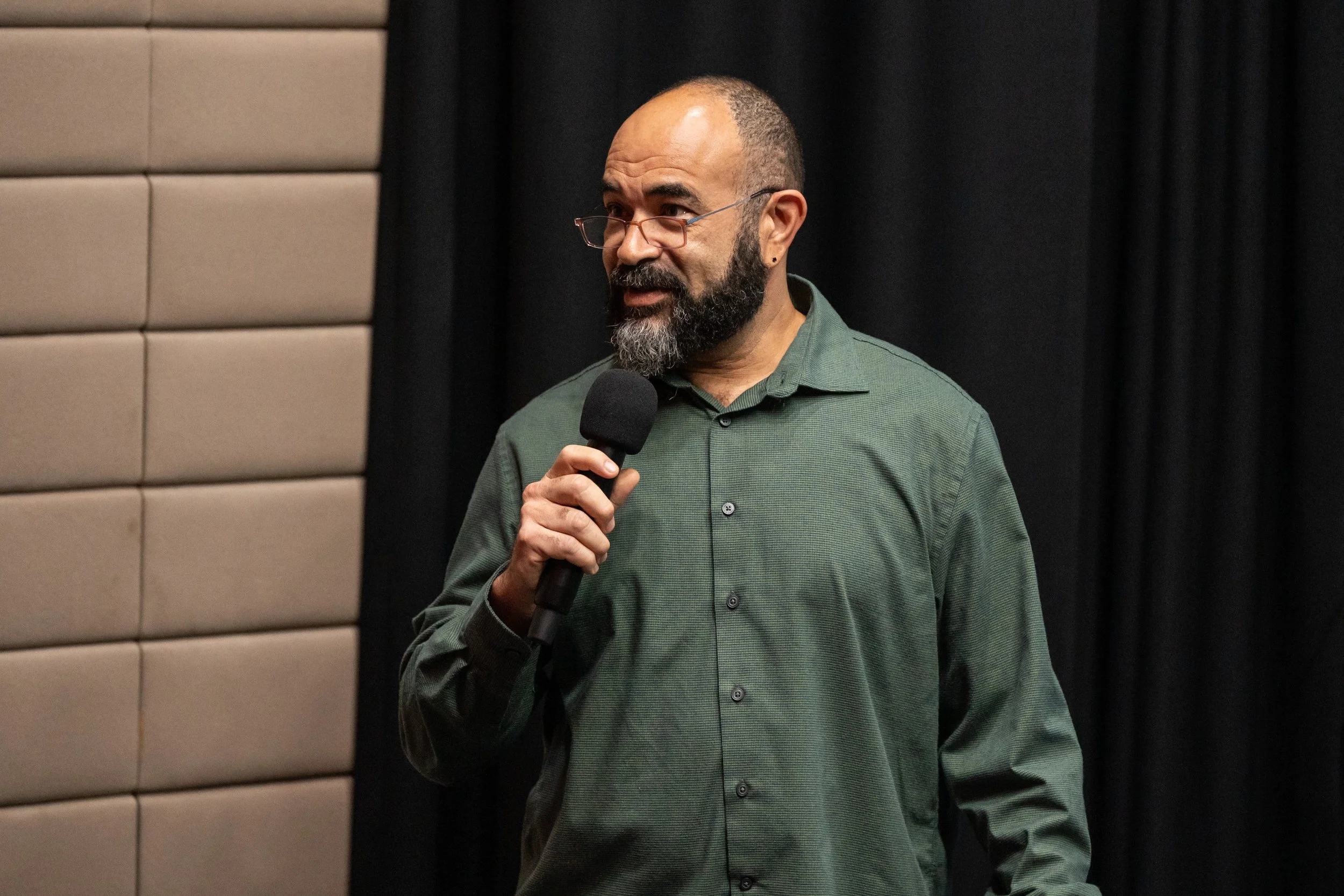
Patrice Simms speaking at “Reframing Resistance” a Counterstream Story Salon. Photography by Jeff Weiner.
PATRICE SIMMS: The easy answer to the first part of that question is that law is always insufficient in grappling with the real world challenges that communities face. The complete answer to that question—and I think this is one of the real challenges that environmental law and policy has faced over the years—is that when a lawyer shows up in a community, especially if they're lawyers who are unfamiliar with social change movements, they show up and they have one tool. And that one tool is the law. But lawyering is never a complete answer to a problem that faces real people in real communities. The law is a tool, and to be properly and powerfully used, it has to be just one of several tools that get deployed.
“When a lawyer shows up in a community, especially if they’re lawyers who are unfamiliar with social change movements, they show up and they have one tool. And that one tool is the law. But lawyering is never a complete answer to a problem that faces real people in real communities.”
PATRICE SIMMS: As a tool, law can drive significant and sometimes relatively rapid change, even in the face of political and economic headwinds. But the law itself, and lawyering and litigation, are never complete answers. The solution is always a combination of thinking about law, thinking about policy, thinking about the people and how people power is harnessed and organized and put to work, how social institutions and infrastructure are built to give people agency in the kinds of decisions that get made and the environment and community that they want to live in. There's an old saying that if you've got a hammer, everything looks like a nail. And lawyers often have that problem. They show up with the law and they think every solution to every problem is a legal one when often it really isn't.
That’s a lesson that’s often really hard for lawyers to learn, including for myself. And another thing that I think I've learned is to constantly interrogate and to try to ask others, especially lawyers, whenever they're engaged in advocacy that has implications for communities, to say, is this the right tool? What role should the law play? And am I doing it in a way that is consistent with building community power as opposed to stepping on community power?
COUNTERSTREAM: Was there a particular experience that really drove home that lesson for you or was it more so many different interactions?
PATRICE SIMMS: Oh, that's a really good question. Really good question. It’s a lesson that emerged over time, through repeated exposure and experience working with different communities on different kinds of issues.
One of the places where I watched it play out in ways that were most dramatic was in some of the climate-related advocacy that was happening throughout the early 2000s. I was really watching what was a fairly elitist-driven climate strategy emerge, and trying to grapple with the immense challenge of climate change. And what I saw was that so much of the strategy failed to acknowledge, and to connect with, the real human relationship to climate change. And failed to engage communities and especially failed to engage those communities that were most on the frontlines of the threats of climate change.
Photography by Brandon Holland.
COUNTERSTREAM. Thank you so much for that.
As you know, this issue of Peace & Riot really focuses on the resonances of Hurricane Katrina. And one of the things that we're exploring with the contributors is what we do when a lot of the political infrastructure that we've relied on for support—however massively imperfect and incomplete— is crumbling. FEMA is being undermined, funding for nonprofits is being slashed. Faced with these threats, what strategies do you believe are most effective to build solidarity? And how can legal action in particular support communities who are dealing with disaster relief at this time?
PATRICE SIMMS: The attacks both on the institutions that create the infrastructure for the policies that protect people and the attacks on the community-based organizations themselves, is just really discouraging and disgusting. We are certainly at a point where we can't turn to the federal government for protections, and in many instances, we can’t turn to states and municipalities and cities, either. So we’re at the point at which the power of the people is so much more important. It’s also a moment in time where we need to be really aware of how we— as people and organizations with relative privilege—are making sure that we're showing up for the communities whose voices are being stifled. And that means not running away from the challenging conversations. It means not hiding under the table because we're scared that someone might come after us. It means being willing to continue to put our resources, our energies, our money, and our attention towards these issues, and to show up for the people in the communities who are still on the frontlines.
“It means not hiding under the table because we’re scared that someone might come after us. It means being willing to continue to put our resources, our energies, our money, and our attention towards these issues, and to show up for the people in the communities who are still on the frontlines.”
PATRICE SIMMS: And I think there's certainly a role for lawyers. In the policy space, we need to make sure that we don't stop talking about things that matter just because they put us in the spotlight or in someone’s crosshairs, right? We need to make sure that we're demanding that those that are in charge of the pocketbooks and the resources are continuing to support community-based organizations and issues, and to make sure that we're doing everything we can to organize a defense so that when community organizers find themselves under attack, they've got people coming to their defense, including in the legal context. All of that is to say, I think when we find ourselves in situations like we're in now, it heightens the responsibility for the relatively privileged community of lawyers and legal advocates to show up in defense of community.
COUNTERSTREAM: This next question is a little more personal, and is inspired by how being a parent shapes your organizing and advocacy. What kind of conversations do you have with your children about environmental justice?
PATRICE SIMMS: I love that question. Being a parent informs everything that you do in the rest of your life in one way or another. And that certainly is increasingly true with my work. I have two kids, a son and a daughter. My daughter is older, she's twenty three, and my son is twenty one.
As a parent, you become really conscious of the idea that we are all temporary stewards of this world. And we're going to hand it off to other people in what might feel like a long time, but really is not that long at all. One of the things that goes along with being temporary stewards is having the responsibility to do the best that we can to make sure that what we're passing along is something that is sustainable and healthy and vibrant. For the last twenty or so years, that has been a part of my understanding of the role that I was playing as an environmental lawyer and ultimately as an environmental advocate.
“As a parent, you become really conscious of the idea that we are all temporary stewards of this world.”
PATRICE SIMMS: The other thing I came to realize when I had kids is, whether you want them to or not, your kids pay attention to what you're doing and they learn from it. And you know, when we decide what we're gonna do and how we're gonna do it in the world, one of the things that we're doing is modeling those decisions and responsibilities for our kids. So I always wanted to feel, when I was making decisions about the course of my career and the kinds of work that I wanted to do, that I was doing those things in a way that would make my children proud, and serve as positive lessons for them in the course of their own life. I don't have any particular expectations or aspirations for what my kids do and how they do it, but I want them to be able to make decisions that are motivated by the desire to leave the world in a better place than we found it.
Over the years, from time to time, we have had conversations about environmental justice issues, and I have had occasion to invite my children to various kinds of events and other things where they've had a chance to see some of that. I remember some fun times when I had first taken the job at Howard and I was teaching classes. I remember moments when my kids would come to class with me, and they would sit in the back of a classroom and listen to the class lesson on some environmental issue or other. And even though I'm sure they don't remember any of the details of those days, kids are like sponges. They’re learning all the time, and they're learning not just facts and figures, but also how to think and how to place yourself in the context of the world in a way that's deliberate.
COUNTERSTREAM: Firstly, that’s the coolest “bring your kid to work day” experience to have—
PATRICE SIMMS: I have a distinct memory of my son sitting on the upper steps in the back of the law classroom, and playing with some little toy cars while I was giving my lecture. He would’ve been about 5 years old.
COUNTERSTREAM: That's so sweet! And I love what you said about being a temporary steward. Our last question—and this is one that we are asking all of our contributors—is how the concepts of peace and riot show up in your work.
PATRICE SIMMS: That’s an interesting question, and I’ll try for a short answer! I think that what we are striving for is peace, right? And not just peace as demonstrated by the absence of fighting and violence, but peace as demonstrated by a state of living in harmony with the people and environments around us. And I think to get there, sometimes it takes the noise of a riot to be heard. And I don't mean a literal riot, but a riot of voices, a riot of demonstration to demand the kind of change that will ultimately bring peace.
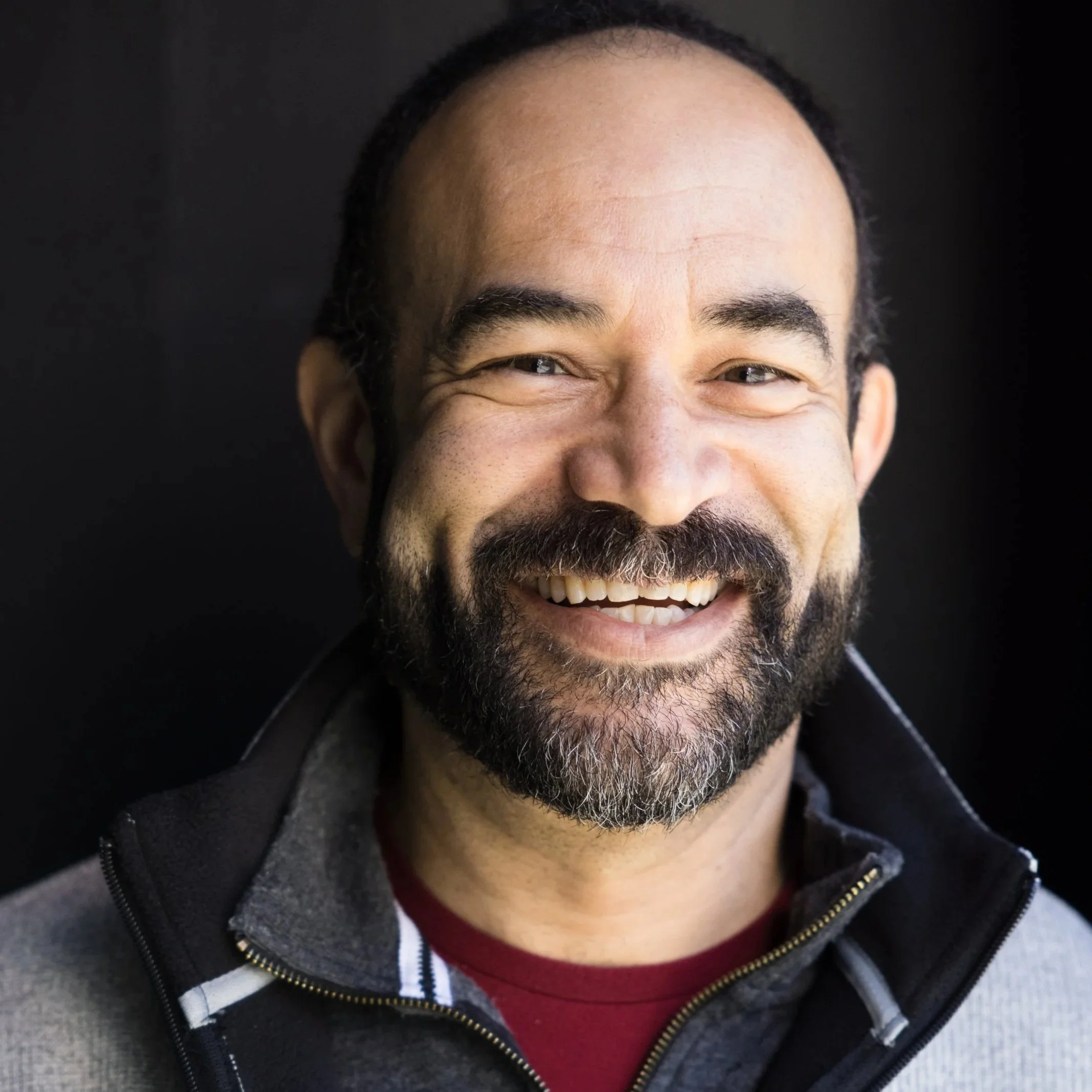
Patrice L. Simms, he/him, is Co-Founder of Counterstream Media. He is an environmental attorney and thought leader with twenty-five years in the environmental law arena. Currently, Patrice serves as the Vice President of Litigation for Healthy Communities with Earthjustice.
Before joining Earthjustice, he was a professor and led environmental law programming at Howard University School of Law. From October 2020 to January 2021, Patrice served as the volunteer lead of the EPA Agency Review Team for the Biden-Harris Presidential Transition. Patrice also served in a political appointment in the Obama Administration as a Deputy Assistant Attorney General in DOJ’s Environment and Natural Resources Division.
Over the course of his career, Patrice has also worked at the U.S. Environmental Protection Agency (EPA) in its Office of General Counsel and with its Environmental Appeals Board, and as a Senior Attorney with the Natural Resources Defense Council. Patrice is currently a member of the Board of Directors for the Environmental Integrity Project, and prior to joining the staff served for five years on the Board of Trustees for Earthjustice. He was a founding steering committee member of the Green Leadership Trust and helped to launch what is now Green 2.0. He is also a current Fellow with the American College of Environmental Lawyers (ACOEL). Patrice is a 1998 graduate of Howard University School of Law.
Peace & Riot is a nonprofit publication and free to read.
We believe access to movement-rooted storytelling should remain open and accessible.
But sustaining this publication requires sustained funding.
If you value independent storytelling that uplifts frontline voices, honors lived experience, and strengthens cultural resistance, please consider supporting our work with a tax-deductible donation.
Your contribution helps sustain the journalists, editors, artists, and storytellers who make this digital zine possible — and ensures Peace & Riot remains a platform for connection, truth, and creative expression.
Support Peace & Riot today.