
SUMMER 2026
The Land Beneath Democracy
America at 250
By Steve Phillips

Indigenous demonstrators sit atop a horse trailer near the U.S. Capitol in Washington, D.C. on October 15, 2024 after U.S. Park Police attempted to confiscate horses that had arrived on the National Mall, which were to be used to travel to a meeting on Capitol Hill. One day prior, members of the Muwekma Ohlone Tribe of the San Francisco Bay Area, along with other tribal groups and their supporters, entered Washington, D.C. on horseback on Indigenous Peoples' Day as part of the protest titled the 'Trail of Truth', setting up tents on the National Mall and demanding federal recognition for Indigenous tribes. (Photo by Bryan Olin Dozier/NurPhoto via AP)
This story was produced by Counterstream Media and co-published with Nonprofit Quarterly as part of the #WeTheCivic national narrative intervention.
The fight to build a true multiracial democracy and the fight for environmental justice are not separate struggles. They’re two expressions of the same questions: Whose lives matter? How do we all live—and thrive—together on this planet while sharing responsibility for its care?
The United States recently marked its 250th anniversary. With that milestone, many of us have found ourselves once again reflecting on the meaning of the nation’s founding.
What’s important to keep in mind is that before there was the notion of an American democracy, there was land.
For thousands of years before Europeans arrived, Indigenous Nations governed and cared for the land that would eventually become the United States. They developed systems of stewardship, agriculture, trade, diplomacy, and governance that endured for millennia. They tended to the fertile soil of North America and its forests, rivers, and plains, using knowledge and wisdom developed over generations.
The extraordinary stewardship of the land, and the abundance and fertility it produced, helped make America possible.
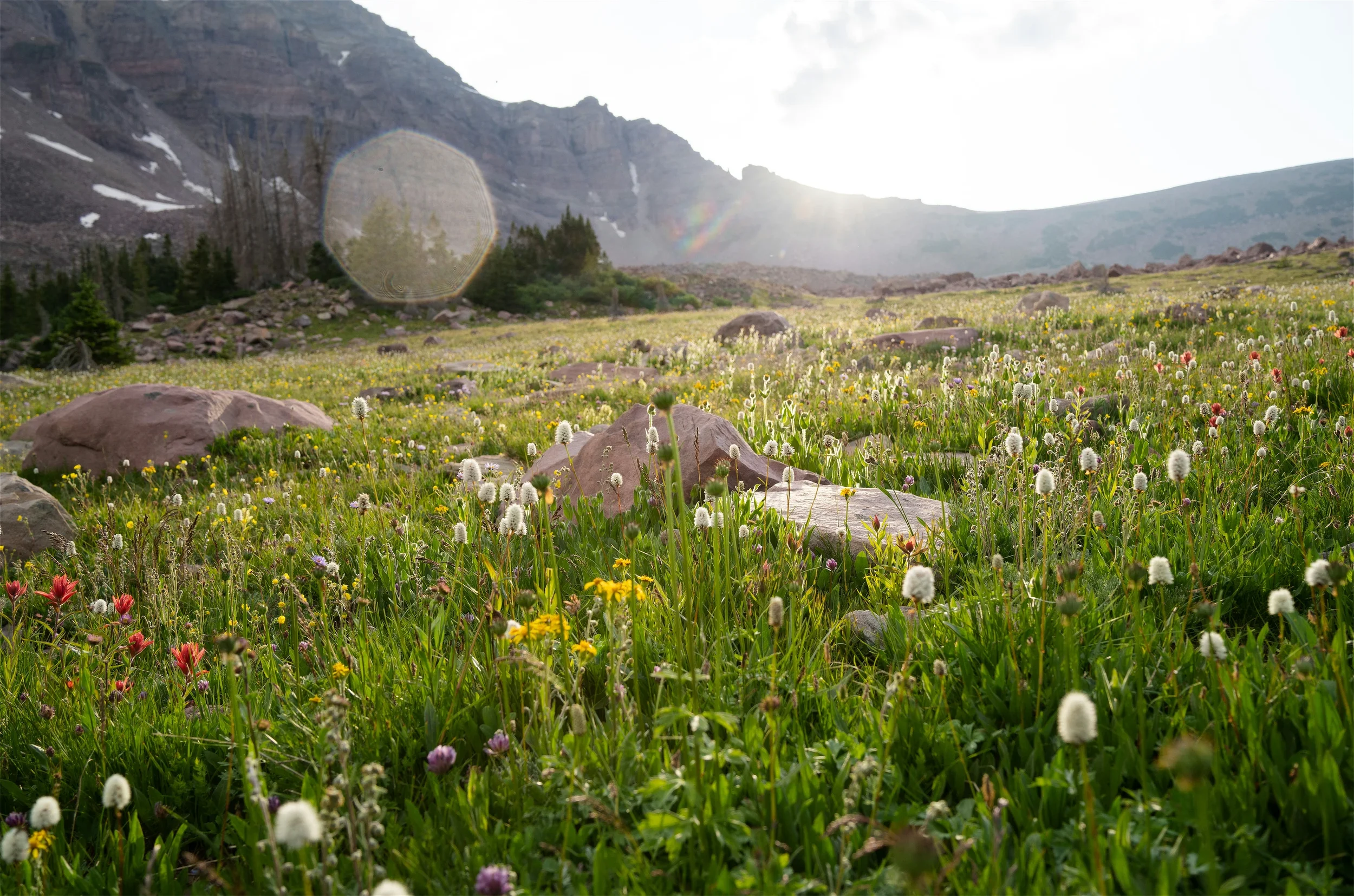
“The story of America cannot be divided into separate histories of race, economics, and the environment. The land itself is the hinge connecting them.”
REMEMBERING WHO GENERATED THE WEALTH OF THIS LAND
The story of America cannot be divided into separate histories of race, economics, and the environment. The land itself is the hinge connecting them.
The rich soil produced tobacco, rice, cotton, indigo, and other crops that generated enormous wealth for the European settlers and their descendants. Those crops formed the economic foundation of this nation. But harvesting that wealth was back-breaking work, and the demand for labor helped entrench chattel slavery, creating a system in which millions of Africans and their descendants were held in captivity and forced to do the work that made America wealthy.
When the white male founders of the United States set out to build a new nation, they borrowed heavily from Indigenous Nations whose political systems had governed this land 15,000 years before Europeans first arrived.
Among those influences was the Haudenosaunee Confederacy, also known as the Iroquois Confederacy. For centuries, the Haudenosaunee maintained a sophisticated system of governance through the Great Law of Peace, balancing authority among Nations through deliberation, consensus, and shared responsibility.
But the founders left behind one of the Haudenosaunee’s most profound principles: responsibility to the Seventh Generation.
“The Seventh Generation Principle asks leaders to consider how today’s decisions will affect people living several generations in the future. Will the land remain healthy? Will communities thrive? Are we leaving future generations something better than we inherited?”
THE SEVENTH GENERATION PRINCIPLE
The Seventh Generation Principle asks leaders to consider how today's decisions will affect people living several generations in the future. Will the land remain healthy? Will communities thrive? Are we leaving future generations something better than we inherited?
For the Haudenosaunee, political authority and ecological responsibility were inseparable.
Our nation’s founders rejected that route. They embraced an Enlightenment view of land as property, capital, and economic opportunity. Nature became a resource to extract. Land became wealth. The result has been a society that often prioritizes ownership over stewardship, extraction over sustainability, and concentrated power over shared responsibility. In this way, the violent seizure of Indigenous land, the exploitation of enslaved labor, the accumulation of wealth, and the concentration of political power all emerged from the same extractive relationship to the earth.
And this omission was not just about the environment. It was also about democracy itself.
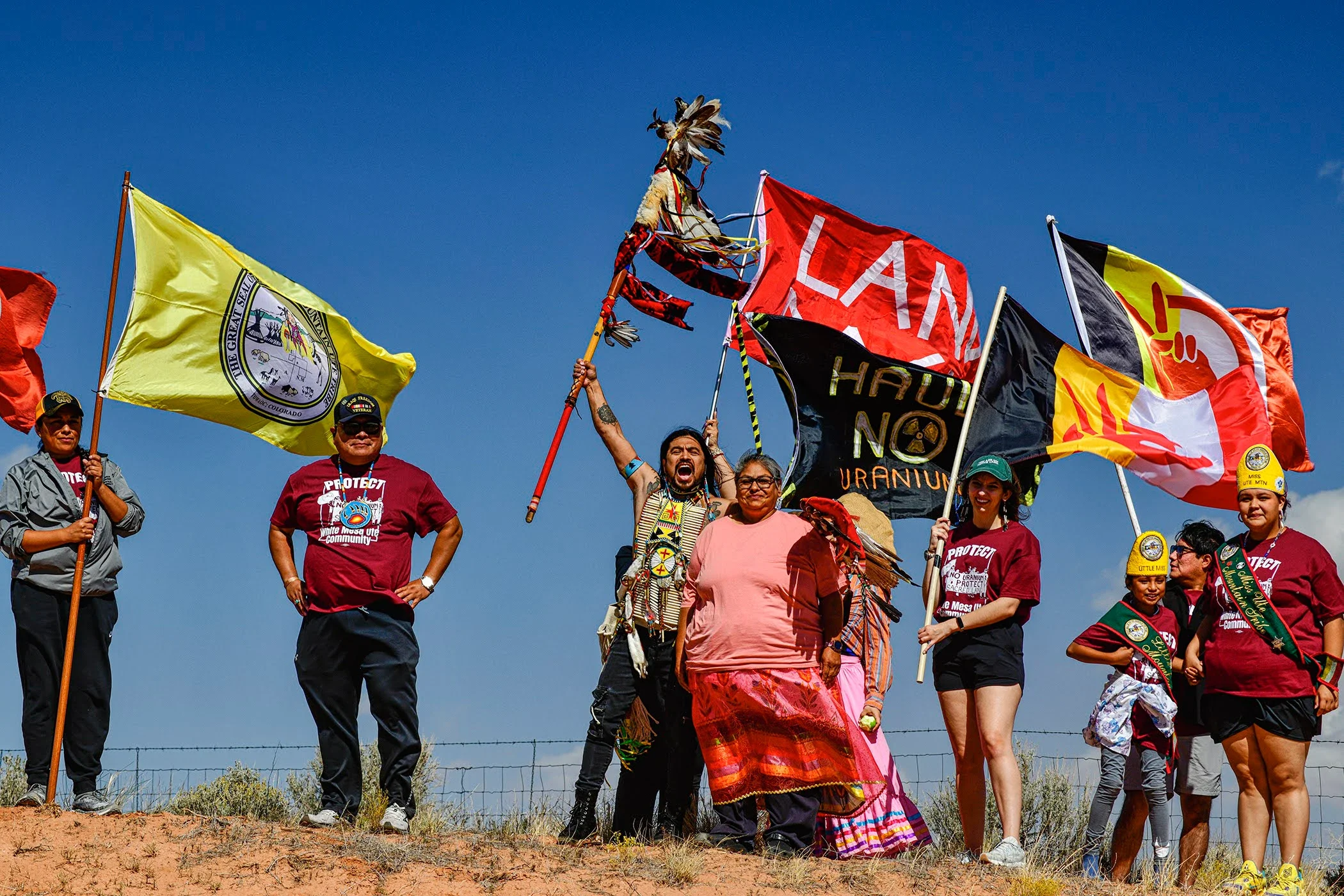
Members of the Ute Mountain Ute Tribe and White Mesa Concerned Community protest uranium mining on Indigenous land in Utah. (c) Tim Peterson.
DEMOCRACY AND EXCLUSION
The so-called “founders” of America proclaimed in 1776 that “all” people are created equal while simultaneously protecting slavery, excluding women from political participation, and enabling the violent dispossession of Indigenous peoples. (Clearly all didn’t mean all.)
For much of American history, white men have enjoyed access to political power, economic opportunity, land ownership, and legal protection that others have been denied. The hard-fought expansion of democracy—from Reconstruction to women’s suffrage to the civil rights movement and modern voting rights struggles—has largely been driven by those excluded from the founders’ original design.
Yet the mainstream, status quo narrative in this country tends to frame inequality as a problem of deficiency among marginalized groups rather than excess among those who dominate positions of power, namely those who are pale and male.
For decades, conversations about equity have focused primarily on the underrepresentation of women, people of color, and more recently, LGBTQIA+ individuals. But the more revealing inquiry is to focus on overrepresentation, not underrepresentation.
Although white men constitute approximately 29 percent of the population, they continue to occupy vastly disproportionate shares of leadership positions across business, finance, higher education, media, politics, and philanthropy.
This is not accidental.
It reflects what I call Straight White American Male Preference, or SWAMP: the longstanding systems of advantage, networks, assumptions, and institutions that continue to favor white men.
ENVIRONMENTAL INJUSTICE
Environmental injustice mirrors racial injustice—and that’s by design. Across the country, highways have been routed through Black and brown neighborhoods. Hazardous waste sites disproportionately appear near communities of color. Refineries, ports, warehouses, and gas and chemical plants frequently operate next to neighborhoods whose residents possess far fewer resources, time, and political power to fight these forces.
The consequences are immeasurable. On average, Black Americans experience higher exposure to air pollution than their white counterparts. Latino communities often live in areas with elevated levels of pollution. Indigenous communities disproportionately face threats from mining, pipelines, and water contamination. Farmworkers—many of them Latino or Asian immigrants—experience repeated exposure to dangerous pesticides.
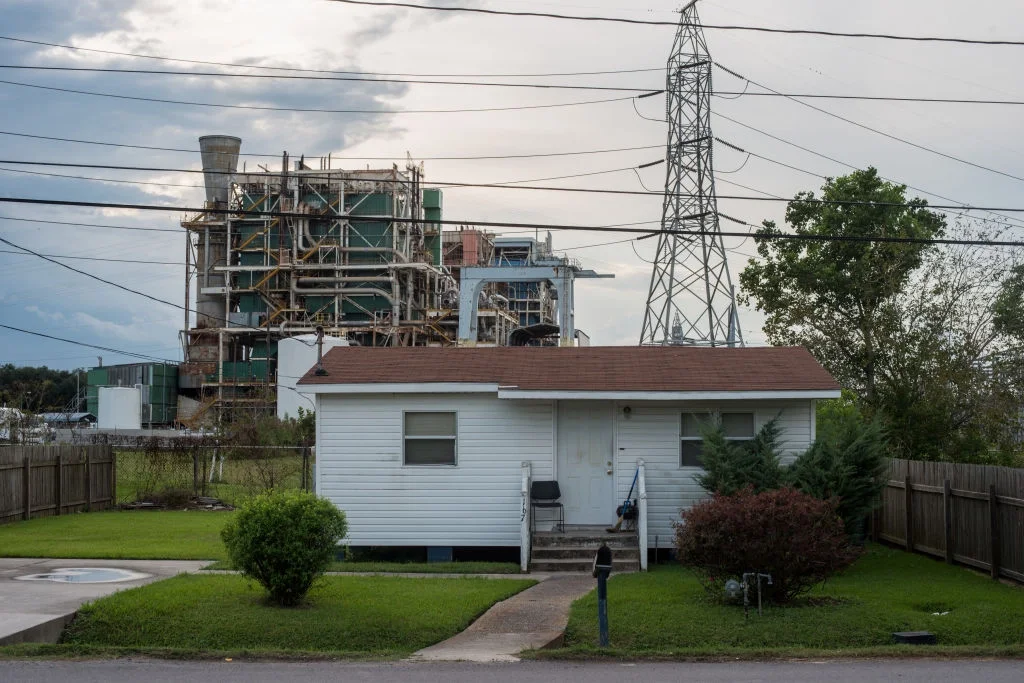
'Cancer Alley' is one of the most polluted areas of the United States and lies along the once pristine Mississippi River that stretches some 80 miles from New Orleans to Baton Rouge, where a dense concentration of oil refineries, petrochemical plants, and other chemical industries reside alongside suburban homes. (Photo by Giles Clarke/Getty Images.)
“In this way, environmental injustice reveals something fundamental: the same systems that have historically concentrated wealth and power among white Americans have also concentrated pollution and environmental risk in Black, Latino, Indigenous, and low-income communities.”
Climate change intensifies these inequalities. Extreme heat disproportionately kills people living in neighborhoods lacking trees and green space. Flooding increasingly affects communities with inadequate infrastructure. Wildfire smoke spreads across regions where many outdoor workers cannot simply stay home. Rising insurance costs threaten working-class families long before they affect the wealthy.
The distribution of power that shapes corporate boardrooms also shapes environmental risk. In this way, environmental injustice reveals something fundamental: the same systems that have historically concentrated wealth and power among white Americans have also concentrated pollution and environmental risk in Black, Latino, Indigenous, and low-income communities.
THE RECKONING THAT WASN’T
Six years ago, after the police murder of George Floyd, our nation experienced a moment of racial reckoning unlike any in recent memory. The footage of Floyd's final moments shocked the conscience of the nation in a way few events in modern American history have.
What followed was unprecedented. Corporations announced racial equity initiatives. Universities expanded diversity programs. Foundations increased commitments to racial justice. Institutions that had long avoided discussing systemic racism suddenly acknowledged its existence. For a brief moment, it seemed possible that America might finally confront the deep inequalities that have shaped the country since its founding.
Unsurprisingly, the moment did not last.
Corporate racial equity programs have largely been dismantled. Universities have retreated from diversity initiatives. Philanthropic commitments have declined. Political attacks on DEI and racial justice efforts continue to intensify.
The problem was not simply the backlash. It was that too many institutions embraced statements more readily than shifts in power. They focused on symbolic commitments rather than redistributing opportunity, authority, and resources.
Environmental justice has often experienced similar cycles. Communities organize. Progress is made. Attention shifts. Political winds change. Commitments fade.
The underlying problem remains the same: those who hold the greatest power and make the most important decisions continue to be disproportionately white and disproportionately male. Until that concentration of power changes, both racial justice and environmental justice will remain vulnerable to retreat and reversal.There is no single solution. Building a true multiracial democracy requires many people doing many kinds of work. Some organize communities. Some run for office. Some challenge institutions from within. Others change the public conversation by reshaping how we understand the problems themselves.
That has long been the mission of my work and of Democracy in Color. Through our newsletter and other writings, research, and podcast, we seek to elevate leaders who are building political power in communities of color, direct people toward strategic opportunities to invest their time and resources, and challenge institutions to think more boldly about where power resides, how money is invested, and whose voices shape public priorities.
Ideas matter because they shape action. Through my books and columns—including my most recent book, Are White Men Smarter Than Everybody Else?—I have tried to change the framework through which progressives understand inequality. Changing that conversation is not an end in itself. It is one step toward changing who holds power, who makes decisions, and ultimately whose future those decisions serve.
“In many ways, environmental justice reconnects us to the older Indigenous understanding of stewardship that preceded the United States itself. The health of the land and the health of the people are inseparable. The well-being of future generations must shape present decisions.”
THE ENVIRONMENTAL MOVEMENT’S UNFINISHED WORK
Like every movement for social change, the environmental movement has had its own history of exclusion and contradiction. At its best, environmentalism has protected public lands and preserved ecosystems. But parts of the movement have mirrored the racial and economic inequalities that have plagued our society since day one.
The landmark 2014 Green 2.0 study found that “The current state of racial diversity in environmental organizations is troubling. . .Diversity decreases as responsibility increases.” The largest environmental organizations are obviously not immune to SWAMP. This isn’t simply a matter of representation. A movement led primarily by those least affected by environmental harm may struggle to understand the full dimensions of the crisis. A movement that fails to elevate leaders from frontline communities risks pursuing environmental protection without environmental justice. SWAMP within the environmental movement is therefore not simply an equity problem. It’s an obstacle to the movement reaching its highest and fullest potential. So as we, as a nation, look to the next 250 years, urgent questions remain: Who gets to define American environmentalism? Whose interests should it serve?
Does the movement primarily benefit those who already enjoy wealth, political influence, and healthy communities? Or does it elevate leaders from the communities that bear the greatest environmental burdens?
Those questions have increasingly been answered by the environmental justice movement, one of the most promising sectors of the overall environmental movement.
Environmental justice emerged largely from Black, Latino, Indigenous, Asian American, and low-income communities who understood that pollution, climate vulnerability, and environmental harm were not distributed equally. These communities recognized that environmental protection and racial justice could not be separated.
In many ways, environmental justice reconnects us to the older Indigenous understanding of stewardship that preceded the United States itself. The health of the land and the health of the people are inseparable. The well-being of future generations must shape present decisions.
THE NEXT 250 YEARS
As this nation marks its 250th anniversary, the most important question isn’t whether America has fulfilled its founding ideals (spoiler alert: it hasn’t). The more important question is whether we’re prepared to expand them.
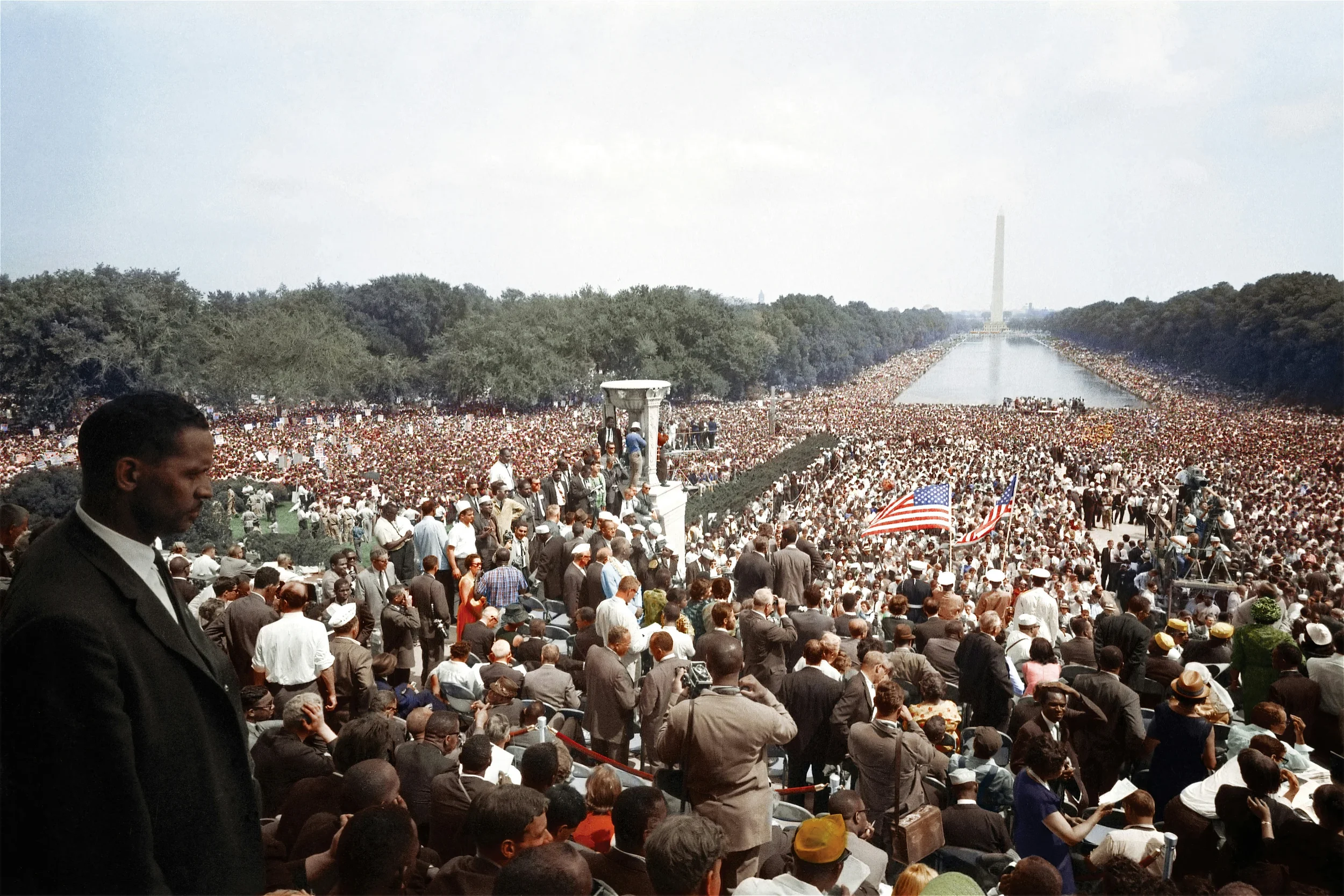
The March on Washington, August 23, 1963.
A truly multiracial democracy rooted in climate justice would mean that political power, economic opportunity, and environmental protections are shared broadly across society. It would mean preferences for none and justice for all. It would mean that the interests of future generations are included in present decisions.
The United States can become a true multiracial democracy, one in which all are treated equally, one that is sustainable for all—one that finally understands that justice among people and stewardship of the earth are inseparable. The Haudenosaunee offered elements of such a vision centuries ago.
At 250 years young, America still has time to learn the lesson its founders left behind and finally fulfill the promise that all means all. The next seven generations depend on it.
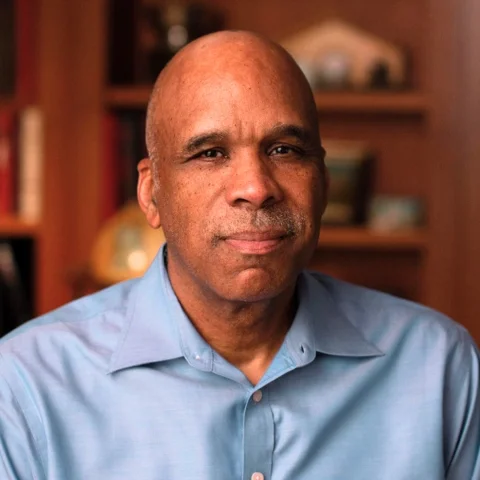
Steve Phillips is a bestselling author, columnist, and national political thought leader. He is the author of The New York Times and Washington Post bestselling Brown Is the New White and How We Win the Civil War. His newest book is Are White Men Smarter Than Everybody Else? He is also the founder of Democracy in Color, a political media organization dedicated to race, politics, and the progressive New American Majority. Phillips is the host of “Democracy in Color with Steve Phillips,” a color-conscious podcast on politics. He is a regular columnist for The Nation and The Guardian.
Storytelling that challenges America’s colonial roots
Peace & Riot brings you stories from the frontlines.
From the activists who pioneered the modern environmental justice movement, to the Indigenous organizers defending their sacred lands, to the agricultural laborers fighting for dignity—we’re a home for the people and movements that have always pushed this country closer to its ideals.
Keep our work alive with a donation of any size.