
SUMMER 2026
We Make The World
An exclusive first look at Patrisse Cullors' forthcoming book
Shilpi Chhotray in conversation with Patrisse Cullors
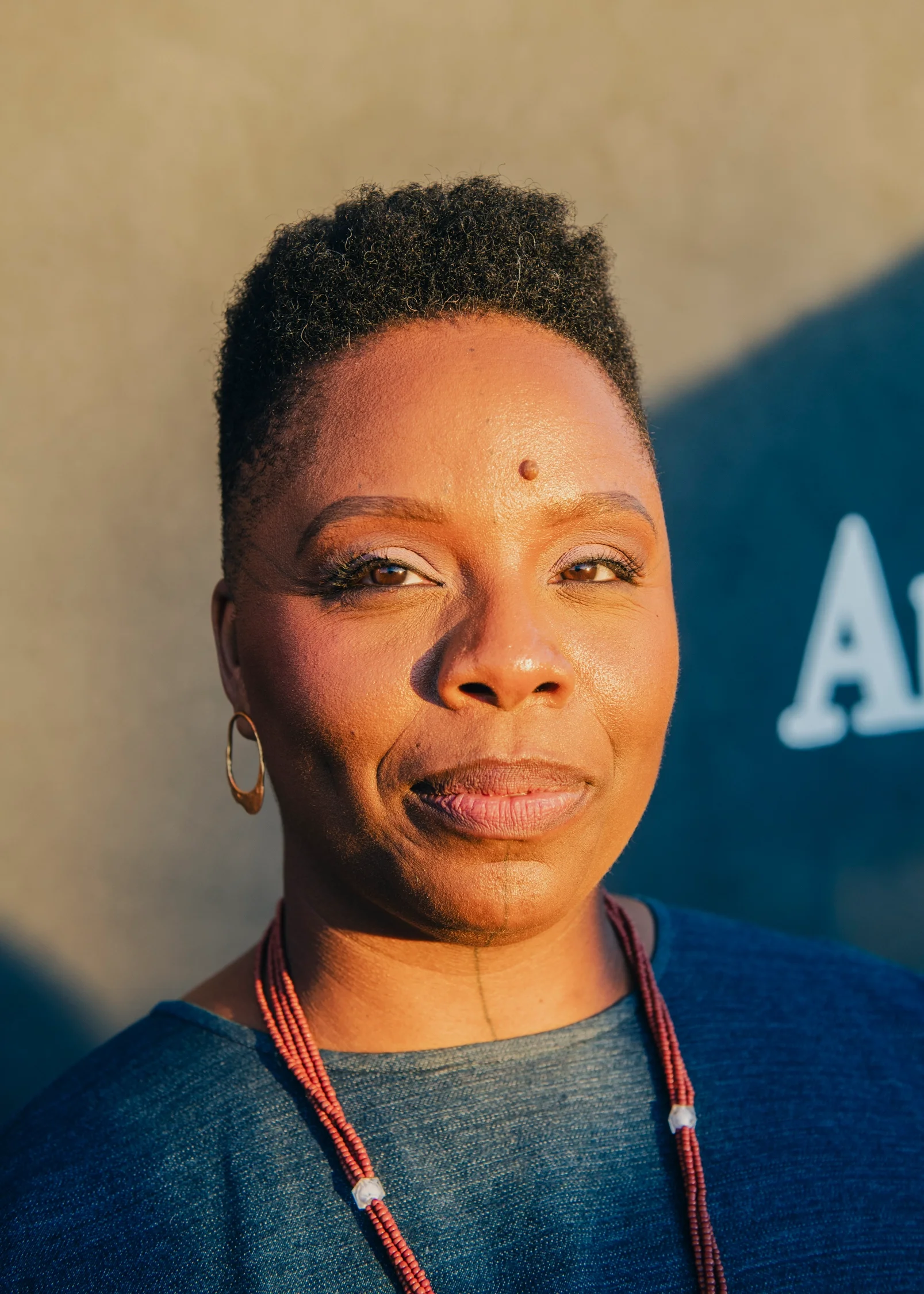
Patrisse Cullors. Photograph by Jason LeCras.
Before Patrisse Cullors' new book is released this November, Peace & Riot is honored to share an exclusive first look. In We Make The World, Cullors explores why aesthetics are not simply an accessory to movement-building, but a vital strategy for imagining and creating more just futures.
A year ago, Cullors joined Shilpi Chhotray on A People's Climate for a conversation about the integral role of cultural work in social movements. Here, that conversation continues as Cullors reflects on the relationship between art, aesthetics, and organizing—and why the worlds we build must be as intentional as the futures we fight for.
Shilpi Chhotray: In our conversation on A People's Climate, we talked about the importance of imagination in movement work. Your new book extends that conversation, exploring aesthetics as a source of political power. Why should aesthetics matter to organizers working to build lasting movements?
Patrisse Cullors: Aesthetics has always mattered to organizers. When we think about the Black Panther Party, we think about the leather vests, the leather jackets, and the powder blue shirts, and then we think about the afros. The aesthetics of movements across time—the Black Arts Movement, the Chicano Arts Movement—all of our movements have actually centered aesthetics as a way to reclaim.
What I'm doing with this book is reminding us that aesthetics has always been an important thread and how we evolve and shape the world.
Whether that is the reclaiming of how we look, right? Black people being dehumanized, black face, you know? Thinking about the ways in which our actual physical traits have been used against us. And so to see a movement like the Panther Party reclaim that, or Black women in the natural hair movement to say our natural hair is beautiful in the state that it's in. This is an aesthetic choice. We sometimes relegate aesthetics to, you know, the commodified art world, but aesthetics is our everyday life.
Shilpi Chhotray: In the 250th year of the United States, we're witnessing competing visions of America expressed not just through policy, but through symbols, imagery, spectacle, and public space. How do the aesthetics of liberation movements challenge dominant narratives?
“The aesthetics of liberation are about true collective freedom and the freedom of being able to live long, healthy lives in community with one another in a way that actually honors our highest and truest selves.”
Patrisse Cullors: I was thinking about how the American project is like a really well thought out comms marketing campaign. The American project, right, this idea of, we'll bring in your weary and your distressed and we'll take you in. This is really a kind of white racist imagery. And the liberation movements that we're a part of, that we are calling in, are liberating our ideas of what's possible and what's not possible. The aesthetics of liberation are about true collective freedom and the freedom of being able to live long, healthy lives in community with one another in a way that actually honors our highest and truest selves.
Shilpi Chhotray: What does it mean for you not just to create art, but doing it in a disruptive way that asks people to think a little differently?
Patrisse Cullors: My art practice is first and foremost focused on my own healing. For those of us who've grown up in this country under the crushing weight of white supremacy, our healing is an everyday practice. I think about the onslaught of autoimmune diseases for Black women and women of color. I think of every person I talk to who is suffering from severe fatigue and exhaustion. And we know now, research says that racism creates a shorter lifespan for us. So my art practice is a way in which I get to reclaim my life. I get to practice what is true for me.
And we are now seeing through research—a new book has come out called Art Care: The Science of How the Arts Save Lives by Daisy Fancourt—she created this book to really re-evangelize to folks that there's real neuroscience behind how art is saving our lives. Art saved my life.
And I believe that the reason why so many of our movements have an arts movement inside of them or at the heartbeat of them, is because it's about how we practice our liberation. It’s how I practice my liberation in a place that I am not fully liberated yet. And so that's an extension, I'm trying to mirror that for the communities that I'm part of.
Shilpi Chhotray: One final question, Patrisse. What do you hope organizers, artists, and storytellers take away from the ideas in your book?
Patrisse Cullors: I hope it inspires folks to develop their own practice. You do not have to develop an art practice so that you can then make art and sell it. If you think about the millions of years that human beings have been alive and how we've used art, whether it's clay from the earth or drawing inside of caves or the braiding of each other's hair. We have been practicing art before it was a commodity, before it was an industry.
“And so my hope is that in this time of deep despair and exhaustion, we go back to our practices that are in our DNA.”
And so my hope is that in this time of deep despair and exhaustion, we go back to our practices that are in our DNA. We go back to them for the sake of our own healthy lives, so we can reclaim that, but also for our collective being.
Excerpted from We Make the World by Patrisse Cullors and reprinted with permission from HarperOne, an imprint of HarperCollins Publishers. Copyright 2026.
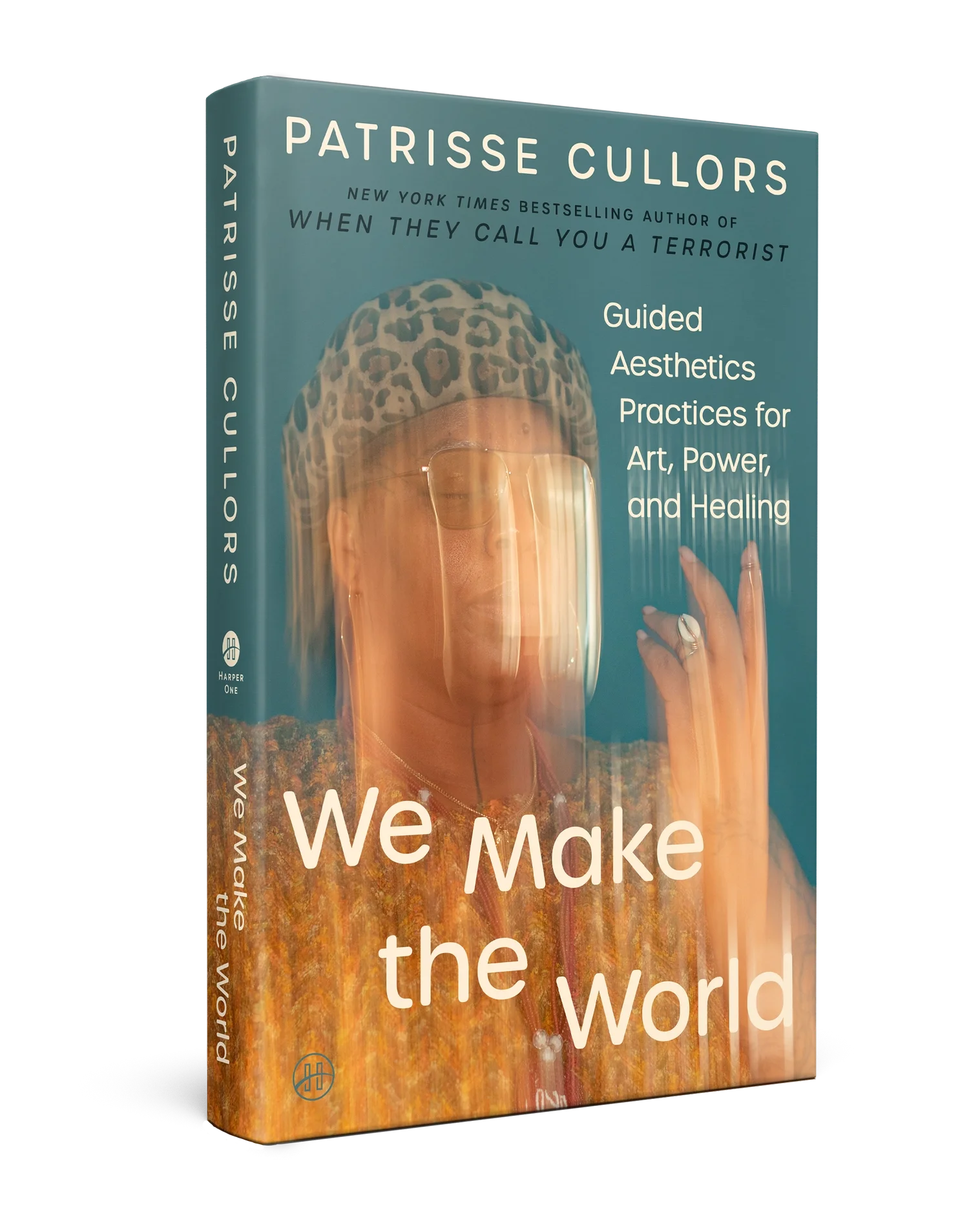
Purchase We Make the World:
Embodied Imagination: Beyond the Mind/Body Split
Western philosophical traditions have long separated mind from body, imagination from physicality, thought from sensation. This Cartesian dualism—“I think, therefore I am”—has deeply influenced how we understand creativity, often privileging conceptual and intellectual approaches over embodied knowing.
Yet our most powerful imaginative experiences engage our whole being. Think of children at play, fully immersed in worlds of their creation, their bodies expressing the reality they’re imagining. Or consider how dreams incorporate sensory experience—we don’t just think about our dreams; we feel, hear, and move within them.
Artists working across cultures and throughout history have recognized that imagination is not confined to the mind but lives in the body. For instance, Aboriginal Australian song lines map landscapes through embodied stories that must be walked to be fully known. West African griot traditions integrate narrative, movement, and music to preserve cultural memory.
These traditions remind us that imagination is a force of its own. It emerges through breath, gesture, rhythm, and touch. It involves new possibilities, feeling them, moving with them, bringing them into physical form through practiced and spontaneous movement.
Imagination as a Transformative Force
What does it mean to imagine a world not led by violence but by care? A world that is radically different from what we are currently experiencing. What does it mean to step outside the conditions imposed on us and dream of something so different it scares you?
I have always believed that imagination is a transformative force. It is not passive; it does not exist in the ether, waiting to be accessed by the elite. It is alive. It is urgent. It demands action. My art practice and that of so many of the artists I have shared in this book has been a response to this urgency, a practice of envisioning new ways of being in the world.
Imagination is what allows us to see beyond the systems that tell us what is possible. It allows us to rewrite narratives, to build new frameworks, to create spaces where healing is prioritized over harm. When I create, I am not just making art, I am engaging in a process of world-building. I am offering a vision of what could be, daring others to step into it with me.
Narrative Activism: Storytelling for Social Change
Beyond personal healing, storytelling has emerged as a powerful strategy for social change movements. Narrative activism recognizes that political struggles are fought in a multitude of ways, through policy and protest but also through the stories societies tell about themselves—about who belongs, what matters, what’s possible, and what’s just.
Reframing Dominant Narratives
Narrative activists/organizers work to identify and challenge harmful dominant narratives—stories that justify oppression, normalize injustice, or limit imagination about what’s possible. Some of the stereotypes that narrative activists challenge: “poverty is the result of personal failure” or “some people are naturally more deserving than others” or “violence is inevitable.”
When we expose the constructed nature of these narratives we offer compelling alternatives; this then leads to activists/organizers creating cognitive shifts that make policy change possible. As cognitive linguist George Lakoff argues, “Frames trump facts.” Without new narrative frameworks, even the most compel-ling evidence for change can be dismissed or misinterpreted.
The storytelling approach to activism differs from purely information-based strategies. When we assume that facts alone will change minds, narrative activists/organizers recognize that people make sense of facts through existing story structures. Effective change requires new stories, not just new data.
CASE STUDY: FRESCO STEEZ X LEVI’S BLACK HISTORY COLLECTION
When Black feminist and cultural worker Fresco Steez created the Levi’s Black History Month collection, they did something deceptively simple: They put images of Black political movements—movements that have long been dismissed, criminalized, or feared—on clothing sold by a global brand. Suddenly, this history wasn’t tucked away in archives or academic texts. It was on people’s bodies, and online, visible in everyday life.
What made the collection powerful wasn’t just visibility, though. It was the reframing. These movements have so often been portrayed as threats, as chaos, as something to contain. Fresco Steez told a different story—one of dignity, resistance, and ongoing struggle. And by doing it through Levi’s, a brand with massive reach, that story traveled. It showed up in cities and countries where people might never encounter this history otherwise.
There’s something worth sitting with here: What happens when marginalized histories get that kind of platform? When they’re not just tolerated but given prestige? It doesn’t undo the harm of decades of misrepresentation, but it does crack something open. It says this history belongs in public, that the history of Black social movements is not one to be ashamed of. Levi’s, an American brand, can hold the enormity of what it means to stitch Black imagery on jeans and remind the world that our work is not a footnote in history, it’s worth being worn and being claimed.
CASE STUDY: DEFINE AMERICAN
Founded by Pulitzer Prize–winning journalist Jose Antonio Vargas, Define American uses storytelling to shift public perception and policy around immigration. The organization’s core strategy is sharing authentic narratives of immigrants’ experiences—not just stories of exceptional achievement that reinforce “good immigrant” stereotypes, but complex, nuanced accounts of everyday life.
This organization has humanized abstract policy debates through personal stories. Define American has successfully influenced media coverage, challenged dehumanizing language, and built broader coalitions for immigration reform.
Their approach reminds us that narrative activism works most effectively when it combines personal testimony with systemic analysis. It helps audiences connect individual stories to larger patterns, and it maintains the emotional power of specific human experiences.
Storytelling Guidelines for Movements
For artists and activists using storytelling for social change, these principles can enhance effectiveness:
Balance problem and vision: Stories that only detail what’s wrong can lead to despair; narratives need to include compelling visions of alternatives.
Center affected communities: Ensure those most affected by issues are telling their own stories rather than being spoken for.
Connect personal and structural: Link individual experiences to systemic patterns without sacrificing the power of specific human stories.
Identify narrative leverage points: Focus on stories that challenge key assumptions underlying unjust systems.
Consider the emotional journey: Effective narratives acknowledge difficult emotions (anger, grief, fear) while also cultivating agency, hope, and connection.
Create narrative ownership: Develop stories that audience members can adapt, retell, and make their own.
Measure narrative change: Look beyond immediate reactions to track shifts in underlying frames, metaphors, and assumptions over time.
Closing Reflection: The Stories We Leave Behind
We are made of stories. The ones we are given, the ones we break free from, the ones we pass down like heirlooms. When we create art from these stories, we do more than document our existence—we offer a thread for others to hold on to. We say, You are not alone.
To create is to remember. To share is to heal.
So tell your story. Let it be heard. Let it be seen. Let it live. Let it become part of the great archive of human experience—threads woven across time, across cultures, across differences. Let it be transformed by those who receive it, who add their own threads, who pass it on changed yet similar.
The world needs your story—not because it is exceptional (though it may be), but because it is yours. Because without it, our collective narrative remains incomplete. Because in the spaces between the stories we’ve been told lies the possibility of new worlds, new ways of being, new paths toward healing.
In a world that so often fragments and isolates, storytelling remains our most ancient technology for connection, for meaning-making, for collective healing. It reminds us that we have never been alone, that others have walked similar paths, that our individual journeys are part of something larger—a human story that continues beyond any single lifetime.
So we listen. We speak. We create. And in this exchange, this constant flow of giving and receiving narrative, we find what we have always sought: belonging, purpose, the thread that connects us to what was and what might yet be.
Tell your story. The world is listening.
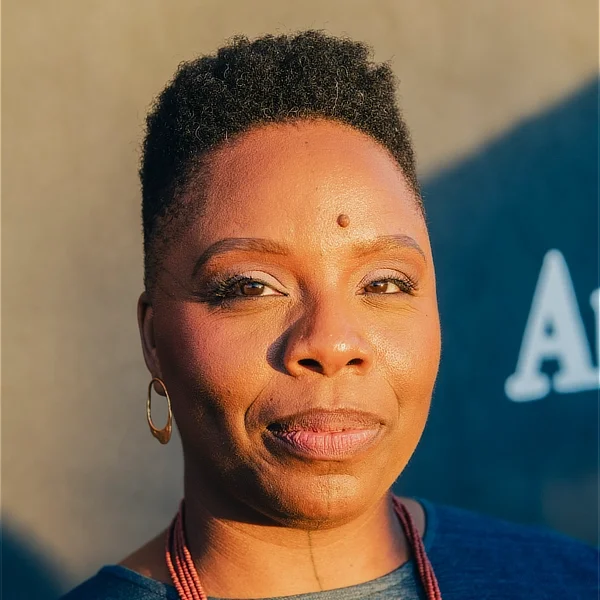
Patrisse Cullors is the co-author of The New York Times bestseller When They Call You a Terrorist, and an educator, artist, and abolitionist from Los Angeles. She is the co-founder of the Crenshaw Dairy Mart and has been on the frontlines of the abolitionist movement with Black Lives Matter, Justice LA, Dignity and Power Now, and Reform LA jails. Also the founder of The Center For Art and Abolition, Cullors has popularized the term “Abolitionist Aesthetics” to challenge artists to aestheticize abolition.
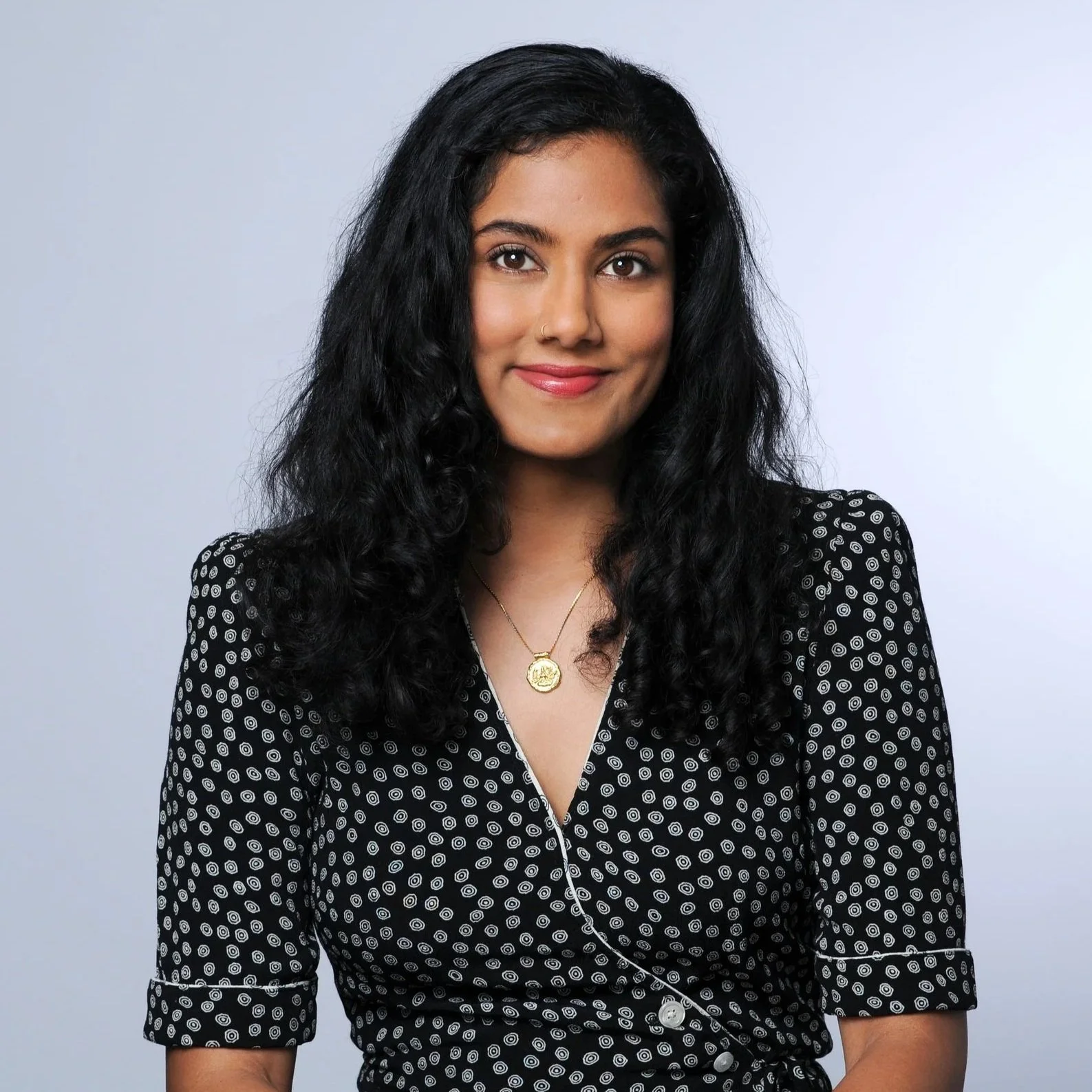
Shilpi Chhotray (she/her) is a journalist, podcast host, and forthcoming OR Books author covering environmental justice, climate politics, and the communities challenging systems of power. She is the Co-Founder and President of Counterstream Media, host of Webby-nominated A People's Climate with The Nation, and executive producer of Peace & Riot.
Her reporting draws on nearly 15 years of experience spanning environmental science and policy, strategic communications, and movement organizing. She specializes in long-form interviews with frontline organizers, movement leaders, social justice scholars, and legal experts working on climate and environmental issues across the United States and internationally—exploring how communities reshape public conversations about climate and democracy.
Her writing has appeared in The Guardian, The Nation, Prism, and Nonprofit Quarterly, and her commentary has been featured by ABC, NBC, NPR, BBC, Rolling Stone, Al Jazeera, Newsweek, and KQED.
Storytelling that challenges America’s colonial roots
Peace & Riot brings you stories from the frontlines.
From the activists who pioneered the modern environmental justice movement, to the Indigenous organizers defending their sacred lands, to the agricultural laborers fighting for dignity—we’re a home for the people and movements that have always pushed this country closer to its ideals.
Keep our work alive with a donation of any size.