
SPRING 2026
Youth Organizers in Texas are Pushing Back Against AI Data Centers
Alexia Leclercq on fighting resource abuse and environmental injustice in her home community
By Aina Marzia

Houston, 2020. Arielle Bobb-Willis. This issue’s photographs were chosen for their artistry, human perspective, and emotional depth. While AI can try to mimic and steal their appearance, it cannot replicate lived experience, intuition, or the human truths that make them meaningful. Learn more about this issue’s featured photographer here.
When OpenAI’s ChatGPT first launched in 2022, it reshaped how we think, search for, and aggregate information. Unlike a standard search engine, it outputs for a creative search in less than a minute. AI, however, doesn’t just manifest as an extension of the unseen internet; these searches require data centers, often large warehouses full of computers, that consume copious amounts of energy to produce just one response. According to MIT research, a single generative AI search query can consume up to five times as much energy as a typical search request.

Alexia Leclercq. Photography by Leta K Photography, LLC. Editing by Kirsten Wessel
For frontline youth in Texas, the impact of AI-driven energy usage on land and water hits close to home. Alexia Leclercq, a water and land rights activist, founded the Austin-based environmental education organization Start:Empowerment in 2019. Now called Land Justice Community School (LJCS), LJCS focuses on youth self-determination, Indigenous land sovereignty, and environmental justice. As Leclercq explains, these data centers are “being placed upon us without really any consent from the people. It's a systemic push for building AI data centers and for tech billionaires to profit while really draining our power and our water.”

Land Justice Community School (LJCS). Photography by Leta K Photography, LLC. Editing by Kirsten Wessel
In Texas, where water allocation resources are already being poured into the petrochemical and fossil fuel industry, the construction of AI data centers will extract even more from the residents living in this drought-prone region. As of March 24th, there are over 70 operating and proposed data centers in Central Texas, where Alexia is from. This growing data center hub is a reflection of Texan governance: approval for air pollution permits moves far faster in Texas than in most other states.
In February of this year, for example, the city of Round Rock approved the rezoning of nearly 30 acres for the construction of the Skybox Data Center. A single data center can require as much as 5 million gallons of water every day. As Alexia shares, the construction of data centers like Skybox in drought-devastated Texas feels especially unjust.
“We've seen extreme droughts, we've seen extreme ice storms, we've seen hurricanes, all as a result of the climate crisis. Communities of color and working-class communities are being disproportionately impacted. There's a deep history of systemic oppression already, and this is just adding to its cumulative impacts,” she adds.
“The water is consistently discolored. People have changed their washing machines three to four times, and the cost is about 200 to 300 dollars a month, because it is privatized water. ”
Alexia has worked for water accessibility across Texas for more than a decade. From working as the Policy Director at PODER, where she led a campaign in Austin's Colony neighborhood for access to clean and affordable water, to working with her congressman's office to get funding for water infrastructure in the Del Valle area, Alexia has been on the frontlines of environmental conservation. In many parts of Texas, Alexia says, “the water is consistently discolored. People have changed their washing machines three to four times, and the cost is about 200 to 300 dollars a month, because it is privatized water. ” Now, PODER is leading a partnership with the University of Texas at Austin to conduct water testing and hopes to release an academic paper detailing problematic lead and chemical levels in the community's water later this year.

Land Justice Community School (LJCS). Photography by Leta K Photography, LLC. Editing by Kirsten Wessel
The fight against “Dirty Data Centers” is part of this legacy of reclamation and resistance. Organizers are pointing out how these proposals are largely at the expense of poor and often urban communities, especially considering that Texas has some of the loosest environmental regulations in the entire country. Current policies continue to put thousands of people at risk of health issues and personal sustainability.
As part of resisting, Alexia’s organization, LJCS, is using art, political education, and public advocacy to rally against the construction of AI data centers. The youth from LJCS, for example, are currently working on a zine on AI and pollution with the goal of educating residents on the true impact of the extractive industry on water. Through call-to-action campaigns, Alexia is also encouraging people to show up and testify at local hearings in order to underscore public opposition to water privatization and push the city council to reconsider what gets constructed—and at whose cost.
Alexia’s youth-led organizing work is proof that change is possible. Alexia's organization was contacted by the Data Center Action Coalition to bring youth speakers to share their concerns with the San Marcos City Council in an effort to block a proposed data center. Thanks to the organizing efforts of the Data Center Action Coalition— the main coalition for all the organizing efforts—over 125 people signed up to speak, and 57 more signed up to talk at the public hearing. Ultimately, the council members rejected the proposal to construct a $1.5 billion data center at 2 AM the next day.
“We've done protests, we've done testifying at hearings at City Hall, we've done social media videos, we've done education, we've gone door to door,” she says.
Community groups like Alexia’s and the Save Our Springs Alliance decried the effects of a data center proposal and illuminated the water injustices that they would experience if the construction were approved. “I don’t think people realize how much local zoning decisions actually impact whether data centers get built; a lot of local environmental decisions are made at the city council level,” she explains.
As data centers continue to expand, youth organizers like Alexia want to “make sure this is ethical, sustainable, and prevent it from being integrated in so many ways that are not needed.” She says data centers “are just leading to profit for these tech companies and harm for frontline communities and the planet.”

Land Justice Community School (LJCS). Photography by Leta K Photography, LLC. Editing by Kirsten Wessel
The conversation on ethics reflects a broader need to create nuanced advocacy campaigns. This is part of the reason why Alexia believes that the movement against AI has to come from young people. “Because a lot of the original base was like older white men, we wanted to expand that and help people from other demographics get involved,” she says. In hopes of mobilizing young people, Land Justice Community School organizes a Summer Youth Fellowship in Central Texas, which centers the work of Black and Brown young people across Texas by providing them with funding and learning opportunities to drive environmental justice change.
As the generation that is most rapidly integrating AI into their daily lives, Alexia believes that youth engagement is critical. “I feel like we're kind of at that point where we need to choose, going forward, what we want our future to look like.”

Aina Marzia is an independent journalist covering intersectional politics and movements and a student at Princeton University studying Anthropology on the Law track with a minor in Latin American Studies. Her work has appeared in Al Jazeera English, TheNation, Teen Vogue, Business Insider, The New Republic, The New Arab, The DailyBeast, The American Prospect, Grist, Yahoo, VICE, and on NPR and elsewhere. She was previously a fact-checking intern at In These Times and a 2024 Puffin Writing Fellow at The Nation. Aina is a recipient of the 2026 White House Correspondents Association Scholarship from the Asian American Journalists Association, the Scholastic Gold Medal for her journalism portfolio, “Classrooms: The New Political Playground,” awarded by The New York Times, and the 2025 Outstanding South Asian Student Journalist for her feature in Al Jazeera English.
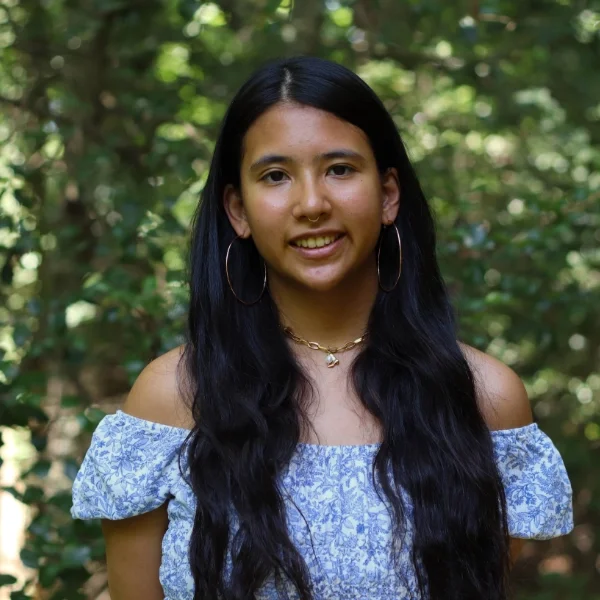
Alexia Leclercq is an environmental justice organizer, scholar, and artist with over a decade of experience leading impactful campaigns. She has secured clean water protections, advanced aggregate mining regulations and land use laws, halted petrochemical projects, and strengthened global climate efforts, including the loss and damage fund and an equitable fossil fuel phase-out. She is the Founder and Executive Director of Land Justice Community School. Her climate curriculum has reached over 120,000 students, and she launched a pioneering climate organizing fellowship for Gen Z youth of color. Alexia also co-founded the Colorado River Conservancy and Community Powered ATX. Her leadership has been widely recognized by Forbes, NYT, Washington Post, and more. She served as a U.S. UN Youth Assembly Ambassador and contributes to national research initiatives, while frequently lecturing at leading universities.
Peace & Riot is made by real people — not AI.
Journalists, photographers, editors, and contributors doing original reporting from the frontlines.
That work is under threat. Newsrooms are shrinking. AI is training itself on what journalists have already built, and replacing it with something hollow.
Independent, human storytelling is being squeezed from every direction. If you value work built on lived experience, not stolen data — help keep it alive.
Donate to power more issues like this one.