Fall/Winter 2025
LETTER FROM PEACe & RIOT
Abre’ Conner on finding power in the storm.
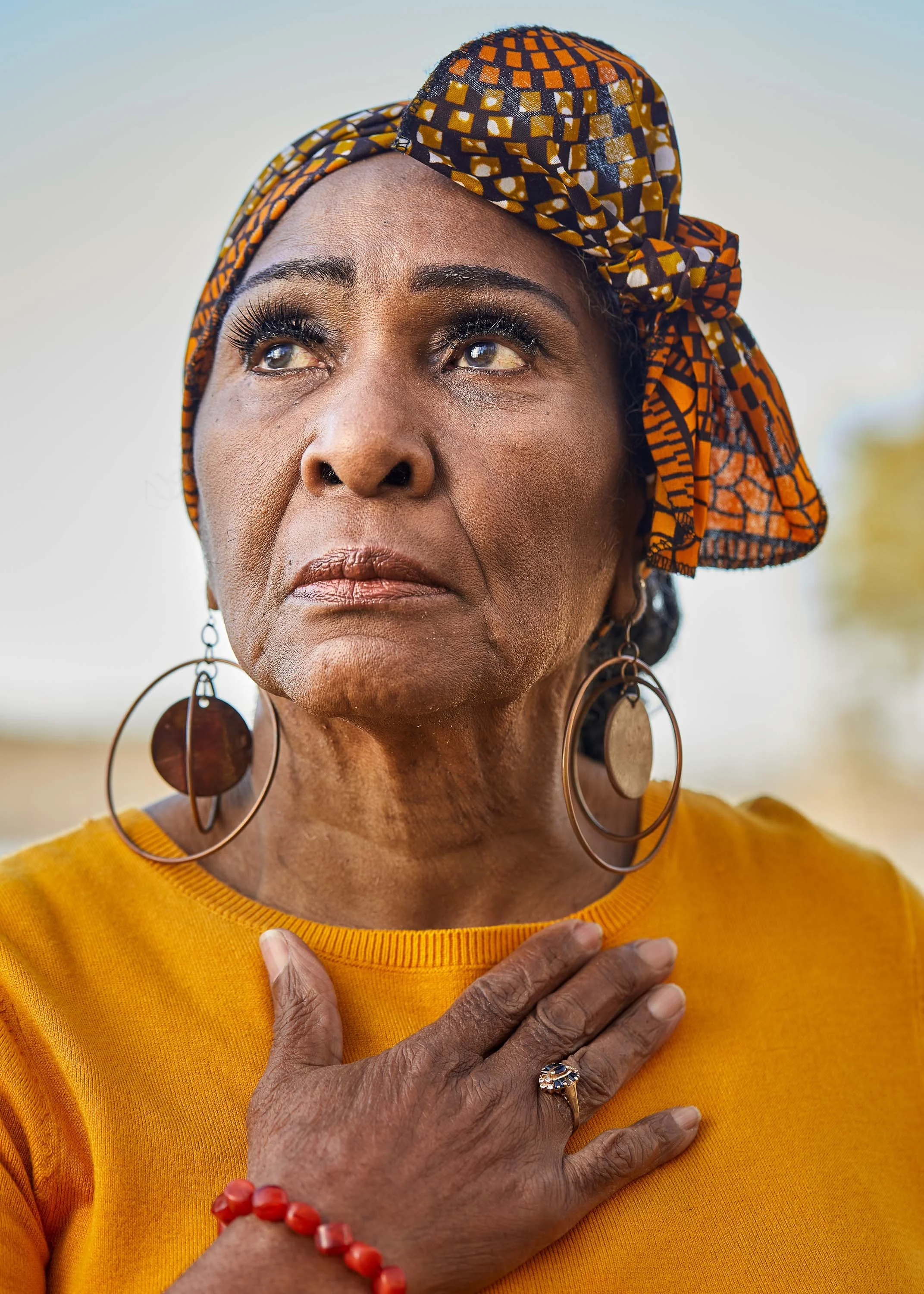
Dollie Burwell, who helped spark the environmental justice movement. Photography by Justin Cook.
This special issue of Peace & Riot focuses on what communities, particularly in the Gulf South, have learned from living through disaster—and how those lessons can shape climate justice and community organizing into the future.
When I reflect on disaster resilience, I think about the role of environmental justice in particular. As the Director of the Center for Environmental and Climate Justice at the NAACP, I have had the incredible opportunity to work with and learn from trailblazers within this movement, and I keep returning to a conversation I had earlier this year with Dollie Burwell.
In 1982, Burwell was one of the critical organizers from her predominantly Black community in Warren County, North Carolina who protested against an EPA-approved proposal to dump hazardous waste in her home. For six weeks, Burwell and other Warren County residents marched and protested. More than 500 were arrested.
Inspired by her experience with both the NAACP and the broader civil rights movements, Burwell worked with her frontline community to create an intersectional movement that centered the people most harmed. In our conversation, Burwell highlighted the importance of not only being willing to take on hard fights, but also finding joy in this work. Even after all that she has done for this movement, she still is encouraged by the work of younger generations.
Dollie Burwell, whose activism sparked the environmental justice movement as we know it today, shows us how communities survive and thrive by standing together. The same spirit that helped her community confront toxic waste decades ago is the same energy driving people-powered disaster recovery today.
“The same spirit that helped her community confront toxic waste decades ago is the same energy driving people-powered disaster recovery today.”
Disaster resilience isn’t just about weathering storms—it’s about organizing, protecting one another, and holding those in power accountable. When we have a President who rolls back emergency management support, and tech companies who support dirty buildouts of data centers, people power is our best option. This is also why the NAACP released the Frontline Framework which are data center guiding principles built on the knowledge of our elders regarding how to show a united front when fighting difficult opponents.
Burwell didn’t stop that first landfill, but her unwavering commitment to the long fight reminds us that resilience is built through persistence, courage, and care for each other. We may not control the pace of climate disasters, but we can invest in hope, community, and shared responsibility—the true foundations of disaster resilience.
Motivated by that mission, the NAACP released the Power in the Storm toolkit in partnership with Counterstream earlier this year. Launched in the wake of the 20th anniversary of Katrina, one of our primary goals with this toolkit is to amplify people-powered solutions for disaster resiliency so that when crisis strikes, communities have a clear plan for recovery.
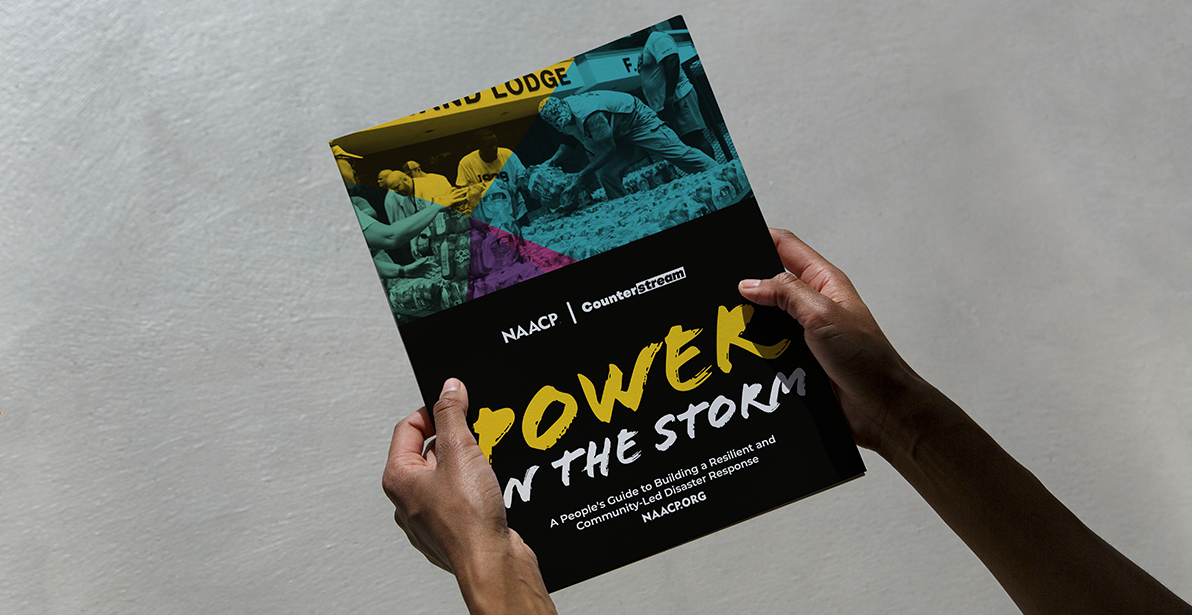
Power in the Storm a disaster relief toolkit made by Counterstream and NAACP.
Disasters such as Hurricane Katrina and the more recent catastrophes in North Carolina expose systemic inequities and reveal government failures. They also illuminate the ways in which frontline communities can come together to take care of one another in the face of both ‘natural’ and manmade forces.
It’s in that spirit that this issue of Peace & Riot explores how people power is a critical part of disaster resilience. From environmental journalist Yessenia Funes’ investigation into hurricane recovery, Counterstream Co-Founder Shilpi Chhotray’s conversation with activist Sharon Lavigne on community organizing, and Heather McTeer Toney’s essay on ark building in the age of climate change, we hope this issue can be a blueprint for helping communities find ‘power in the storm.’
Abre’ Conner
Director of the Center for Environmental and Climate Justice, NAACP
Advisor, Counterstream Media

Abre' Conner, Esq. is the Director of the Center for Environmental and Climate Justice at NAACP and an Advisory Council Member at Counterstream. She oversees the strategy and collaboration across the NAACP to dismantle environmental racism. She has taught Education Law and is currently faculty in the Environmental Policy and Management Program at the University of California-Davis.
Abre' has been named a top 40 under 40 Nation's Best Advocate by the National Bar Association, top 100 leader by Fresno Black Chamber of Commerce, top 40 On the Rise Attorneys by the American Bar Association Young Lawyers Division, Community Champion by Fresno Building Healthy Communities, 40 under 40 alumni by the University of Florida, 40 under 40 Young, Gifted, and Green recipient, and has been featured in the New York Times' The Daily, Essence, Forbes Magazine, American Bar Association Journal, Zeta Phi Beta Sorority Incorporated's National Magazine, The Archon, and Cosmopolitan Magazine.
Peace & Riot is a nonprofit publication and free to read.
We believe access to movement-rooted storytelling should remain open and accessible.
But sustaining this publication requires sustained funding.
If you value independent storytelling that uplifts frontline voices, honors lived experience, and strengthens cultural resistance, please consider supporting our work with a tax-deductible donation.
Your contribution helps sustain the journalists, editors, artists, and storytellers who make this digital zine possible — and ensures Peace & Riot remains a platform for connection, truth, and creative expression.
Support Peace & Riot today.
This issue of Peace & Riot was made possible with support from