
Summer 2026
Restorying Our Relationship to Land Back and Reparations
Reflections from When We Are Kin
Kailea Loften in conversation with Kyle Mays
This story was made in partnership with BLIS Collective.
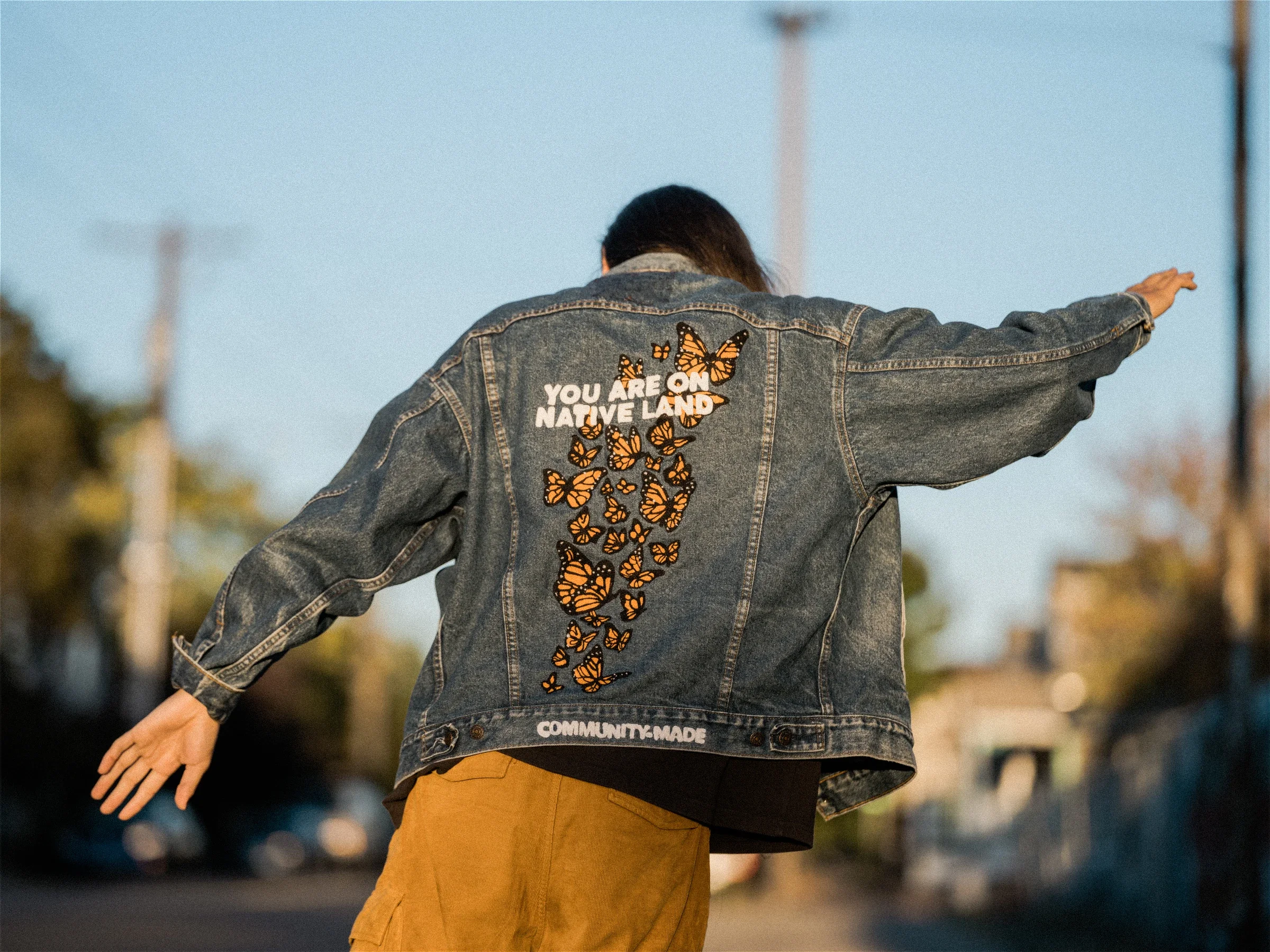
Photography by Josue Rivas.
This story was produced by Counterstream Media and co-published with Nonprofit Quarterly as part of the #WeTheCivic national narrative intervention.
As we reflect on America at 250, restorying our relationship to land is a critical culture shift. Weaving together the Black Reparations Movement and the Indigenous Land Back movement here in the so-called United States is an essential part of healing from the ongoing harms of settler colonialism.
But to do that, we must first take an honest look at the entangled and complicated histories at the heart of America. In this conversation, historian Kyle Mays and community publisher Kailea Loften reflect on some of the core learnings from Mays’ most recent book, When We Are Kin: The History and Future of Afro-Indigenous Solidarity. From a critical examination of the legacy of Black Wall Street to reflections on Mays’ point-by-point manifesto for Black and Indigenous reparatory justice, this conversation asks us to both consider and critique how we understand issues like solidarity, Land Back, and reparations in this current moment.
This conversation has been edited for length and clarity.
Kailea Loften: Our first conversation was in 2021 after AnAfro-Indigenous History of the United States came out. I remember in that initial interview asking you about the role of the historian because something that really struck me—both when I read that book and now that I've finished When We Are Kin—is the way you're consistently in the research, in the digging. So I’m curious to hear: what do you think the role of the historian is at this current moment in time?
Kyle Mays: The role of the historian has changed a lot, even since we first met, because there's so much misinformation about history. A historian’s job is to use their ability to study the past and present it to the public, so that people can understand how we got to where we are, and consider where we might go in the future based on that history.
“I think there needs to be more historians who not only share histories within communities, but who are also committed to justice. Giving a lecture is great, but we have a duty as well to provide young people with the tools to think about the history of the United States as a colonial empire.”
I think there needs to be more historians who not only share histories within communities, but who are also committed to justice. Giving a lecture is great, but we have a duty as well to provide young people with the tools to think about the history of the United States as a colonial empire. This includes giving examples of historical young people like Fred Hampton, a co-founder of the Chicago chapter of the Black Panther Party, who bravely tried to challenge racism and capitalism before the FBI found him too dangerous and, in conjunction with the Chicago PD, murdered him. And for those with PhDs, we need you to engage with various publics through interviews like this one. Whether it's about history, education, culture, current events—we need more people doing that kind of outreach. We need to do more writing. Write about the Indigenous activists from the American Indian Movement who, for example, took over the Bureau of Indian Affairs building in 1972. They had a confrontation with the police, but more importantly, found and snuck out all of these documents which showed the shady practice of colonial mismanagement and land theft! And writing has to combine history with a call for action in the present.
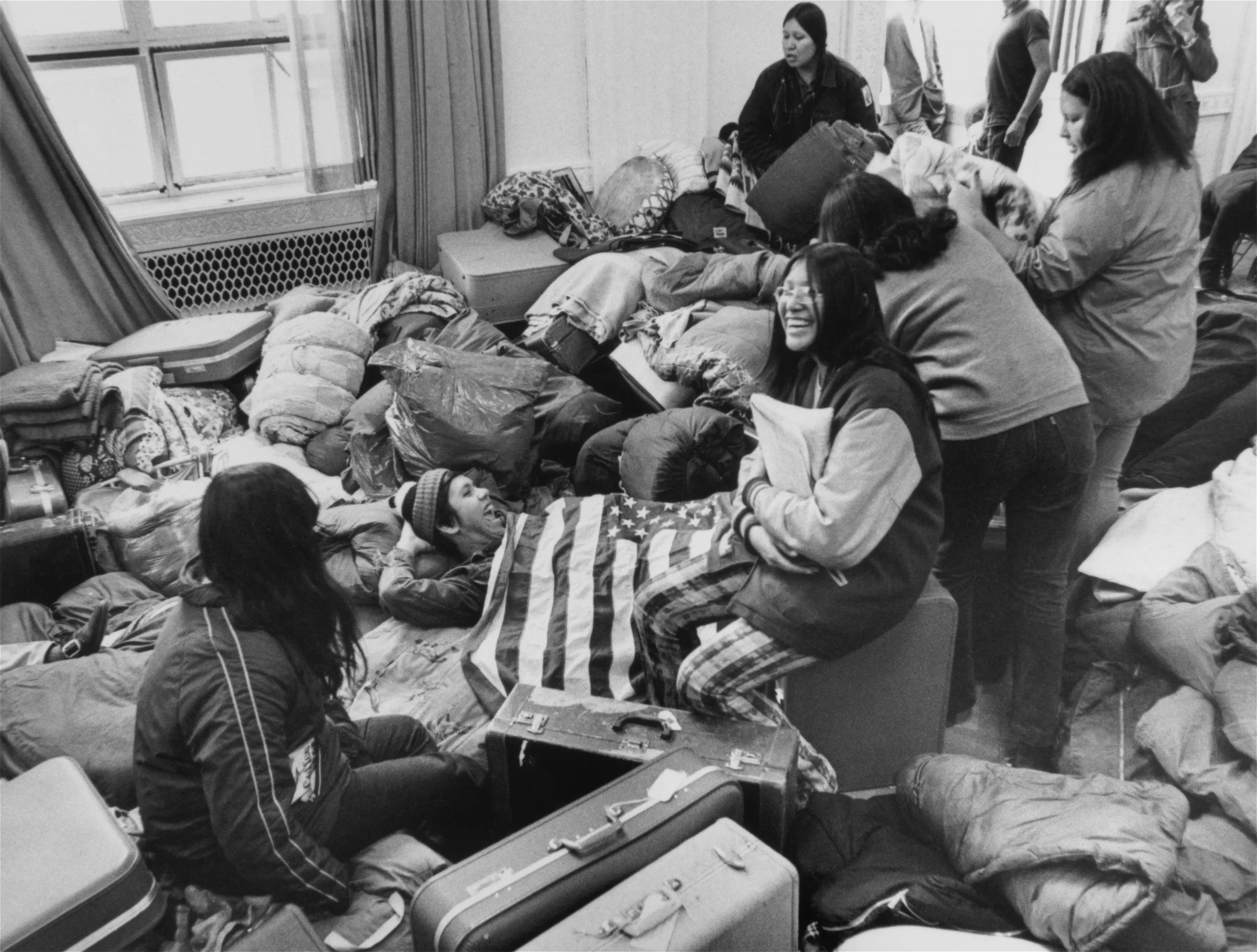
Several hundred Native American activists demanding better treatment of their people, seized the offices of the Bureau of Indian Affairs and negotiated a temporary settlement with the Nixon administration allowing them to spend the night in the offices within the Department of Interior headquarters in Washington, DC, 3rd November 1972. A group of approximately 500 Native American activists with the American Indian Movement (AIM) had taken over the offices of the Bureau of Indian Affairs at the culmination of their cross-country journey in the Trail of Broken Treaties, to bring attention to Native American issues such as living standards and treaty rights. (Photo by Bettmann Archive/Getty Images)
One of the major issues we need to address is that a lot of historians or scholars—especially the younger generation—want to be celebrities and internet famous without actually doing the hard labor it requires to write. For instance, people often ask, why aren't you on social media more or responding to people? And I like the old-school approach of writing a book as a response to something. It's long-form, and that takes way more time and effort.
Kailea Loften: I’m hearing that much of the work is actually about knowing how to sustain a long-form dialogue. Which is so much the work of When We Are Kin. I’d love to know a bit about the origin story behind the project. Where did the title come from? Who were you in conversation with as you decided to move into this project?
Kyle Mays: The framing of When We Are Kin, it's about becoming a good ancestor. Becoming a good ancestor means being in community and accountable to that community. It means kinship. It means breaking bread with people and checking up on people just to see how they are doing. It’s about being able to look back and know you tried to do the best thing possible for yourself and your community, for the next generation.
People are focused on their life here and now and not what's happening 100, 150 years down the line. I understand some of it is an issue of immediate needs. When people's security and basic needs are not met, it’s difficult to dream and think about what it means to be a good ancestor in a way our ancestors did 200 years ago.
In terms of who I am in dialogue with, one thing I love to do is just be a ghost and scour social media. I'm not commenting, posting, or anything—
Kailea Loften: Some people might call that a lurker (laughs).
Kyle Mays: I like to hover a little bit because I want to see which issues are relevant to people I’m not in community with. What are people talking about? And how are they talking about it? I'll also have family or friends send me some screenshots of discourses around Black people who see gaining wealth as a way out of capitalism or FBA (Foundational Black Americans) claiming that they are the original, Indigenous Peoples. And so I'm taking all that data and combining it with historical material I've read or reread.
After I give talks, there are always questions around three things: (1) reparations, (2) Land Back; and (3) solidarity. People always want more solidarity. That's why you have to get historical examples. For example, in the book, I’m thinking about Du Bois and Black Reconstruction. Everyone’s like, I love Black Reconstruction, it's completely fantastic. But what about settler colonialism in the era of Reconstruction? And to me, without understanding that, even saying something like abolition democracy, it doesn't account for the ongoing genocide against Native peoples, even during that time period, from the Civil War, 1861, up until the end of Reconstruction in 1877. There's so much Native history that's intimately tied to the history of Reconstruction that's completely ignored and missed. For instance, during the Civil War, the United States passed the Homestead Act in 1862. So they are actively taking land while Black people are fighting for their freedom! The U.S. was expanding its colonial empire while trying to deal with the freedom of Black people. That’s wild!
And one of my favorite subjects is Black Wall Street, the Greenwood area in Tulsa, Oklahoma, where Black people and their businesses were destroyed in 1921. There was this interview that my colleague, Professor Robin D.G. Kelley, did about Black Wall Street in 2020. And it's a simple point, but it completely changed my perspective because everyone thinks it's Black Capitalist Utopia, but just a basic cursory analysis would say, wait a minute, most Black people were not wealthy in Black Wall Street. And why would we want a utopia like that when most of the Black people, poor people, vulnerable people did not benefit from that wealth generated? It’s one of my favorite subjects because people love to talk about it as an ideal situation for Black people today, but again, it didn’t benefit ALL Black people, and it doesn’t account at all for the fact that this Black capitalist utopia was built on Indigenous land.
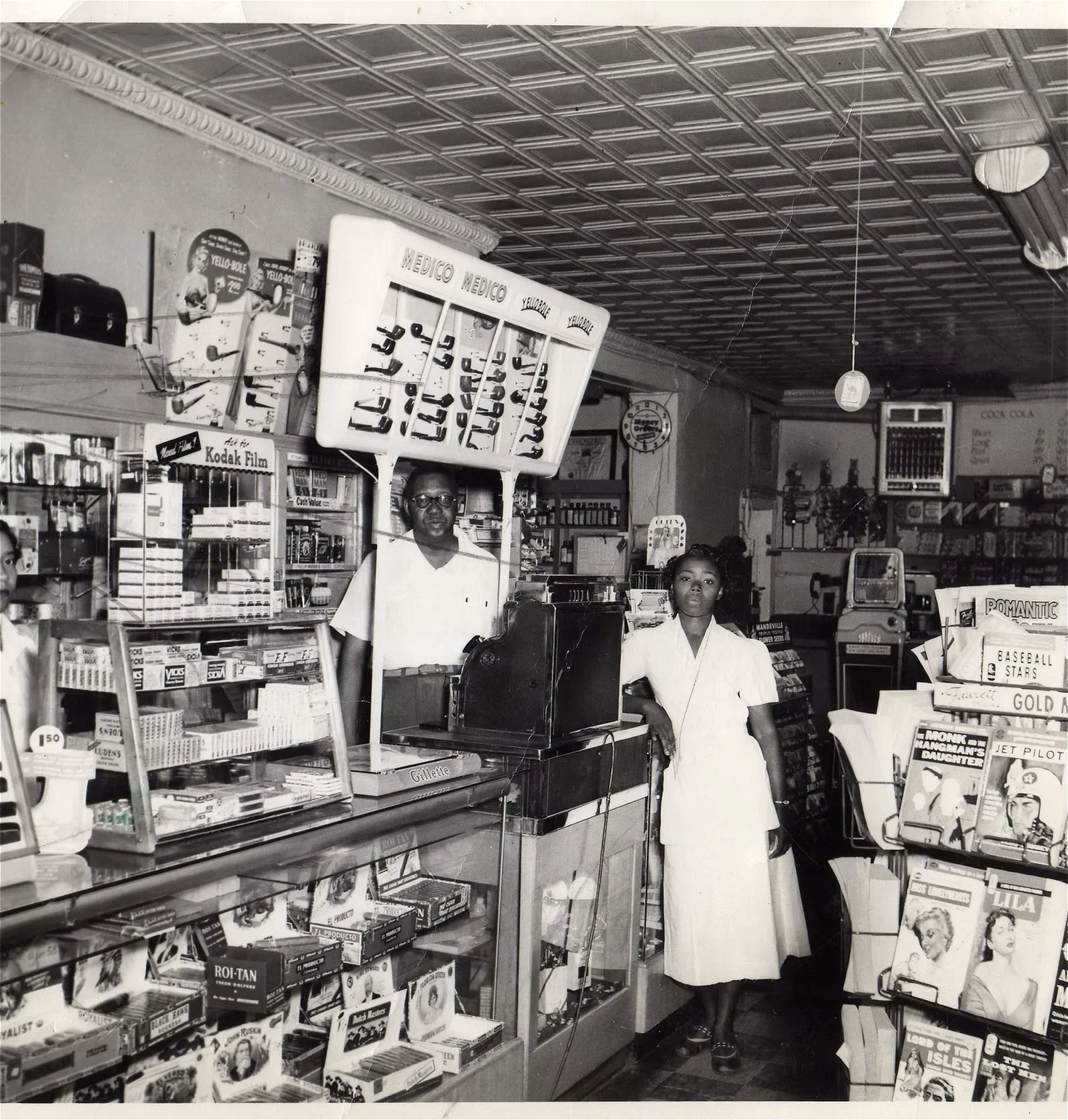
The People’s Drugstore was located in a three-story building on the northwest corner of Greenwood and Archer. Photo courtesy of Greenwood Cultural Center.
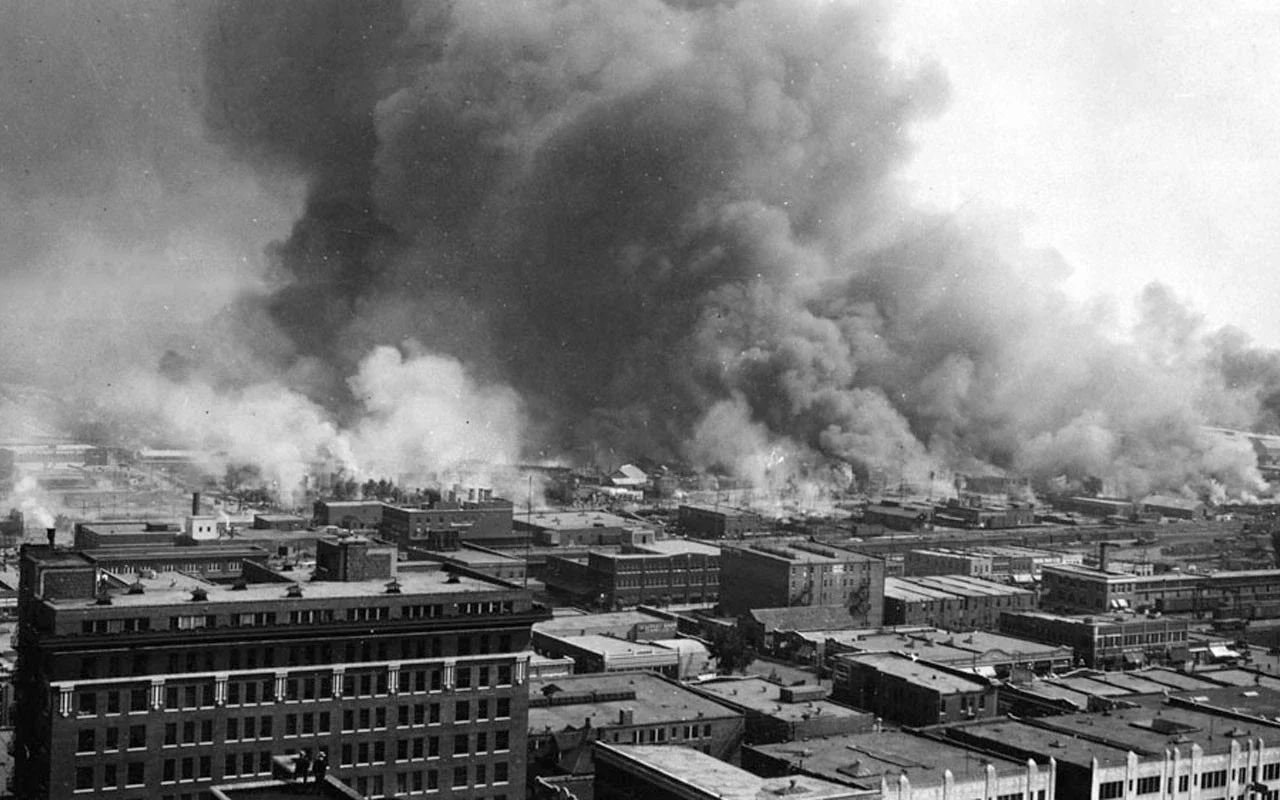
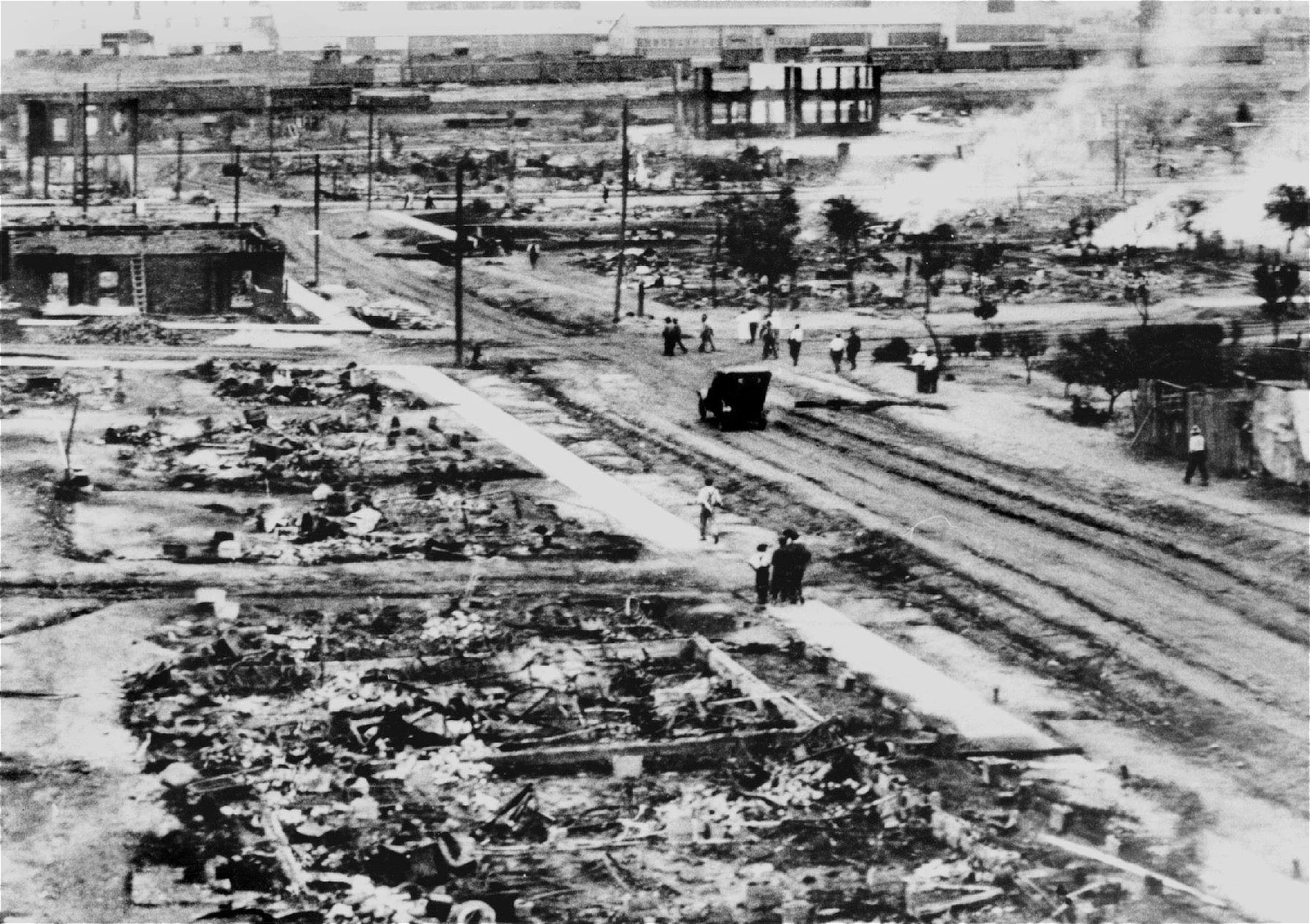
Aftermath of the Tulsa race massacre, June 1, 1921.
Kailea Loften: We can't say it's a utopia because it perpetuates so much of the harm that’s foundational to this country. A few people get to ascend and continue to build wealth, power, and resources, while the majority continue to struggle.
“The idea of Black Wall Street as a utopia is not one we should strive for. We can do better than that.”
Kyle Mays: And that analysis missing from the discourse is so frustrating to me. When people argue for Black Wall Street, it’s like why? It didn't work for everyone. Most people were poor or working poor, and even the insurance payments mostly benefited a handful of wealthy people who already had money and were able to get some buyouts, which was a travesty. The idea of Black Wall Street as a utopia is not one we should strive for. We can do better than that.
Kailea Loften: I appreciated the book because we are in this moment—especially with the BLIS Collective, of which you are a member—where we are really exploring how we weave together the Black Reparations Movement and the Indigenous Land Back movement here in the so-called United States.
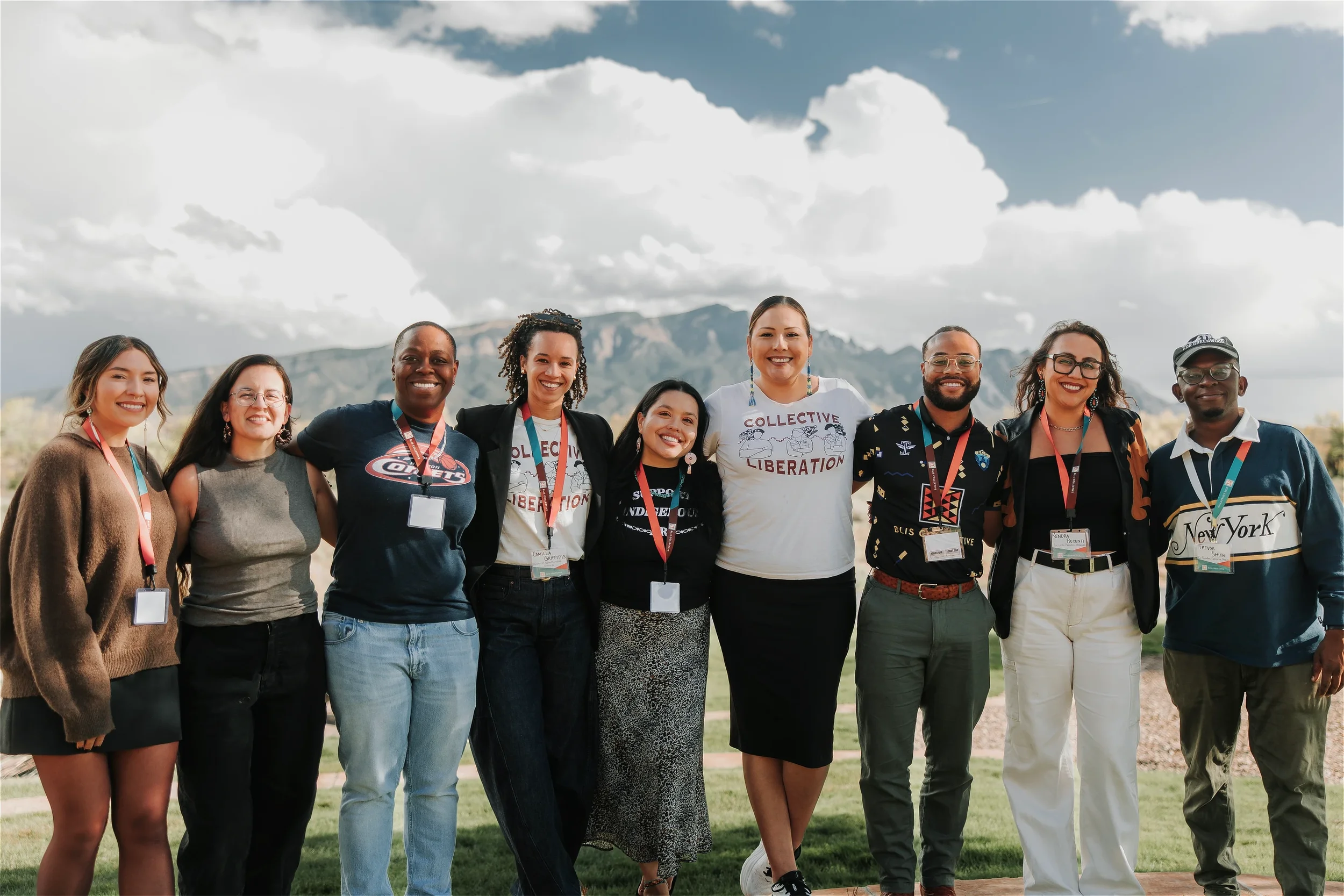
BLIS Collective team gathered at the Grounded in Solidarity Retreat. Photography by Wes Cunningham.
Kailea Loften: And if we were to be honest about the ways that our histories have played out, there isn't actually room for a Black Wall Street in that future if we're serious about addressing oppression.
Have you talked to any of your family about this? How does it sit with them? What are some of their thoughts?
Kyle Mays: My older brother is reading the book now, and he'll call me daily, like, well, I don't know if I agree with this or that. We specifically argue about cash payments and returning land. While I think the most vulnerable deserve some form of assistance with cash to get food, clothing, housing, and healthcare, whatever they need to address their basic needs, cash payments don’t address the biggest elephant in the room: capitalism.
Now Land Back is important, but my issue with that is sometimes Indigenous Peoples seem to suggest that colonial entities are going to give land back out of the kindness of their heart. Or they don’t want to consider that we have to figure out how to live here together. To me, Tribal sovereignty would figure out how to include Black people on their land, which is something I discuss in When We Are Kin. But we argue all the time.
“...until you critique capitalism, racial capitalism and settler colonialism, I’m going to hold the line that cash reparations are not fundamentally going to change the lives of Black people and especially the most vulnerable people. And if you want reparations to be this capitalist pipe dream, so you can get this version of the American dream, then I want no part of that reparations plan. And I’m going to continue to hold that line.”
I've been receiving pushback on ideas—because I like to test ideas out on various crowds while I'm writing. I was giving this talk, and there was an older Black gentleman I could tell was seething the entire time I'm talking. So he picks up the mic during the Q&A, and he is like How dare you say that Black people are not owed reparations and cash payments. I just was like, well, until you critique capitalism, racial capitalism and settler colonialism, I'm going to hold the line that cash reparations are not fundamentally going to change the lives of Black people and especially the most vulnerable people. And if you want reparations to be this capitalist pipe dream, so you can get this version of the American dream, then I want no part of that reparations plan. And I'm going to continue to hold that line.
Kailea Loften: It makes me think of the global impact that wealth concentration and hoarding by the average American has had globally. The planet and the global majority cannot take it anymore. We've been taught to dream the wrong dream.
Kyle Mays: That’s the point of the U.S. empire that I think sometimes Black folks, and even Native peoples in the U.S., forget. Are we oppressed here? Yes, we are. But you are also not getting bombed right now. The U.S. empire exploits other countries in the Global South, and we all benefit from it here in America.
A great example of this was people debating whether or not to vote for Kamala Harris. On the one hand, we should vote. However, we have to think of how voting for someone who will be the head of the U.S. empire will impact other people around the world. We have a responsibility to critique the U.S. empire abroad and how it impacts all of those who are oppressed around the world.
Kailea Loften: I live in Canada right now, and Canada, of course, is complicit and a part of so much harm globally, but I've also been considering what it means to be an American. I respect our drive for creativity and innovation that I think many of us hold. But I've also been thinking about entitlement and the way that Americans, as a “global superpower” with military might, hold entitlement as a central value. Our vision of success is limited because of our entitlement to convenience and comfort which relies on continual imperialism.
We’re also both Afro-Indigenous. You have Indigenous ancestry to what is called the United States; I'm First Nations to what is called Canada. As we both know, many Tribal governments are inherently conservative because they are imposed governments. What this can translate to is our governments investing in harmful, extractive industries as part of our economic development plans.
“It’s hard to talk about because you’re not supposed to throw your people under the bus. But how are we going to muddle our way out of it if we’re not honest about what’s happening?”
When we are considering Black reparations and the way that people want to immediately default to Wall Street, I see the mirror when it comes to our Tribal Nations: it's the same calculus. In my case, one of my Nations is deeply invested in mining. Peoples’ hearts and minds are confused and sick with capitalism. Relatives of mine have said things like, we were given this land by Creator so we could develop it. I'm sitting over here thinking, we’re perpetuating continual land dispossession and harm to our own people. It’s hard to talk about because you’re not supposed to throw your people under the bus. But how are we going to muddle our way out of it if we're not honest about what's happening?
Kyle Mays: Honesty, exactly. I think today, if we're being honest, Tribal sovereignty and notions of Indigenous sovereignty are often, at least in the U.S., and Canada, just neoliberalism. It's focused on individual enterprise and building up big businesses.
The focus on development and getting more capital wealth—what does that do for us? What kind of harm does that cause within our communities? Because you can gain wealth, but that can lead to exploiting vulnerable people in the community. For example, there was a documentary that came out two years ago that makes the connection between tribally-owned casinos and disenrollment within Tribal Nations. Tribes were using the facade of Tribal sovereignty to reproduce colonial economies and outcomes, such as disenrolling people as part of wealth hoarding.
When I explain sovereignty to students, I say there's big sovereignty, and little sovereignty. Big sovereignty is the U.S. or Canadian government. They can pretty much do whatever they want. And then there's little sovereignty, and I like to call it little neoliberal sovereignty for a lot of Indigenous Nations, because they are focused on enterprise, and they see their destiny as tied up with the United States or Canada. They’re masking it with phrases from the treaties—we have treaty rights, we've been here since time immemorial—but what does that get us? In other words, if your focus is on Tribal sovereignty and only your community, it doesn’t solve the broader issues because our oppressions are intimately linked, whether it’s a data center stealing water or a company trying to build a pipeline. We all need clean water.
This is why one of the best examples of solidarity in recent memory was the resistance at Standing Rock, where, in 2016, Indigenous and non-Indigenous alike, including members of the Black Lives Matter chapter in Minneapolis, showed up in solidarity. Why? Because this is the land we all must live on together!
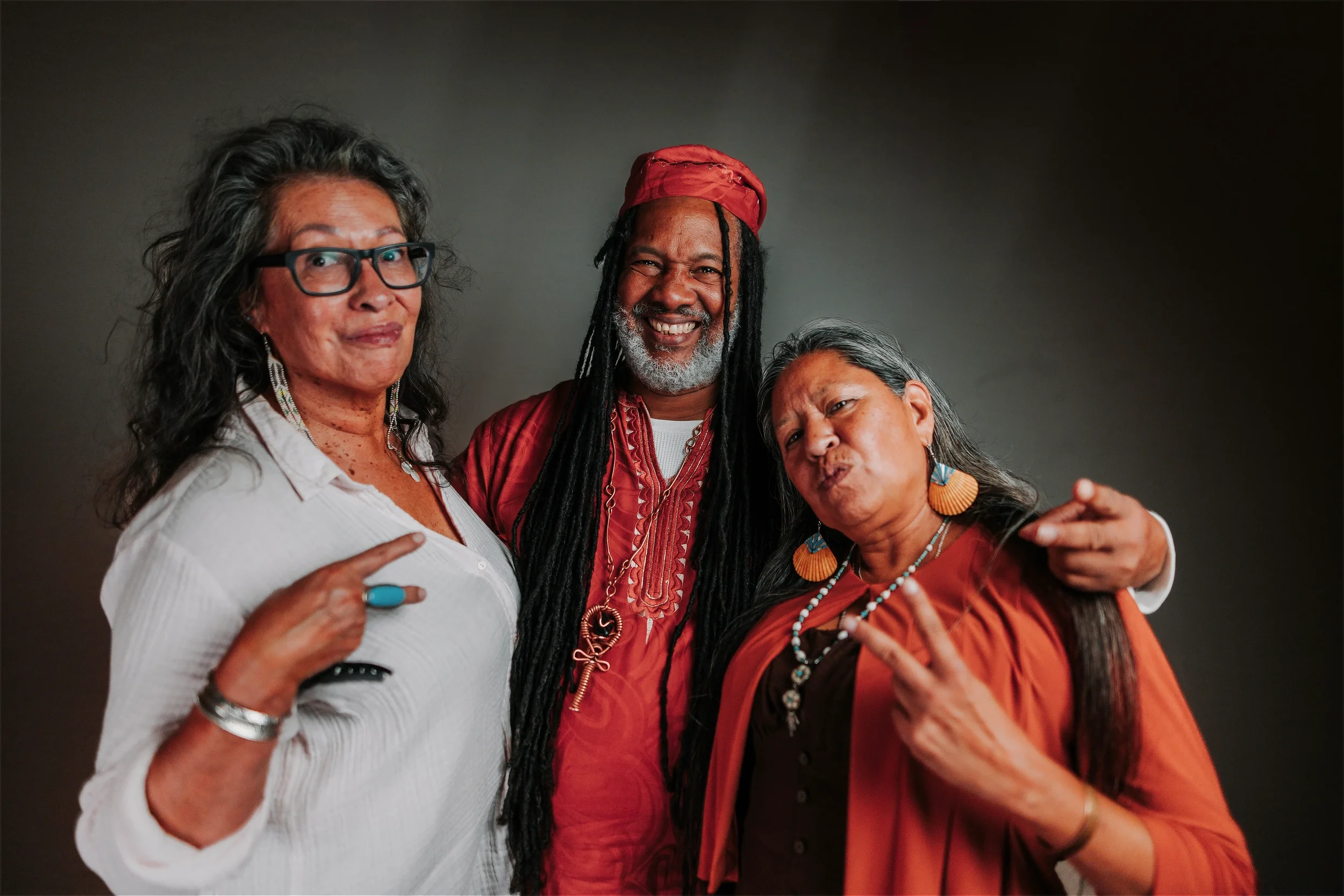
Judith LeBlanc (Native Organizers Alliance), Jumoke Ifetayo (First Repair), and Lucille R. Contreras (Texas Tribal Buffalo Project). Photography by Wes Cunningham.
Kailea Loften: At the start of the book, you explicitly say that no two oppressed groups are natural allies, and that line really stood out to me. I understand it from an embodied and familial experience, but I think you're so right to point that out because there is a natural assumption that oppressed people would trend towards solidarity. But when it comes to Black and Indigenous peoples in the U.S., that's really not the case. Can you speak more to why it is that our natural inclination isn’t to reach towards each other and say, let me help you up? What is that about?
“Kwame Ture when he would explicitly say this is Native people’s land and they have to be centered because of that, which means, and I think in a legitimate sense, they have to come first and you have to engage with them. On the other hand, I think Indigenous Nations need to do a better job of reaching out to Black people—and this is just an example—who live near their sovereign or historical homelands.”
Kyle Mays: When I was writing that, I was thinking of the phrase, when Black people and Black women are free, all people are free. And I'm like, well, does that account for colonialism? I'm not saying it doesn't, but I'm certainly not saying it is either. I think that's a conversation people begin to have, which is why I really appreciate, and have always appreciated, Kwame Ture when he would explicitly say this is Native people's land and they have to be centered because of that, which means, and I think in a legitimate sense, they have to come first and you have to engage with them. On the other hand, I think Indigenous Nations need to do a better job of reaching out to Black people—and this is just an example—who live near their sovereign or historical homelands.
So kinship and solidarity, I think, has been difficult to come by because, as you mentioned earlier, people are so caught up in this notion of the American dream. They want some sense of security. A nice house, a nice car, their kids to be fed and have a good education, so they can be comfortable. But at what cost does that comfort come about?
What happens when four million formerly enslaved people all of a sudden find freedom, and the United States asks them to join in as settlers? How do they understand citizenship? By toiling the land, owning land, and voting; that's kind of how they understood it. Was colonialism a part of the conversation? No, not really. Except for those who engaged with Indigenous Peoples, or lived amongst Indigenous Peoples and were enslaved or at least connected. There were exceptions, of course, but ever since then, people are trying to figure out how to create belonging in the nation-state while being comfortable and finding security. But again, how does that security come about? It's not divorced from the U.S. empire at all.
Kailea Loften: It continues to be a question about how we navigate the fear of the idea of the other. And how is it that we learn how to recognize each other as kin.
We’re both dedicated to this idea of a future where we're able to practice familial ways of being with each other. You know, that deep acceptance, that desire of wanting to raise each other up, of wanting to work together. I'm thinking about the in-between steps as well and I think one of them is somehow being able to recognize real humanity in other people on a level that makes you feel like I want to make sure that this person is protected, fed, and cared for. And as I'm speaking out loud, I'm also considering how I think so many of us, as mothers, feel that way when we think about children out in the world. You hear a child call out Mom! or you see a kid having a hard time, and you don't question if you’re going to respond. You're not going to ask, is this child worth my time? Is this child worth saving? You're just thinking that’s a child, like my child. We struggle, I think, to see each other as sacred.
Kyle Mays: I like that. It reminded me of going camping last summer in Northern Michigan. I got invited by the folks from Color Out Here to go camping for a few days. And before I responded, I went, in my head, hell no, I'm not doing that. I'm a city boy. Shout out to living off the land, but I'm not doing it. But they told me they have everything I would need. So I said, all right, you know what? Ball on top, let's go.
I don't remember the last time I went camping, but it was a great experience. People I don't know had to help me put up my tent. It was a good time not to be on your cell phone. We would have communal meals with people, and it was just a fantastic moment of engagement. And then you become more vulnerable because you wanna look out for people. Someone was telling me about these little raspberries, and then I was like, look, look at this little raspberry. I went to grab this berry, not knowing it was poisonous, and someone grabbed my hand. She was like Boy, what are you doing? That's learning from the land, and you have to physically trust people. I wish everyone could go camping once a year, or even a couple of times a year. Just hang out on the land and chill, because then you realize you do have to be connected with people. It was very humbling to have to rely on people I didn't necessarily know full well.
Kailea Loften: We're at a moment where we do need to figure out how we collectively restory our relationship to land. Recently, I talked to a woman, and she was sharing how for her, land acquisition as a Black woman is about trying to ensure that the land does not continue to harm our people.
During that interaction, I was considering how many of us have experienced so much pain from how it is that we had to be on the land, such that I think for some of us, there's this idea that you acquire land not only as a way to build power, but also as a way to protect oneself from having to continue to engage with it in a way that is harmful.
I think the book is balanced in that you create space to consider and critique both the Black Reparations movement and the Indigenous Land Back movement. At the end of the book, you include a point-by-point manifesto for Black and Indigenous reparatory justice. And of course, as you offer in the book, these are just a few ideas for people to consider contextualizing to their own life. But I'd be curious to know: did you consult anyone as you were putting together that manifesto, and are there any points you feel you might want to illuminate in particular?
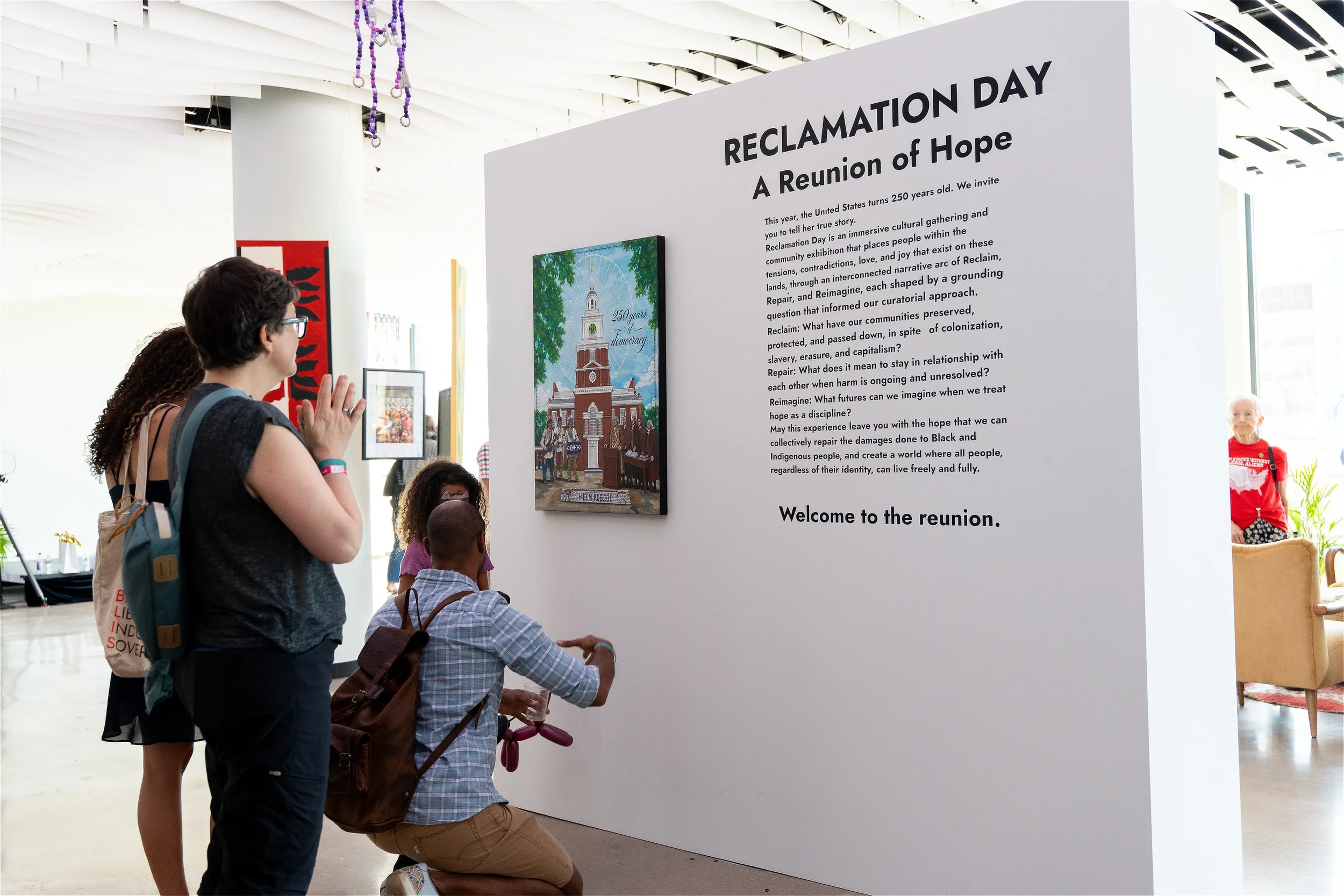
Attendees at BLIS Collective's Reclamation Day: A Reunion of Hope 2026. Photography by Lornabell.
Kyle Mays: I was trained to argue and develop ideas with my academic kin. Shout out to Dr. Geneva Smitherman aka Dr. G. She would always ask questions, and I'd be so frustrated because she's pressing for more and more, but it helps you develop ideas. As I was writing the manifesto for Black and Indigenous reparatory justice, I was inspired by Bruce Lee's concept of Jeet Kune Do. You learn approaches, you learn movements, but the key thing I always appreciated about his martial arts philosophy was that it has to adapt to your own body. The way one person does a kick doesn't necessarily mean you have to do it that way. You have to figure out what works for you. And that's why, with these points, you have to figure out what works for you and your particular scenario.
Kailea Loften: There are two points in particular that I love. The first is Point 2: Return the wealth. Redefine the wealth. The US would not have become an empire without exploiting people and stealing land.
And the last one is Point 17: Undo the borders of our minds and geographies. It makes me think about when I worked at the NDN Collective. During that time, they were working to develop and redistribute the Collective Abundance Fund. This team spent an entire year doing outreach with the community in order to create a community-sourced definition of wealth. And this definition was then used to guide how the fund should operate.
“I continue to recommend that people take the time to define for themselves what true wealth is. So when we are thinking about undoing the borders of our minds and geographies as part of reparatory justice, we know what we value and what we are moving towards.”
When they finally shared their definition with all of us staff, one of my biggest takeaways was that money was just considered one tool for moving towards more time with family, more time to be in practice, more opportunity to ensure that our people are housed and fed.
I continue to recommend that people take the time to define for themselves what true wealth is. So when we are thinking about undoing the borders of our minds and geographies as part of reparatory justice, we know what we value and what we are moving towards.
I appreciate that you end the book there. I like that you give people some tangible ideas for how Black and Indigenous reparatory justice can live in the world.
Kyle Mays: It’s meant for people to build upon, however they see to it. I wrote that thinking of the Black Panther Party’s Ten-Point Program, where they advocate for, among many things, land, bread, and housing, and an end to capitalist exploitation—all things I consider basic human rights. But I also like listing ideas so that people can add to them. Maybe they don’t work for every context, but it’s a reminder that our theories, or how we imagine something might work, must be done in practice.
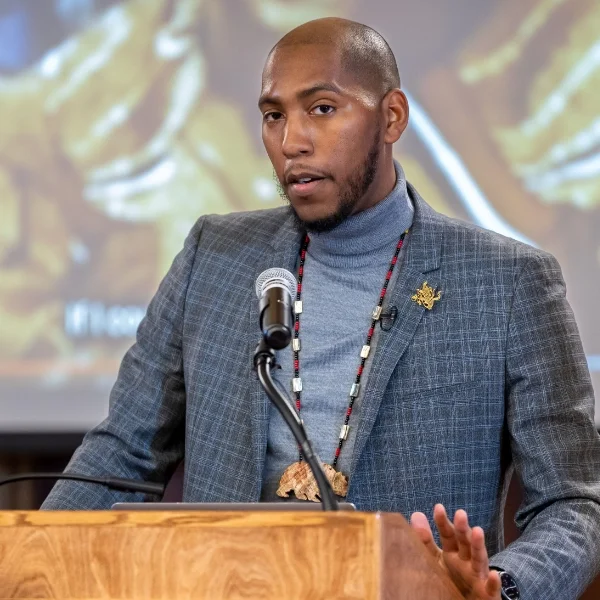
Kyle T. Mays (he/him) is an Afro-Indigenous (Saginaw Chippewa) writer and scholar of Afro-Indigenous history, urban studies, and contemporary popular culture. He is a Professor of African American Studies, American Indian Studies, and History at UCLA and chair of the Department of African American Studies. He is the author of five books including When We Are Kin: The History and Future of Afro-Indigenous Solidarity (Haymarket, 2026).
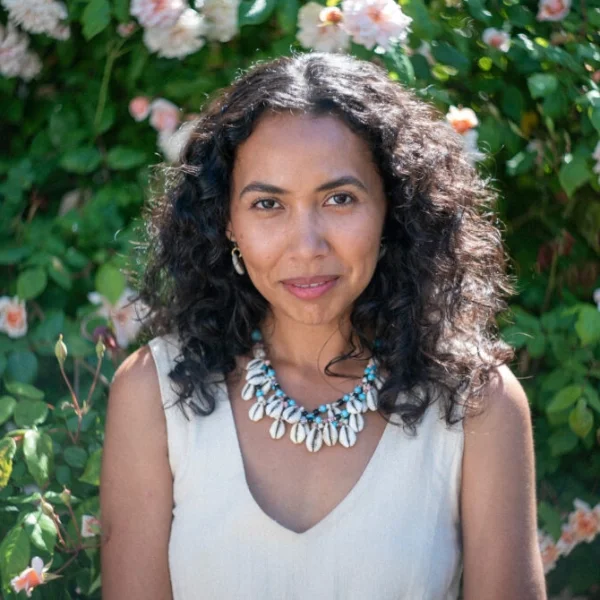
Kailea Loften is a mother of Tahltan, Kaska, and Black American ancestry. She is coeditor for the community publisher Loam and coauthor of the book, Compassion in Crisis: Building Disaster Resilient Communities. She has guided climate change policy with an emphasis on Indigenous rights, previously serving as a Climate Commissioner for the City of Petaluma, California. You can contact her through kailealoften.com.
Storytelling that challenges America’s colonial roots
Peace & Riot brings you stories from the frontlines.
From the activists who pioneered the modern environmental justice movement, to the Indigenous organizers defending their sacred lands, to the agricultural laborers fighting for dignity—we’re a home for the people and movements that have always pushed this country closer to its ideals.
Keep our work alive with a donation of any size.