
SUMMER 2026
Seeking Sanctuary in America
Immigrants find new ways to survive in a hotter, more hostile America
By Julia Luz Betancourt
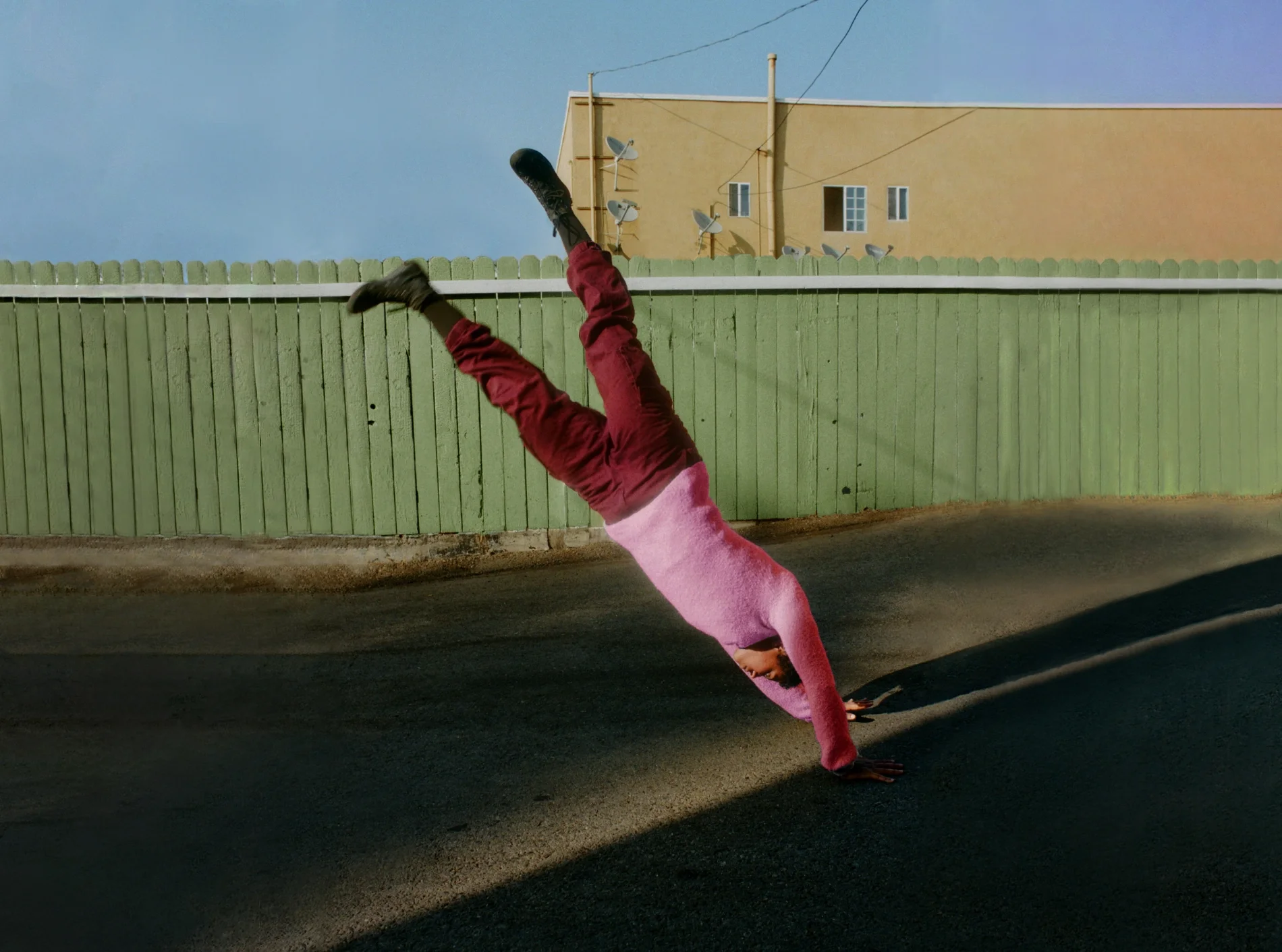
Los Angeles, 2020. Arielle Bobb-Willis. This issue’s photographs were chosen for their artistry, human perspective, and emotional depth. While AI can try to mimic and steal their appearance, it cannot replicate lived experience, intuition, or the human truths that make them meaningful. Learn more about this issue’s featured photographer here.
In 2017, Cinthya Santos Briones witnessed up close what it took for immigrants to avoid deportation in Trump’s America. During a presidency marked by a surge in infamously cruel ICE arrests, deportations, and family separations, she spent days escorting immigrants to court appointments and volunteering at legal clinics in different areas of the country.
Even before then, Santos Briones knew migrating to the United States could result in danger upon arrival. She and her family left Mexico to live in the U.S., where she watched her loved ones navigate life while undocumented. Yet, as an ethnohistorian, she was determined to document how others like them managed to survive. So when she wasn’t at the courts or clinics, she photographed the people who hid away in churches, temples, and faith spaces, learning to stay put in a country that tried relentlessly to send them away.
Living in Sanctuary, her photojournalism series, showcased immigrants who sought refuge in places of worship, which are not required to enforce immigration laws. Taken together, the photos illuminate some of the everyday actions these communities took in resistance to the first Trump administration’s ruthless immigration policies.
“Living there meant inhabiting a prolonged waiting: days marked by fear of a raid, but also by simple routines—cooking, praying, celebrating birthdays—that insisted on life as a political act,” Santos Briones wrote in a summary of the series. “In the face of intensified criminalization, faith-based movements persist—sometimes less visibly—sustaining their communities through accompaniment, protection, and discreet networks of care.”
Reflecting on the project almost a decade later, she tells me the photographs also challenge the romanticization of America as a sanctuary.
“Even though the idea of sanctuary sounds beautiful, [migrants] spent two years, one year, or four years inside of churches without going outside, because they were at risk of being deported or kidnapped by ICE,” she said. “At the same time that it was a sanctuary for them, it was more like a church arrest.”
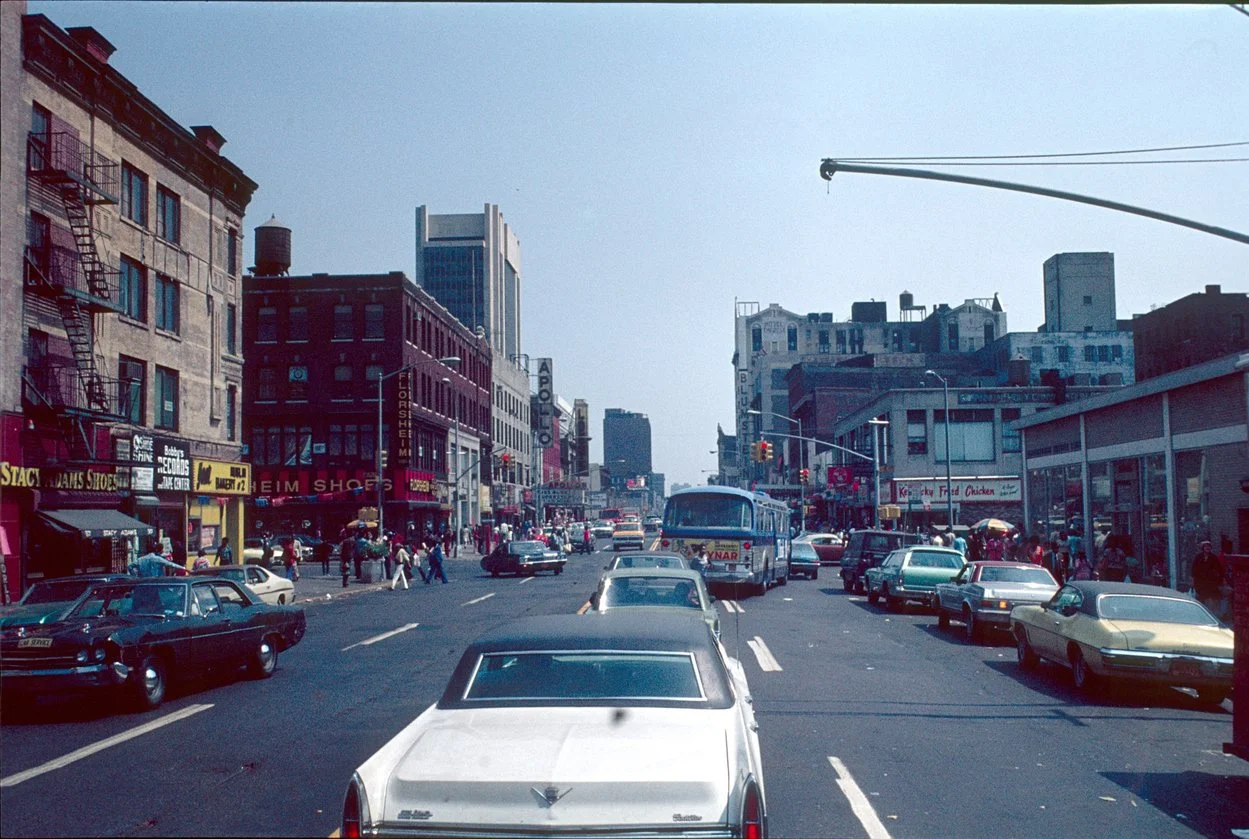
New York, NY. April 28, 1976. District of Harlem. Lively street scene at the intersection of Dr. Martin Luther King Jr. Blvd. and Frederick Douglass Blvd.
For centuries, the U.S. has considered itself a sanctuary for people of the world, promising them a chance at “the American dream.” The words “give me your tired, your poor, your huddled masses yearning to breathe free” remain etched on the Statue of Liberty. In reality, the so-called land of the free has disproportionately targeted non-white migrants for deportation throughout history. And now, it is shutting its borders to most refugees.
The Supreme Court greenlit the end of Temporary Protected Status in June, leaving hundreds of thousands of Haitian and Syrian refugees fleeing war and natural disasters at risk of deportation. More broadly, people forced from home due to climate change face even tighter restrictions on gaining entry into the U.S.
These deliberate policy decisions are just the latest in a long line of racially exclusive immigration laws and codes. But while U.S. rules around citizenship and legal status are arbitrary, they are becoming more punitive, sentencing both people and the planet to a cycle of devastation.
Since the start of Trump’s second term, agencies have increased their use of AI technology to locate immigrants and store their personal data, driving up demand for data centers and the mining of Indigenous territories.
Natural river flows in the Rio Grande are under threat as the federal government constructs thousands of miles of industrial-grade buoys with the intent of making the river impossible to swim across. Meanwhile, the Trump administration is overcrowding detention centers, building new facilities on fragile ecosystems like Florida’s Everglades, and operating and reopening others in toxic areas.
As deportations surge, the climate consequences of expelling hundreds of thousands of people will inevitably be felt by communities far beyond the U.S. and its borders.
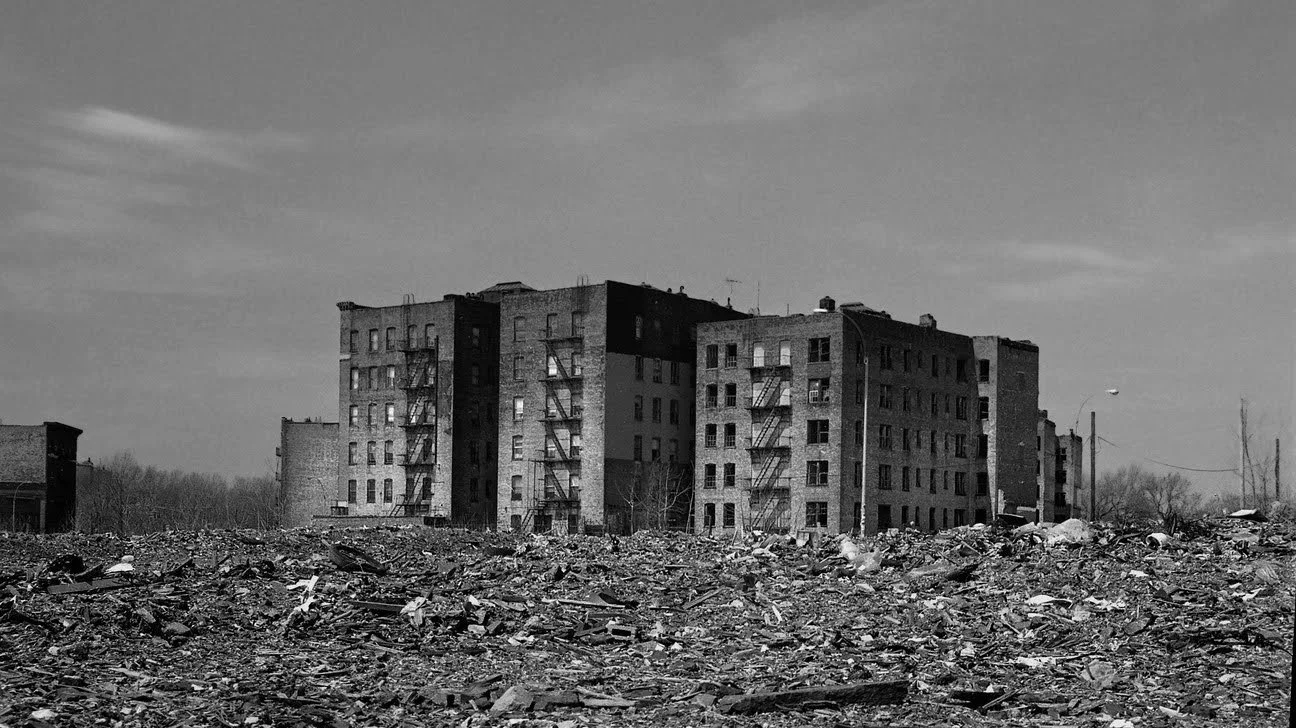
A building surrounded by rubble in the South Bronx during the 1970s, an era of disinvestment—when landlord abandonment, arson, redlining, and the construction of the Cross Bronx Expressway displaced residents and accelerated neighborhood decline.
The U.S. was already one of the largest emitters of greenhouse gases before Trump’s second term. Then ICE administered more than 20,000 deportation flights between January 2025 and April 2026, spiking the agency’s carbon emissions by 88% from the year before and releasing an estimated 370,240 tons into the atmosphere.
But Santos Briones sees another side to the immigration story, one focused on community and healing rather than policing and pain. It’s a story that lives in their relationships to plants.
Healing by and for the People
“Healing plays a huge role in our society and in our community,” Santos Briones said. “Our plants have immigrated with us. Like epazote from Mexico. Like rosemary, or cilantro. They are not native to America, but they were brought through different periods of colonization.”
In 2019, Santos Briones created Herbolario Migrante, or Migrant Herbalism, a community workshop and traveling art series that circulates traditional knowledge of Afro-Indigenous herbal medicines from Latin America and the Caribbean around New York City.
The project’s purpose is to recover how herbs, plants, minerals, seeds, and barks are used for healing in displaced Indigenous immigrant communities. For a one-to-two-month period, immigrants share stories about the herbal remedies passed down in their families and record these remedies through photographs, textiles, poems, and more, preserving them in what Santos Briones calls a “collective archive.”
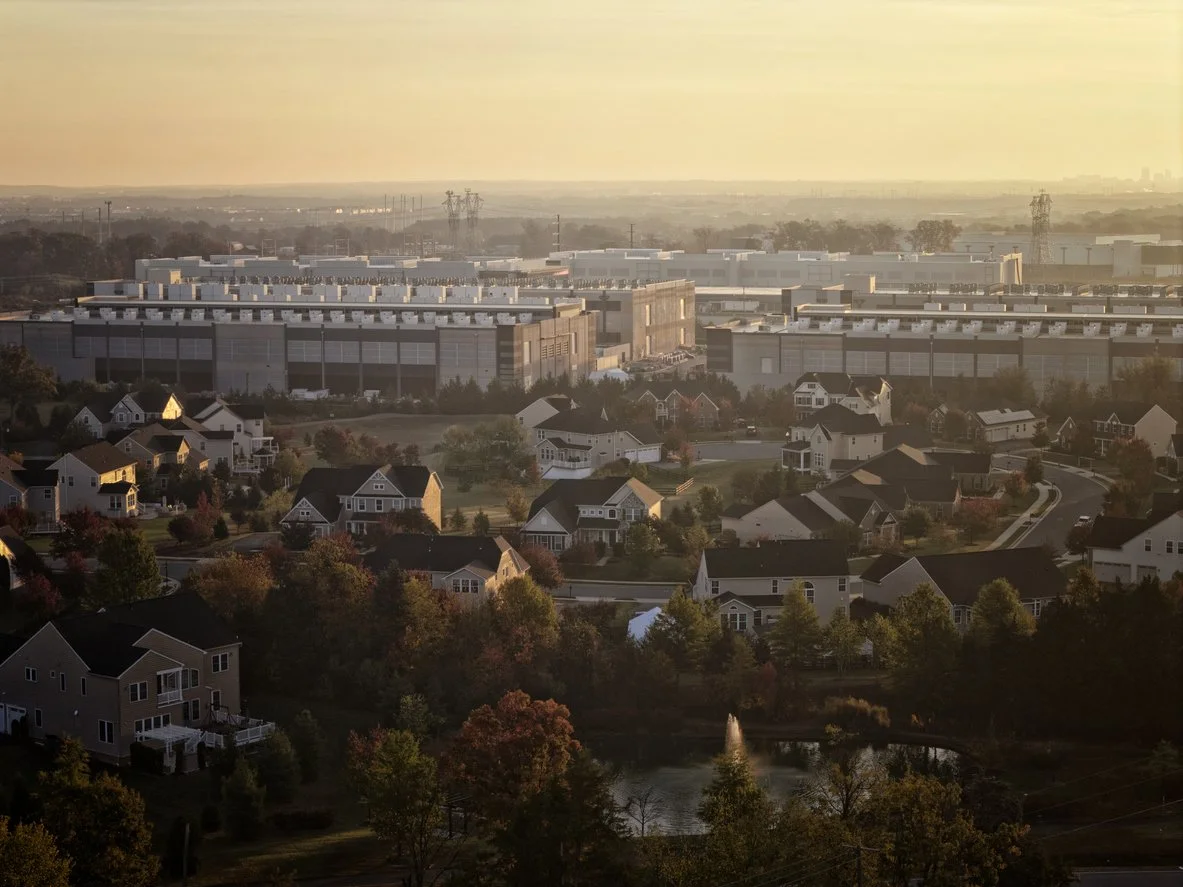
An Amazon Web Services data center looms over a residential neighborhood in Northern Virginia. Northern Virginia has the largest concentration of data centers in the world, often called “Data Center Alley.”
“This is, for me, participatory ethnography—how I am going to research [and] include the voices of the community in my project. It’s not just about me, only. It’s also about what the people think,” she said. “In anthropology, we include their testimonies, even though we don’t call them collaborators. They are our subject. It’s really colonial vocabulary.”
The majority of participants at Santos Briones’s workshops are working-class, immigrant women. With her support, they learn embroidery and create cyanotypes (prints made by laying herbs on a piece of paper coated with solution before leaving it out in the sun, and without using a camera). By the end of the workshop, the group produces a catalog of plants that include written stories and recipes detailing their use, which is then exhibited at a local museum.
“It’s important that the women see the result. It’s important to take them away from [their own] community and to other neighborhoods in the city, other spaces that they usually think are not for them,” said Santos Briones. “They need to reclaim these spaces, like museums and galleries, in a civic intervention.”
“We [immigrants] are not just a force in this country. We are not just our labor,” she added. “We bring knowledge, and Migrant Herbalism speaks to that.”

Hundreds of Prince George’s County residents rallied against the proposed data center in Landover, MD on Sept 11, 2025. Photo courtesy of Party for Socialism and Liberation - DC.
For Santos Briones, a descendant of the Nahua Tribe, preserving this cultural knowledge is personal. Her family left their small town of Pueblo in the 1980s and ‘90s for a chance at life in the U.S. She worked for ten years at the National Institute of Anthropology and History, researching in the region where her paternal family is from in La Huasteca, Mexico.
Studying in Indigenous communities as an anthropologist taught her about herbs, shamans, and other kinds of healers whose traditions live on in today’s immigrant generations—and whose care work provides a safety net as enforcement and healthcare barriers make life in the U.S. more precarious.
In Sonoma County, California, for example, a nonprofit mobile herb clinic known as the Botanical Bus is bringing culturally-centered, collaborative healthcare services to Latine and Indigenous immigrant communities. Aiming to radicalize the care system, the clinic runs four main programs: an apothecary, wellness workshops, Healing Harvest, and Promotoras. The programs are designed to meet people’s health needs with traditional ecological knowledge. They are guided by a team of Latine and Indigenous community health workers—all of whom are immigrants or the daughters of immigrants—who provide trusted, culturally relevant health services to their own community.
“These are a lot of displaced Indigenous peoples who have a really strong relationship to Earth, plant medicine, and community care networks, and thrive in those community care settings,” said Jocelyn Boreta, who co-founded the clinic in 2019. “That is where healing justice exists in these moments, because these care networks are thriving and people are feeling nourished, as if they belong to the Earth, wherever they choose to be.”
Boreta, a licensed herbalist who is of Nahua heritage and the granddaughter of an Indigenous farmworker, launched the organization alongside a group of Latine women to blend care and community organizing. The clinic’s fully-functioning herbal apothecary carries more than 100 dried herbs—including culturally appropriate herbs such as manzanilla and lemon balm—and is run by a lead clinical practitioner and a team of nine clinical apprentices, who each identify as Latine Indigenous herbalists and are in the process of developing their own culturally-centered clinical practices.
In 2025, the Botanical Bus served 1,314 people from cities throughout Sonoma, Marin, and Napa counties and provided 2,500 health services. But Boreta emphasized that while the Botanical Bus seeks to break barriers to healing (98% of clients in 2025 reported that they felt supported, connected, seen, heard, respected, and understood), its goal is not to completely replace primary care. Rather, it hopes to expand access to primary care and uproot deep injustices in the healthcare system.
“There’s a real health disparity in the Latine and Indigenous immigrant communities,” said Boreta. “There is healing justice in Latine and Indigenous immigrant people having the power to find their own path to healing. That path is about access and agency…and being able to overcome some of those barriers is a form of activism.”

Hundreds of Prince George’s County residents rallied against the proposed data center in Landover, MD on Sept 11, 2025. Photo courtesy of Party for Socialism and Liberation - DC.
According to research conducted by the Botanical Bus, one third of their clients screen positive for anxiety or depression, more than half live in households affected by type-2 diabetes, and 83% face barriers to accessing primary care, 70% of whom identify financial barriers as the reason why they delay or forgo treatment altogether.
“Some of the top areas are fear of costs, difficulty navigating the medical system, of care not being offered in their language, and not feeling like they belong to care systems or that they can find themselves within the care that is being recommended,” Boreta added.
The data mirrors the healthcare gaps seen nationally, where immigration status can overwhelmingly determine health outcomes. A 2025 study by KFF and the New York Times found that almost half of likely undocumented immigrant adults and one in five immigrant adults with legal status reported lacking insurance.
After Trump rescinded a Biden-era policy intended to prevent ICE agents from entering protected areas like hospitals, doctor’s offices, and community health clinics, accessing critical healthcare services is becoming more dangerous for immigrants, who can be at risk of detention and deportation for simply seeking out basic survival needs.
But the Botanical Bus is showing that it is possible for immigrant communities to take charge of their health—even as the immigration system works against them. The mobile apothecary regularly travels to vineyard worksites and family service centers to support both immigrant farmworkers and their communities.
A growing network of health providers including federally qualified health centers are working in collaboration with the clinic to create “care hubs” where immigrant communities can receive wraparound services such as herbalism, nutrition, massage, acupuncture, foot care, art therapy, mindfulness, community circles, and shared meals in addition to primary care.
The Botanical Bus Wellness Workshops, available online and at family service centers, spread Indigenous knowledge of herbal medicine by exchanging remedies and recipes. Their program, Healing Harvest, works with local farmers to grow and source herbs and plants from nearby communities.
Boreta says these programs have the power to not only transcend brutal border regimes, but also to uplift the healing abilities that immigrant communities carry.
“Across cultures, food and plants have a really strong power to connect us to a sense of place, even somatically,” she said. “In a time where border regimes are dictating belonging, we get to go back to our relationships, to plant medicine, to food that we enjoy with our loved ones, and we get to reclaim that belonging.”
Planting With Dignity
But the relationships that immigrants can have with plants are not always healing. For the majority-immigrant workers who anchor the U.S. plant nursery industry, abusive and exploitative working conditions have left them fighting for survival in a hotter, more hostile America.
The U.S. plant nursery industry is a multi-billion dollar enterprise. It boomed during the COVID-19 pandemic when an increasing number of consumers sought to beautify their homes and improve their mental health while staying indoors. But hidden behind the leaves and petals is a human rights crisis claiming the lives and health of immigrant workers in Florida.
“There are largely low-wage immigrant workers doing the work in the unregulated U.S. South…for poverty wages, in dangerous working conditions, and being exposed to systemic labor abuses like sexual harassment, toxic pesticides, and extreme heat,” said Oscar Londoño, Co-Executive Director at WeCount!, a human rights organization led by and fighting for immigrant workers in Florida. “What people also don’t know is how important Florida is to that national store.”
Florida produces nearly 70% of the nation’s indoor foliage, making it the “national epicenter” of the industry, according to WeCount!’s report, The Human Cost of Houseplants. At the same time, the state remains a focal point of the dangers of U.S. labor exploitation as climate change intensifies. Florida leads the entire country in heat-related hospitalizations. Plant nursery workers, alongside construction workers and farmers, are on the frontlines of this deadly dilemma.
Of the plant nursery workers WeCount! surveyed for its report, 86% reported accidents or illness on the job, including from heat stress and pesticide exposure. More than one third reported having no access to water at work—and 62% of those who did receive water said it was too dirty and unsanitary to drink.
Londoño, who is the son of immigrant parents from Colombia and Honduras, ties the lack of labor protections for Florida’s immigrant plant nursery workers back to the South’s history of racial exclusion.
“It was agricultural workers in the 1930s who were excluded from core labor rights because they were Black workers, and because of the connection of agriculture to an entire regime backed by slavery,” said Londoño. “And so the labor force has changed. More migration has come in. Agriculture in the South is now primarily done by immigrant workers with irregular immigration statuses.”
Agricultural and domestic workers are excluded from the 1935 National Labor Relations Act, forcing them to do without the foundational labor protections many workers are able to enjoy today, such as the right to organize, form a union, and collectively bargain.
To fill the gaps, WeCount!’s 2021 ¡Que Calor! campaign was on the verge of making history in passing the first-ever comprehensive local heat standard that year. Industry groups lobbied to halt it—and in July of 2024, House Bill 433 went into effect, banning local governments from enforcing heat standards.
Londoño says the lobbying groups responsible for the block hold ties to big agriculture, big construction, and one of the largest producers of ornamental houseplants in the world, Costa Farms.
ICE arrests in Florida are also among the highest in the country since Trump’s return. As a result, immigrant workers who are organizing for better wages and working conditions in the state grapple with a heightened threat of deportation, detention, and harassment, in addition to rising heat.
But WeCount! is working to transform those conditions by building a grassroots, bottom-up movement driven by immigrant workers. On Feb. 14, 2026, the organization launched Planting Justice, a statewide campaign to unite the power of workers and consumers to change the way the houseplant business operates.

Hundreds of Prince George’s County residents rallied against the proposed data center in Landover, MD on Sept 11, 2025. Photo courtesy of Party for Socialism and Liberation - DC.
In many ways, Planting Justice was inspired by the Fair Food Program, organized by the Coalition of Immokalee Workers in 2011, which transformed labor conditions in the tomato industry. Following in the coalition’s footsteps, WeCount! is fighting for plant nursery workers to not only merely have a say in their working conditions, but also to develop the standards nurseries should adopt to keep workers safe and protected while on the job.
This labor organizing model is known as worker-driven social responsibility, a counter to corporate social responsibility, which Londoño says treats sustainability as a narrow obligation that doesn’t encompass the workers themselves.
“Worker-driven social responsibility says if we’re going to develop standards that are going to help transform labor and human rights within a company or within a supply chain, workers have to be the ones who develop the standards, educate other workers on those standards, and play a key role in enforcing those standards,” he said. “Oftentimes we hear the narrative of, ‘Who will do the work if there are no immigrants?’ We actually have to ask ourselves, ‘What was the work that we allowed immigrants to do?’”
As part of the campaign, WeCount! has developed a code of conduct alongside hundreds of plant nursery workers that provides a comprehensive list of the health and safety standards and fair wages workers are owed, such as an industry-wide heat illness prevention protocol, the right to paid time off, independent audits, and more.
The vision of the campaign is to win legally binding agreements between WeCount! and the corporate retailers who dominate the plant nursery industry, like Lowe’s, Home Depot, IKEA, and Walmart—which do business with Costa Farms—among others. If companies agree to adopt the code of conduct, they are required to do business only with nurseries that are in compliance with the standards the workers created.
“Ultimately, while [nurseries] feel invincible in a state like Florida or in the U.S. South because of lack of political will, regulations, and labor laws, it’s these multi-billion dollar companies at the top that are their main customers,” Londoño said. “If millions of consumers say, ‘We want you to take action on the supply chain. We want you to guarantee to us that the plant we bought in your store is free of labor abuse and exploitation,’ companies at the top have to respond.”
Challenging corporate norms may sound unpromising, but the Fair Food Program is a testament to what workers can win when they act together. Today, 90% of Florida’s tomato fields are part of the program, and farms all along the East Coast, as well as in Nebraska, Colorado, Wisconsin, and Minnesota are participating.
Londoño believes that, if Planting Justice is successful in Florida, it could lift up the standards for plant nursery workers nationwide, so that no nursery worker anywhere in the country experiences labor abuse or exploitation.
“If we want more plants or more greenery, if we want better food and better vegetables, if we want skyscrapers and cities to be built, we have to care that the workers who are doing that have what they need to live safe and dignified lives,” he said. “With the level of dignity to say, ‘You are a protagonist, not just in defining what the problem is, but in shaping and fighting for the solution.’”
As the U.S. moves through what may turn out to be its hottest summer on record, the season of America’s 250th is waning. The White House’s own July 4 celebrations were delayed due to extreme heat, and a massive smoke cloud is rummaging through the U.S. at the time of this writing. It is a stark reminder that climate change has no borders.
And while the Trump administration may go to extremes to police its own people, it is stories like Santos Briones’s, Boreta’s, and Londoño’s that reveal the truth about this nation’s immigrant communities. The fight for their lives is a fight for the planet.
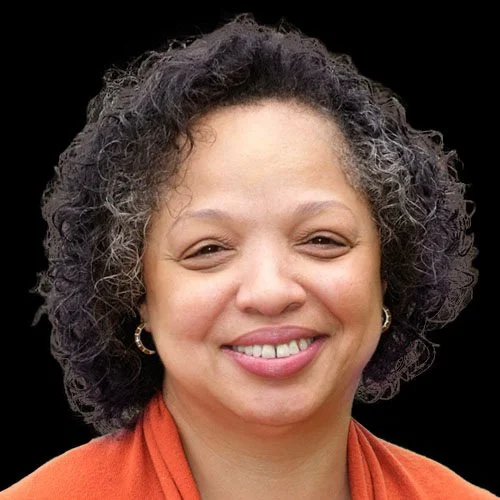
Julia Luz Betancourt is the assistant editor at Counterstream Media and an investigative reporter. She covers how communities organize against abuses of power. Her work has been published by Prism, BreakThrough News, YES! Magazine, Truthout, and more.
Peace & Riot is made by real people — not AI.
Journalists, photographers, editors, and contributors doing original reporting from the frontlines.
That work is under threat. Newsrooms are shrinking. AI is training itself on what journalists have already built, and replacing it with something hollow.
Independent, human storytelling is being squeezed from every direction. If you value work built on lived experience, not stolen data — help keep it alive.
Donate to power more issues like this one.