
SUMMER 2026
The Long Arc of Movement Making
A conversation on the democratic principles of the Environmental Justice Movement with three movement pioneers
Cameron Oglesby, the Environmental Justice Oral History Project, in conversation with Dollie Burwell, Charles Lee, and Rev. Dr. Benjamin F. Chavis, Jr.
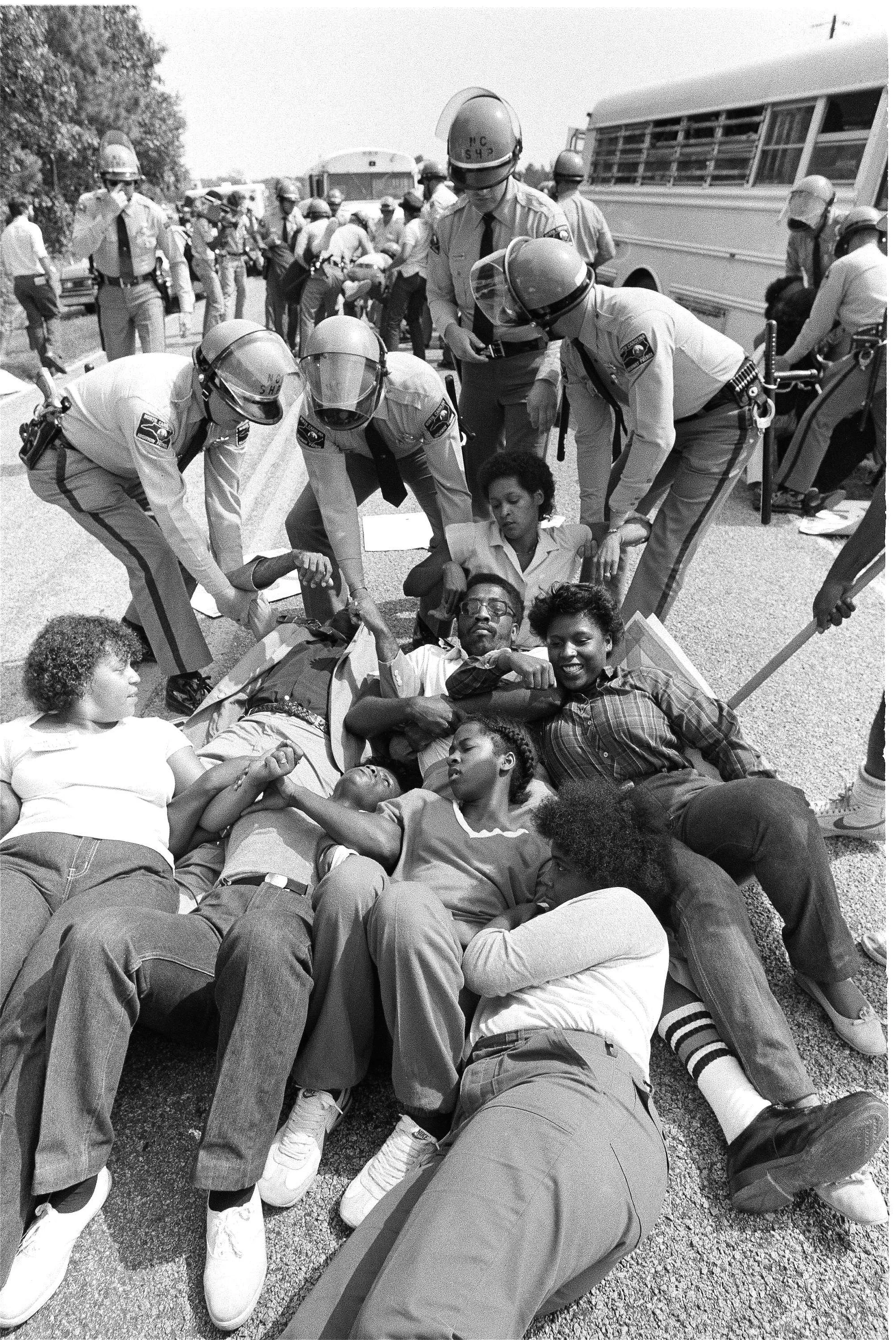
North Carolina State Troopers pick up protestors on the road to the Warren County Landfill in Afton, North Carolina, Friday, September 17, 1982. (AP Photo/Steve Helber)
In September of 1982, a two-lane road in Warren County, North Carolina filled with bodies. Men, women, and children lay down in front of dump trucks carrying soil laced with toxic chemicals, knowing the trucks might not stop for them and the state troopers sent that day were there to clear the road rather than protect anyone on it. Over five hundred people were arrested over the course of six weeks. The landfill got built anyway. By most measures, that should have been the end of the story. Instead, Warren County was the catalyst that sparked a national—and eventually international—conversation surrounding systemic environmental harm.
Dollie Burwell, Charles Lee, and Rev. Dr. Benjamin Chavis, Jr. were each present for different founding moments of the Environmental Justice Movement. This piece traces the lessons they’ve learned as movement leaders on the interplay between environmental justice, social justice, and American democracy. In each of their tellings, offered independently of one another, one claim reverberates: environmental justice and democracy are not independent. Voting, representation, and narrative serve as persistent movement mechanisms regardless of place or time.
The story of Warren County, North Carolina’s ascension as a shining example of the interplay of democratic and environmental organizing does not actually start in 1982 with the PCB protests that launched the Environmental Justice Movement. It began four years earlier with the now (grand)mother of the movement, Dollie Burwell, and her friend Hattie Rudd, going door to door registering Black voters in a county that was majority Black and had never, in its history, elected a representative government. Before she galvanized her small community around a basic understanding of their inherent right to clean water, soil, and self-determination, Burwell built her foundations in the organizing traditions of the Civil Rights Movement of the 1960s and 70s. She was raised in a segregated school system, marred by false “school choice” policies designed to circumvent the Brown v. Board of Education ruling in the U.S. South; she was accustomed to receiving the torn, outdated, and marked-up hand-me-downs of white schools. Guided at every turn by faith in hers and her community’s worthiness in the face of cumulative harms, she turned to the power of electoral politics as a strategy for change. By the time the state announced it would site a PCB landfill in Warren County, Burwell and Rudd had already registered thousands of new voters, their actions establishing critical infrastructure for the next few years of movement-building.
The Power of Civic Protest: Dollie Burwell & Warren County
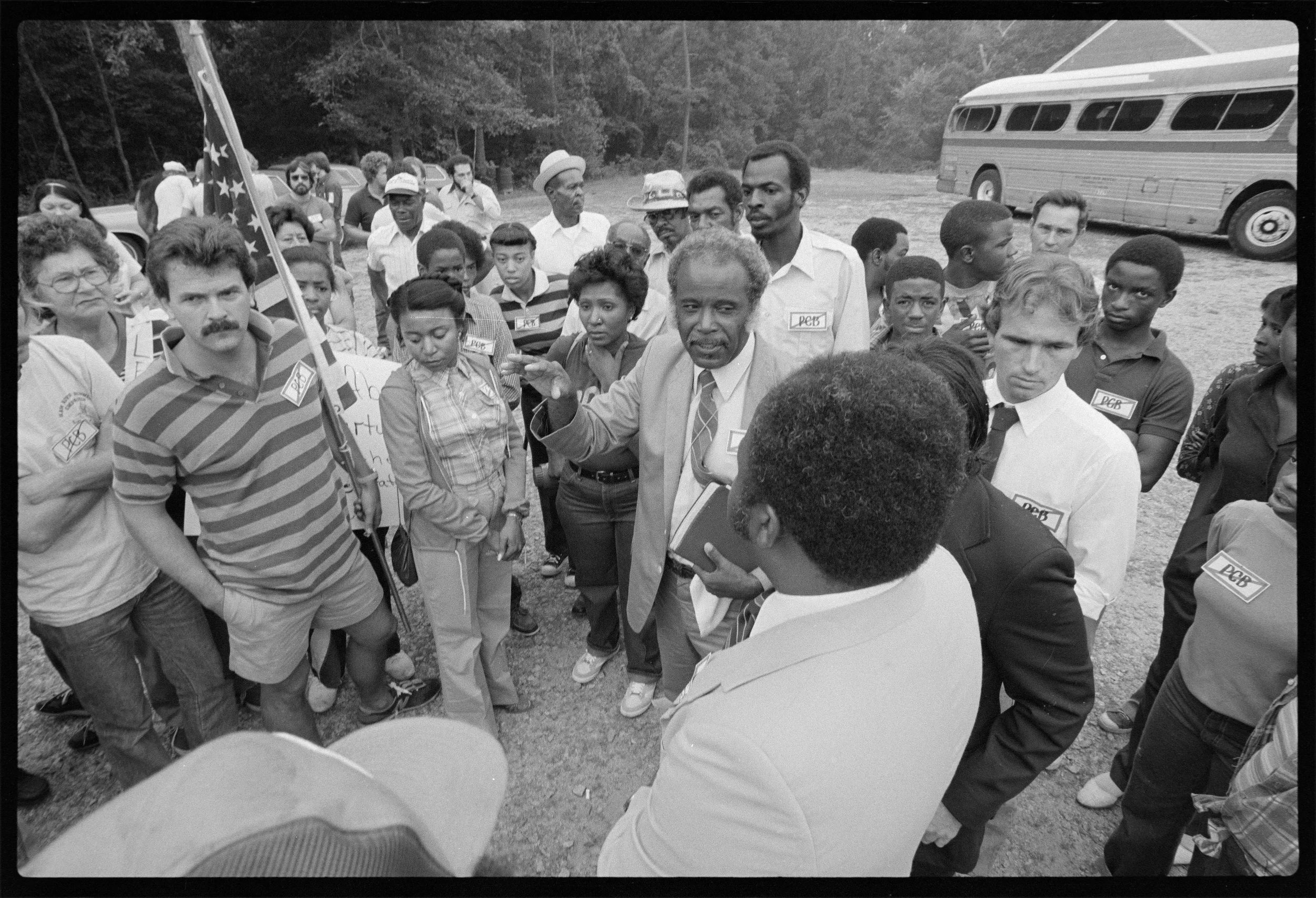
Dollie Burwell (center, holding her hand against her neck) gathering with others to protest in Warren County, NC, 1982. Credit: The Jerome Friar Photographic Collection and Related Materials, Wilson Library, UNC-Chapel Hill, used with permission.
Burwell remembers the day she learned Warren County had been chosen to host the state’s new toxic dump as “a very emotional time.” Her first response was not resolve but despair. “I was very disappointed, and almost in the sense of feeling hopeless,” she said. What ultimately moved her forward was a calling beyond herself, the voice of her ancestors telling her she already had what she needed—the church relationships, the board seats, and the years spent organizing—to fight this new threat just as she’d been pushing against the tide of institutional racism all her life.
The imagery from the PCB protests, though visually iconic, represents a very small portion of the unglamorous daily activities that characterized the success of Warren County. Most days were consumed by crafting flyers and writing letters to public officials from a sympathetic attorney’s office; facilitating community meetings and educational sessions at Coley Springs Baptist Church; and sharing information via landline telephone and word of mouth because that was what it meant to organize before the age of social media. And underneath the five hundred people who eventually laid their bodies in the road in front of potentially hostile waste truck drivers, was a second, uncredited labor force: people making coffee, watching children while people got arrested, praying, and placing yet more phone calls. For Burwell, organizing work of all kinds is grounded in the labor and heart of the community, “Big Mama.” “Big Mama didn’t come to meetings, but Big Mama knew everything that was going on,” Burwell said. When young organizers today ask her how to build that kind of network, Burwell explains that although the tools have changed, the practice hasn’t: “Your generation may have to go from Big Mama to TikTok, but Big Mama still works,” she said.
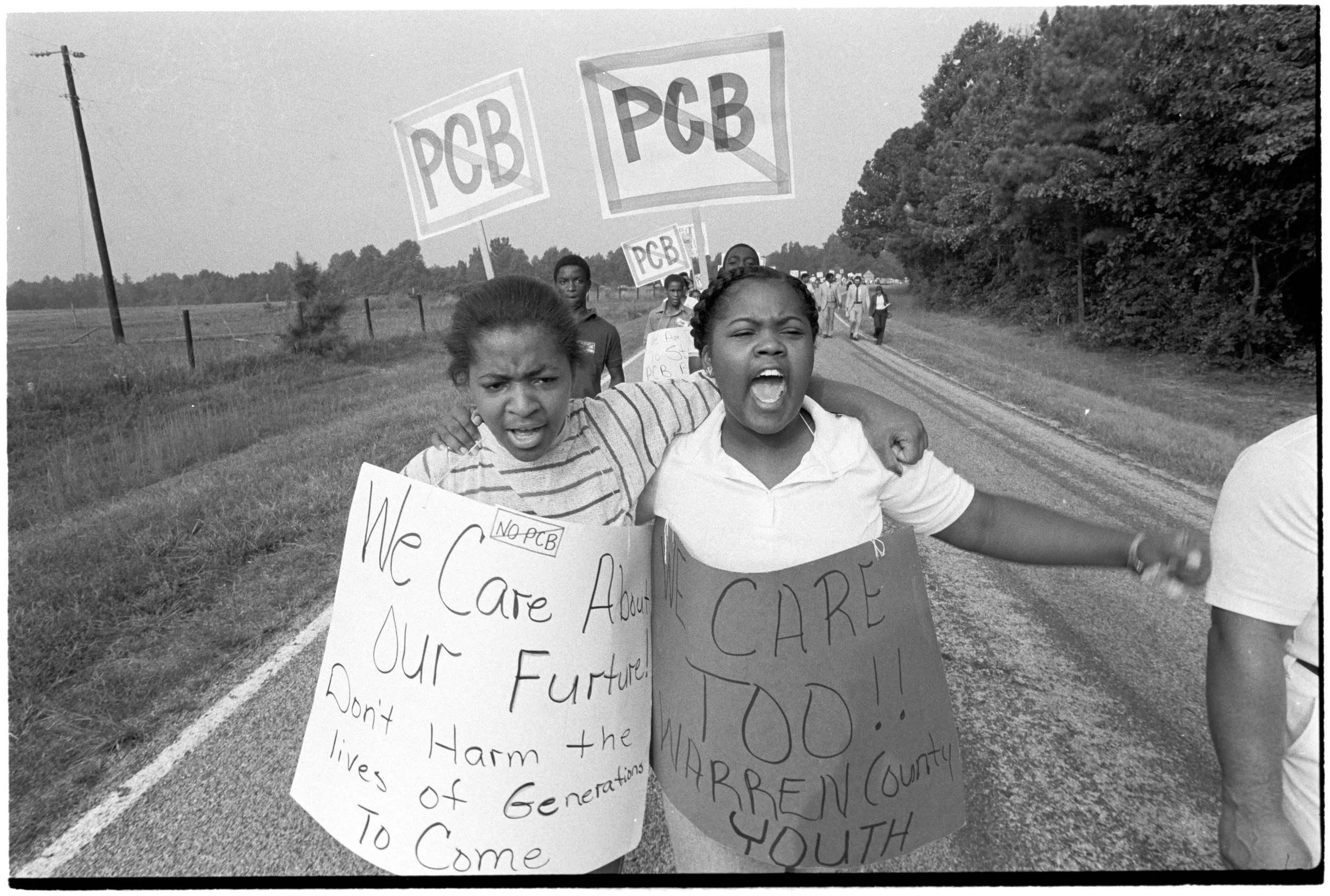
For six weeks in 1982, activists and residents, such as then-15-year-old Consherto Williams (on the right), gathered in Warren County, near the town of Afton, to protest the delivery of 40,000 cubic tons of contaminated soil laced with polychlorinated biphenyls (PCBs), to the hazardous waste landfill in their community. The PCBs would eventually leach into the ground and contaminate the water supply. Credit: The Jerome Friar Photographic Collection and Related Materials, Wilson Library, UNC-Chapel Hill, used with permission.
The results of all of Burwell’s organizing and the six continuous weeks of marching and arrests are well-documented: although the landfill was ultimately placed in Warren County, it became a one-time dump site rather than a constant rotation of toxic waste and truck traffic. And for the first time, the struggle of Black and brown communities of all kinds across the United States was thrust into national attention and given a name: Environmental racism—a term coined in a Warren County jail cell by the eventual head of the United Church of Christ’s Commission for Racial Justice, Rev. Dr. Benjamin Chavis, Jr.
"It was a violation against our civil rights, and that's why the Washington Post dubbed the PCB protest movement to be the largest and greatest civil rights movement since the 1960s,” Burwell said. Indeed, Burwell’s fight in Warren County was the precursor to every other significant milestone in the establishment of environmental justice as an international movement. But the payoff that is not so often cited extends beyond the birth of a movement; as a direct result of all of that organizing, in 1982, Warren County elected its first Black majority on the county commission, its first Black sheriff, and its first Black member of the state house of representatives. A predominantly Black community not only reclaimed its voice, but also leveraged it into the kind of electoral representation that has been critical to subsequent environmental decisions made by the county and community, namely to the eventual remediation of the toxic waste landfill in 2003.
"We elected, for the first time in the history of Warren County, a representative government ... people understood that connection between voting and the political and racial decision that was made to put that dump in Warren County," Burwell said.
Movement Building as Democratic Process: Charles Lee & Toxic Wastes and Race
Charles Lee was at the Warren County protests to show solidarity, and was heavily inspired by what transpired on the ground there. He quickly realized that he was a witness to history. By his own account, what he saw in Warren County convinced him of the transformative potential of civil rights and environmentalism when taken together to support self-determination for communities.
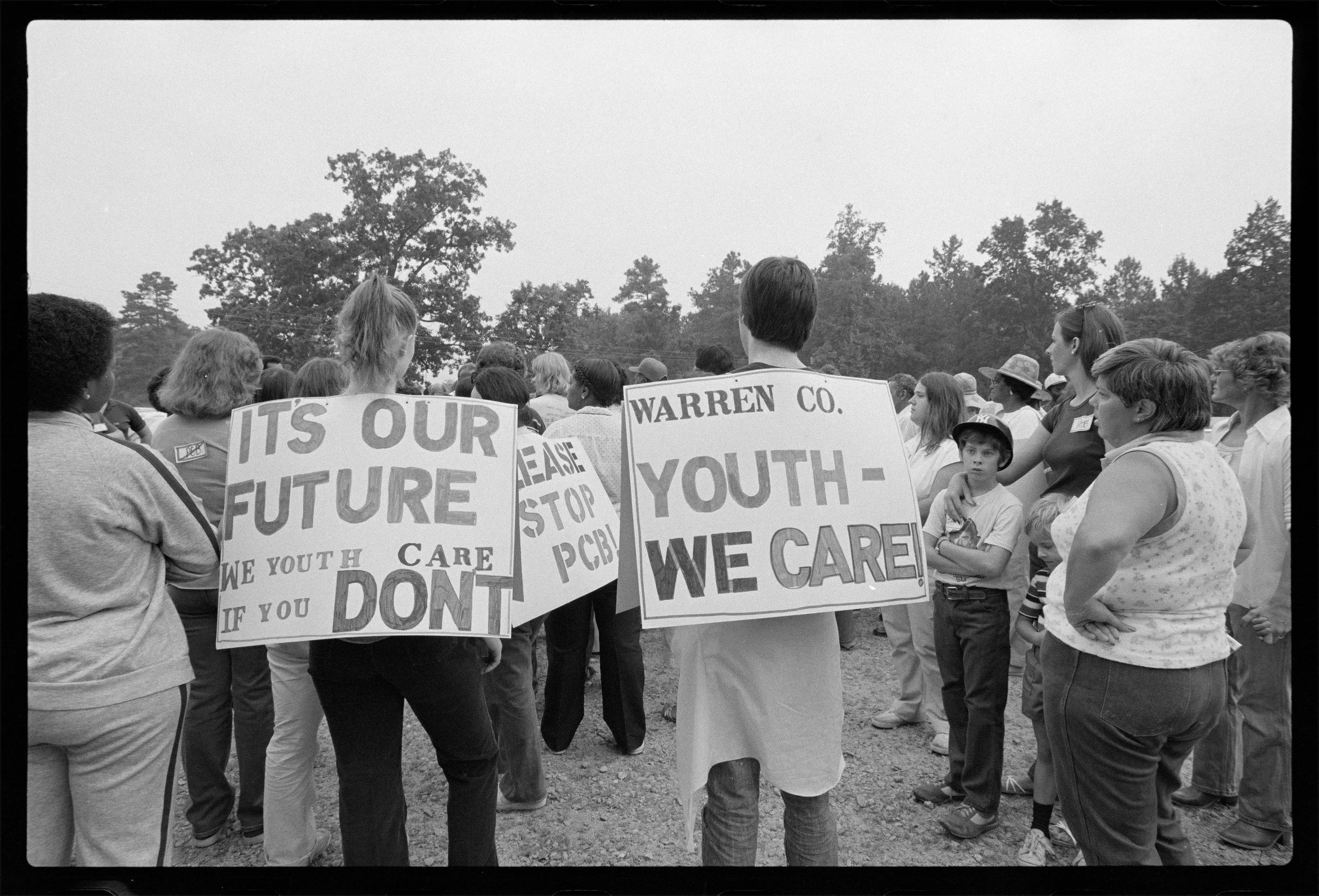
Credit: The Jerome Friar Photographic Collection and Related Materials, Wilson Library, UNC-Chapel Hill, used with permission.
After the PCB protests, Lee got in touch with central organizers Rev. Leon White and Ken and Deborah Ferruccio to do a listening tour up and down the East Coast. As a result, the United Church of Christ’s Commission for Racial Justice asked him to direct a national project on toxics and injustice. He traveled around the country and met with communities whose hazardous living conditions were similar to those of Warren County. Lee was approached by individuals like Hazel M. Johnson in Chicago, who told him she wanted to attend just one environmental meeting that had more than one or two other people of color in the room; and Richard Moore in Albuquerque, who was energized that someone had finally put a name—environmental racism—to what he had been organizing around for years.
Lee’s own research highlighted numerous examples across the country: stories of uranium mining on Native lands out West, farmworkers weathering the fallout from pesticide exposure, lead poisoning in city neighborhoods, and underserved rural communities living above solid waste landfills. The case that struck him hardest was Gauley Bridge, West Virginia, where several hundred workers, most of them Black, died of silicosis in the 1930s while digging a tunnel. The individuals, laid in unmarked graves and forgotten, represent one of the more graphic examples of environmental racism in American labor history.
The First National People of Color Environmental Leadership Summit in 1991.
Left: Charles Lee, at podium, with Rev. Dr. Benjamin Chavis, Jr. to his immediate right.
Right: Charles Lee, left, stands with the Rev. Syngman Rhee, former president of the National Council of Churches.
Having uncovered numerous examples of environmental racism, Lee felt compelled to bring this issue to national attention. He decided that replicating a 1983 GAO study, requested by Congressman Walter Fauntroy, which found that three of four hazardous waste landfills in the Southeast sat in predominantly Black communities, would put the issue of environmental racism on the map. The Toxic Wastes and Race in the United States report of 1987 brought so many contemporary examples like that of Gauley Bridge to the public discourse.
Toxic Wastes and Race in the United States was a landmark study of the American condition, grounded in growing sophistication in the use of Census data and new national environmental databases made possible by the Clean Air and Clean Water Acts. The report, which examined the demographics surrounding commercial hazardous waste facilities and uncontrolled toxic waste sites nationwide, gave communities, as Lee put it, a way to “see these issues from a larger systemic perspective” rather than as isolated, disconnected incidents. Its release was a galvanizing event, stating clearly that race rather than income was the strongest predictor of where hazardous waste was sited in America, with African-Americans and Latinos representing three out of five of the communities living with abandoned hazardous waste sites on the federal Superfund list.
"Toxic Wastes and Race is perhaps the most influential report in the history of environmental justice. But it was a report that was not done by a big university or government agency with lots of resources, but a small civil rights advocacy organization,” Lee said.
It took five years for the EPA to establish its Office of Environmental Equity on the heels of Toxic Wastes and Race in the United States, and another two years before President Bill Clinton signed the first executive order on environmental justice and codified the concept in federal policy. In just over a decade, what started as a small and independent endeavor had become a practice acknowledged at the highest level of U.S. government. All because organizers across the country decided it was about time they gathered, shared knowledge, and connected dots that had never been connected at scale.
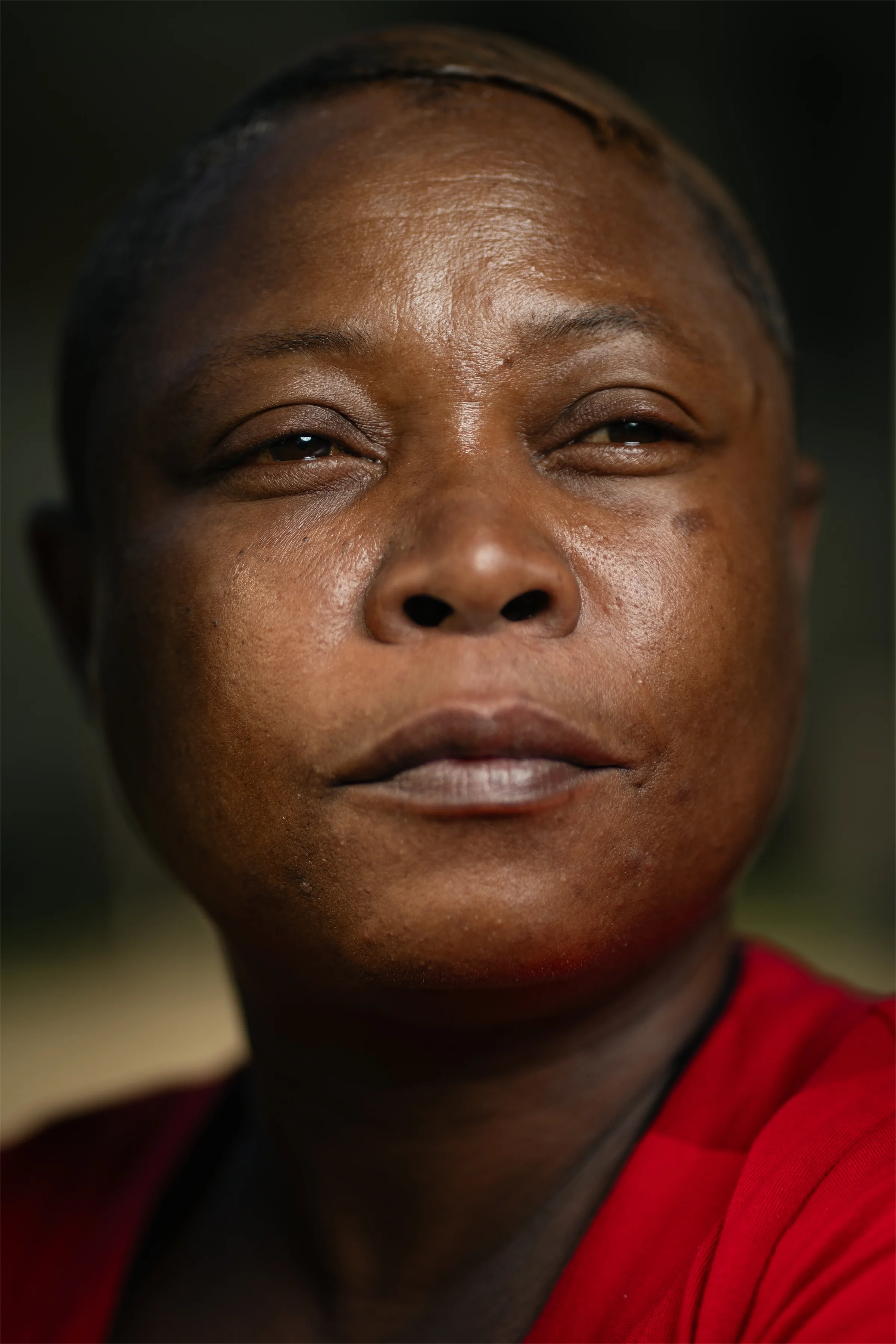
Rev. Dr. Benjamin Chavis, Jr. was present for many of the central milestones of the Environmental Justice Movement, from the 1982 PCB protests with Dollie Burwell to the crafting of Toxic Wastes and Race in the United States with Charles Lee, to the 1991 First National People of Color Environmental Leadership Summit where all three of them contributed to the crafting of the movement’s most core organizing principles in Washington D.C. But his road to this work was initiated not by his arrest in Warren County; instead, it was launched by his unjust arrest a decade prior. As a member of the Wilmington Ten, Chavis spent years in a North Carolina prison for organizing around school desegregation; released only a couple of years before Warren County happened, he was called home to protest for a different kind of Civil Rights struggle.
Codifying the Principles of Environmental Justice: Rev. Dr. Benjamin Chavis, Jr. and the First Environmental Justice Summit
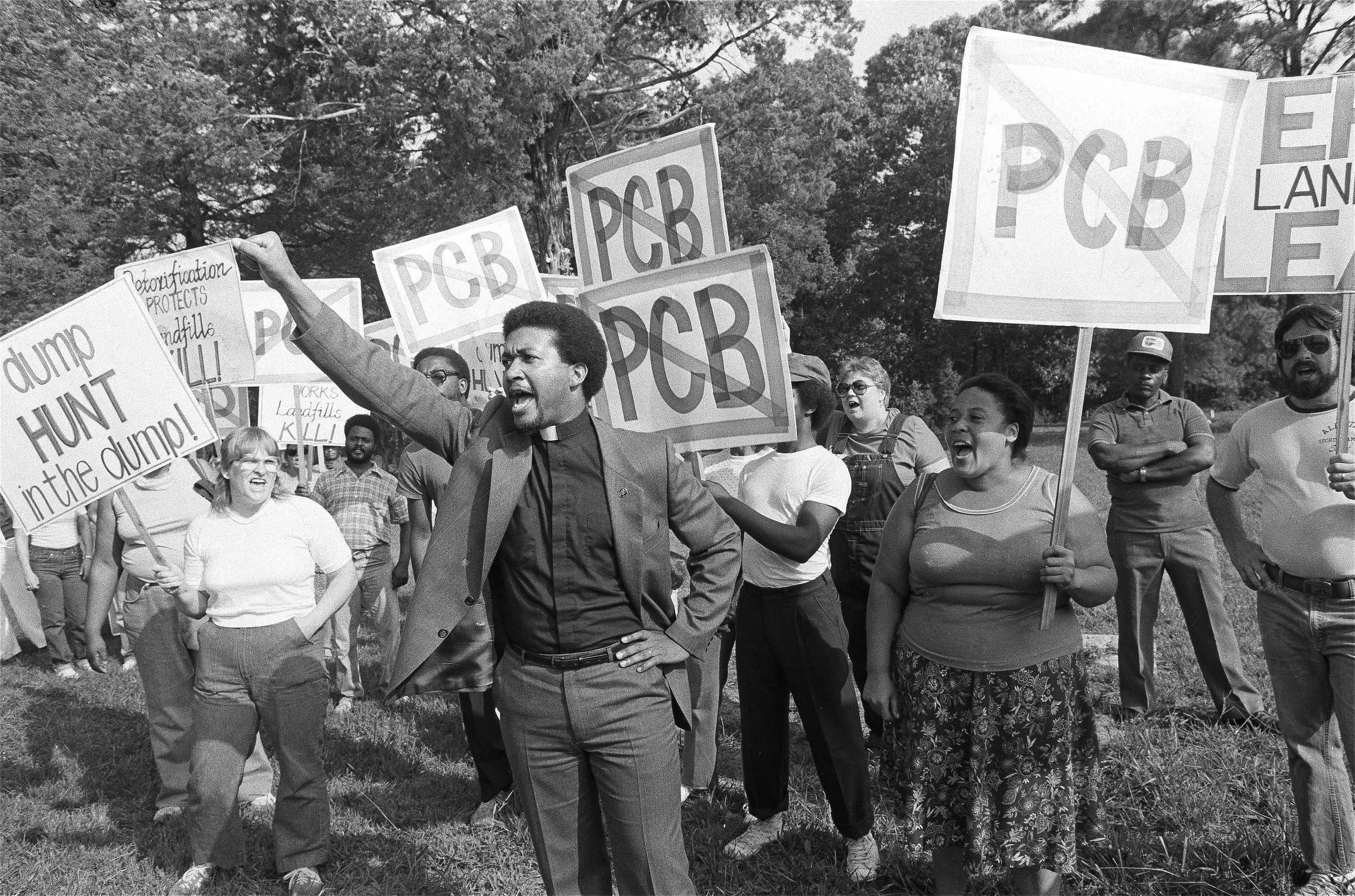
Rev. Ben Chavis, right, raises his fist as fellow protesters are taken to jail at the Warren County PCB landfill near Afton, North Carolina on Thursday, Sept. 16, 1982. Chavis is one of the members of the Wilmington 10. (AP Photo/Greg Gibson)
His first day on the ground in Warren County, Chavis was arrested, coining the term environmental racism to give a name to a lived reality for many underserved communities through U.S. history. By 1991, that same instinct toward the deliberate, public naming of systems and harms would shape a conference much bigger than any that had taken place in U.S. history.
The First National People of Color Environmental Leadership Summit was a convening built over the course of a year, developed to ensure no single ethnic constituency’s concerns would outweigh another’s: Chavis emphasized the role of individuals like Richard Moore in bringing forward Latino organizers, Charles Lee in helping bring forward an Asian and Pacific Islander delegation, as well as the critical representation of Indigenous leadership, advocates and royalty from Hawai’i, as well as those from Alaska and the Marshall Islands. “Everybody went to the leadership summit knowing that we were going to come out with some infrastructure,” Chavis said. “That we were going to come out with principles that we can all agree upon.” It was the embodiment of a representative democracy at work.
What made this summit different was also its intentional uplift of historically disinvested voices; the first two days were closed to white attendees entirely, a choice Chavis admitted was controversial even within the confines of the United Church of Christ. Only on the third and fourth day were mainstream environmental groups—the Sierra Club, the Audubon Society, and the Natural Resources Defense Council—brought in. Those closed-door days set the tone for the program; it was a chance for communities of color to finally meet as leaders and constituencies rather than as an interested minority in the room (just the convening that Hazel M. Johnson had called for years earlier). Chavis recalled that Rev. Jesse Jackson, who spoke at the gathering, told him privately that the summit was the real version of the Rainbow Coalition he’d spent years trying to build.
Often missing from the retelling of the summit narrative was the representation with an already racially diverse room; every delegation brought its own youth leaders, making the summit intergenerational by design, and across nearly every caucus, the majority of delegates were women, a group that is often undercredited across movement spaces despite standing as the backbone for many grassroots activations.
The First National People of Color Environmental Leadership Summit was the landmark convening that produced the 17 Principles of Environmental Justice that continue to serve as the foundations for the Environmental Justice Movement. Every moment of the gathering was recorded on video and in transcript, a deliberate act of documentation at a moment when, as Chavis pointed out, nobody outside a newsroom was thinking about recording anything for its own sake. “We knew we were living in history-making and we did not want to undervalue the historical significance of it,” he said.
When asked about the present moment, Burwell, Lee, and Chavis collectively return to the same year: 1982. Burwell described how the same despair she felt in discovering Warren County was selected for the PCB landfill resurfaced after the 2024 election; she also described the same recovery and push toward resistance gathered through her faith and seeing the same “fire in the belly” she felt then in younger organizers now. “Young people continue to inspire me and continue to keep me in the fight,” she said. “I was on the shoulders of Ella Baker and Dorothy Cotton, Eva Clayton, and many others. I feel like my shoulders are heavy and strong enough to carry you guys, and I'll be right in the fight with you.”
America at 250: Collective Reflection on Movements and Democracy
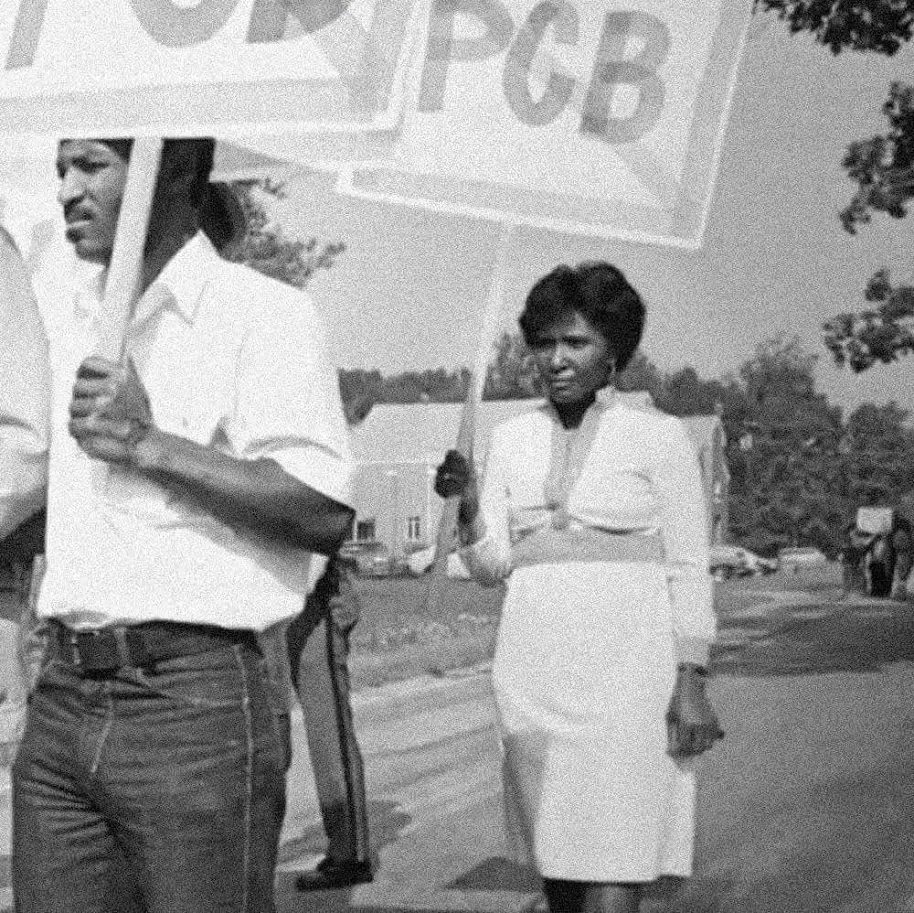
Dollie Burwell in Warren County, NC, 1982.
Lee named the structural attacks on democracy as something that makes environmental injustice harder to solve, because the two problems are and have always been inseparable; his push was to continue to elevate the data and the science, even in the face of anti-intellectualism. As Lee noted, our community experiences and narratives have the power to affect change, just as took place in the crafting of Toxic Wastes and Race in the United States. "The Environmental Justice Movement is not going anywhere,” he said. “It is something that is born out of people and communities, and that it is not predicated on the existence or non-existence of an executive order.”
And Chavis tied current redistricting and Voting Rights struggles back to Warren County’s founding lesson: that representation is a critical mechanism for freedom and that a country that forgets its own history becomes apolitical and susceptible to tyranny. That’s why documentation itself is a civic act and not simply a record of one. “Most Americans are ahistorical, and when you are ahistorical, you become apolitical. That's why the Environmental Justice Movement is a movement to educate,” he said.
In speaking to these three organizers, each one had their own answer for why Warren County catalyzed the Environmental Justice Movement: faith, organizing infrastructure, the power of narrative—but the pervading thought was one of hope. As the U.S. marks 250 years since it established American democracy, the question Warren County first forced into national view—of whose land, whose health, and whose history is prioritized—remains the same question at the heart of every community still organizing against the long afterlives of land and labor exploitation propagated by imperialist systems. Burwell, Lee, and Chavis each built a strong set of tools for that fight—voter rolls, datasets, and a set of founding principles—but all three also understood documentation and representation as critical for the formation of a sound movement. Nearly 45 years after Warren County birthed a movement, their work reads less like a founding story to look back on and more like a living blueprint communities are still building from, proof that a small, determined group standing in the road can still change the course of a country.
"As long as there's life in us, I think we have a reason to know that we can fight on,” said Burwell.
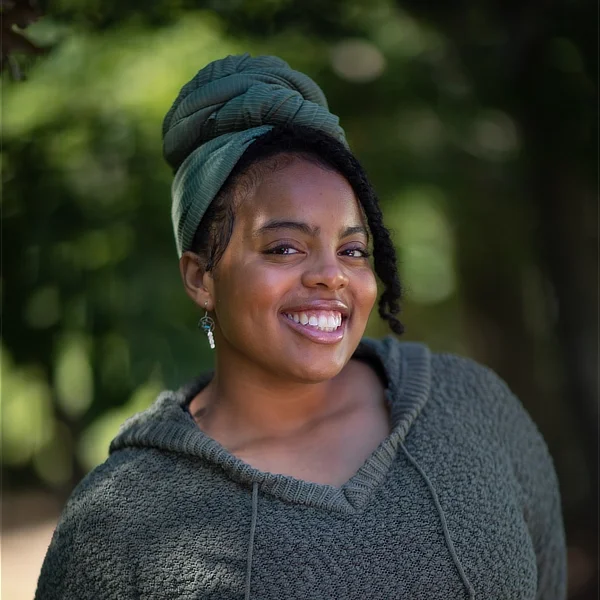
Cameron Oglesby is an environmental justice (EJ) organizer, strategist, oral historian, and journalist whose storytelling centers histories of injustice, joy, resilience, and land stewardship in Black, Indigenous, rural, and southern communities. By day, she serves as the Senior Consultant for Narrative and Influence at Frontline Solutions, and works in her free time to advance climate education and build narrative power for frontline communities as the founder and executive director of the Environmental Justice Oral History Project and the Board Chair for The Margin.
Cameron is a National Geographic Young Explorer, Aspen Institute Ideas Fellow and Future Leader Climate Fellow, Young, Gifted, & Green 40 Under 40 Awardee, and an EE 30 Under 30 Leader with the North American Association for Environmental Education. She has spoken on community narrative and organizing as a critical climate solution on panels with the EPA, Commission for Environmental Cooperation, and NATO, and is currently working with movement leaders to write a primer on the history of environmental racism in the U.S. She's previously received the Sierra Club's National Rachel Carson Award for Environmental Journalism and Covering Climate Now's Student Journalist of the Year Award, among others, for her solutions and movement journalism.
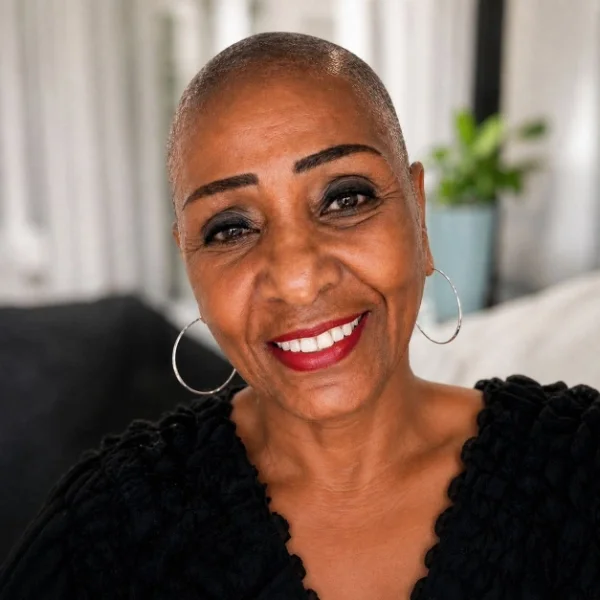
Dollie Bullock Burwell is a longtime North Carolina community leader, Civil Rights advocate, and pioneer of the Environmental Justice Movement. A native of Vance County, she rose to national prominence in 1982 when she helped lead the historic Warren County protests against the dumping of toxic PCB-contaminated soil in a predominantly Black community—an effort widely recognized as the birth of the modern Environmental Justice Movement.
Dollie has dedicated decades to public service, including working on Capitol Hill for multiple members of Congress—serving as Director of Constituent Affairs for Congressman G.K. Butterfield, District Director for Congressman Frank Ballance, and Director of Field Services for Congresswoman Eva Clayton.
Known as a tireless advocate for equity, environmental protection, and human rights, Burwell continues to be recognized as a leading voice in the fight for safe, healthy communities and social justice across North Carolina and across the globe.
Dollie co-authored a children’s book entitled “Keep On A Walkin, Kimberly Burwell’s Fight For Environmental Justice. “This book is about her daughter’s activism during the 1982 Warren County PCB Protest.
Dollie has continued to work selflessly well after her 'retirement', but when she's not serving others, her greatest joys are traveling the world with her daughter and spending time with her extended family and friends.
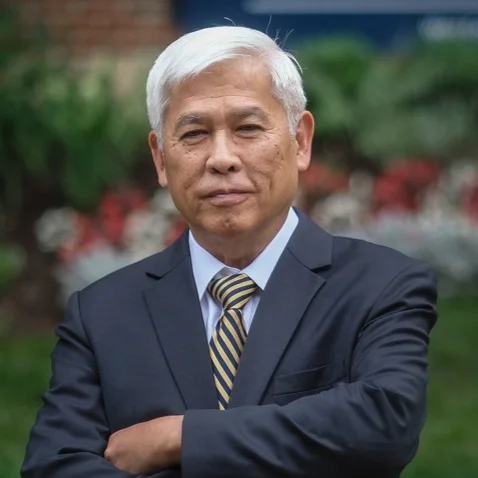
Charles Lee is widely recognized as a true Environmental Justice (EJ) pioneer, thought leader, and founder of the EJ movement in the U.S. Over a fifty-year period, he has worked to move an issue without a name to the center stage of the American experience. He was the principal author of the landmark 1987 report, Toxic Wastes and Race in the United States, organized the historic 1991 First National People of Color Environmental Leadership Summit, and helped spearhead the emergence of federal EJ policy in the early 1990s.
Mr. Lee is currently a Visiting Scholar at the Howard University School of Law. He has served in multiple capacities, including creating the United Church of Christ’s EJ program, directing EPA’s Office of Environmental Justice, and as a Senior Policy Advisor at the EPA’s newly created national program office for EJ and external civil rights. Mr. Lee has served on numerous panels, including the EPA National Environmental Justice Advisory Council and the National Academy of Science/Institute of Medicine EJ Committee. He has authored numerous reports and peer-reviewed journal articles. He has received many awards, including WE ACT for Environmental Justice Legacy Award, American Public Health Association Damu Smith Award, and the William Reilly Award for Environmental Leadership. His professional papers are being archived at the Library of Congress, as a person who “has helped shape the course of our national experience.”
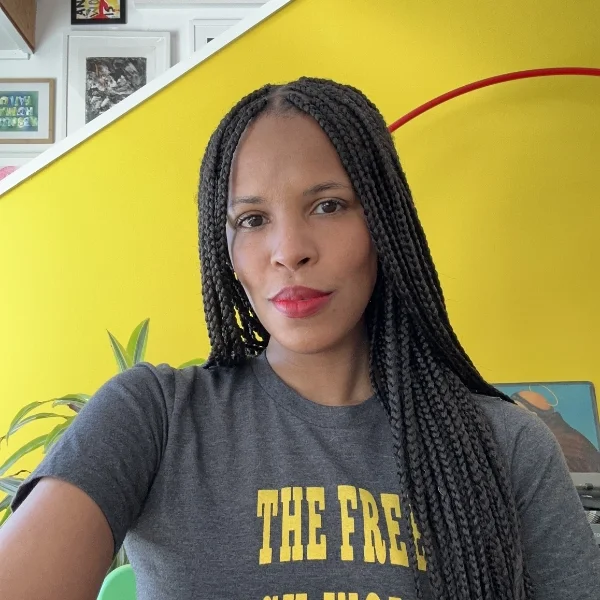
Rev. Dr. Benjamin F. Chavis, Jr. is an African American Civil Rights Movement veteran leader and icon. He is an author, chemist, United Church of Christ ordained minister, and PBS TV Executive Producer of The Chavis Chronicles. He is currently President and CEO of the National Newspaper Publishers Association and Professor of Divinity and Interdisciplinary Studies at Duke University (former inaugural Environmental Justice Fellow at Duke). He also chairs the National Association for Equal Opportunity in Higher Education, Thurgood Marshall Center Trust, We Are Digital, and the Energy Action Alliance.
As a member of the Wilmington Ten, he spent the majority of the 1970s incarcerated as a modern-day political prisoner for a crime for which he was ultimately pardoned. Known as the Godfather of the Environmental Justice Movement, in 1982 Dr. Chavis was the first person to coin the term “environmental racism” during civil rights protests of racial and environmental injustice in Warren County, North Carolina. In 1987, Chavis co-authored the landmark study Toxic Wastes and Race in the United States, and in 1993, Dr. Chavis was the youngest person to be elected as Executive Director and CEO of the NAACP. He worked side by side with Dr. Martin Luther King, Jr. as Youth Coordinator for the Southern Christian Leadership Conference. In 2022, President Joe Biden and Vice President Kamala Harris awarded Dr. Benjamin F. Chavis, Jr. a Presidential Lifetime Achievement Award for national Civil Rights leadership. Dr. Chavis has earned undergraduate and graduate degrees from the University of North Carolina, Duke University, and Howard University.
Peace & Riot is made by real people — not AI.
Journalists, photographers, editors, and contributors doing original reporting from the frontlines.
That work is under threat. Newsrooms are shrinking. AI is training itself on what journalists have already built, and replacing it with something hollow.
Independent, human storytelling is being squeezed from every direction. If you value work built on lived experience, not stolen data — help keep it alive.
Donate to power more issues like this one.