
SPRING 2026
Jamming the AI Hype Machine
Cutting through the myths, marketing, and manufactured inevitability of AI
Amirio Freeman in conversation with Jai Dulani

Austin, 2020. Arielle Bobb-Willis. This issue’s photographs were chosen for their artistry, human perspective, and emotional depth. While AI can try to mimic and steal their appearance, it cannot replicate lived experience, intuition, or the human truths that make them meaningful. Learn more about this issue’s featured photographer here.
A pair of cyborgian figures emerge on my screen, both keeping stilted paces: on the right is First Lady Melania Trump, outfitted in off-white, Cloud Dancer suiting, and to the left is “Figure 03,” a gleaming AI-powered humanoid. The two are flanked by American flags as they come to a row of seated heads of state who’ve descended on the White House. Figure 03 introduces itself in a plasticine voice, expressing gratitude for being part of a “historic movement to empower children with technology and education.”
The narrative pushed by the scene is chilling, encapsulating the vision of AI that its biggest hype men have long championed across our mediascape: a vision of innovation, techno-optimism, and American competitive advantage, a vision of a future with robot teachers, credible self-diagnosis, and a resolved climate crisis.
However, as communities resisting on the ground and journalists looking under the hood of the AI industry have found, the vision that AI giants are peddling obscures AI’s exploitative impact on our neighbors and planet. As Big Tech continues to saturate our airwaves and screens with AI evangelism, how do we intercept that messaging with breakthrough counternarratives that tell the whole story of AI?
Jai Dulani, a Senior Research Specialist at MediaJustice, might have a few answers. In this conversation, Dulani and I dissect the AI industry's media playbook and how to disrupt it, dig into strategies for uplifting the shadow realities of AI within a media landscape captured by tech oligarchs, and unpack how media makers and consumers can support the work of grassroots movements pushing back against the impoverished version of AI taking hold worldwide.
This interview has been edited and condensed for clarity.
AMIRIO FREEMAN: Over the last few years, we’ve seen such a rapid acceleration of AI breakthroughs that have completely reshaped not only our planet but also what it means to be human in this moment. From our work lives to our dating lives, AI has transformed every aspect of our world.
To fuel the technology’s snowballing influence, Big Tech has framed AI as a savior of sorts, especially when it comes to addressing ongoing climate catastrophe. I've been reading Empire of AI by Karen Hao, and in her book, she talks about how AI leaders have saturated our media landscape with the idea that, “AI data centers will grow so efficient, their impact will stop being a problem; generative AI will unlock new climate innovation; AGI will solve climate change once and for all.”
Through your research at the intersection of AI, environmental justice, and America's tech oligarchy, I'm interested in what other narratives you consider key parts of the AI industry’s media playbook right now.
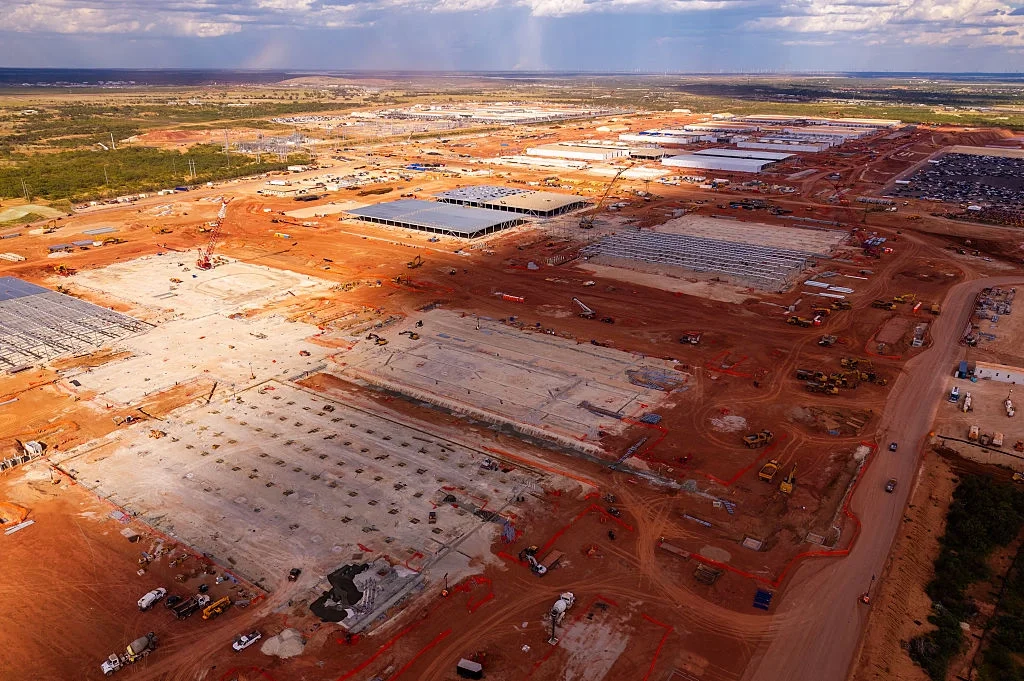
The Stargate AI data center under construction in Abilene, Texas, US, on Tuesday, Sept. 23, 2025. Stargate is a collaboration of OpenAI, Oracle and SoftBank, with promotional support from President Donald Trump, to build data centers and other infrastructure for artificial intelligence throughout the US. Photographer: Kyle Grillot/Bloomberg via Getty Images
JAI DULANI: That’s such a good question, and an issue that it’s important to be aware of. So much of the framing surrounding AI is propaganda peddled by Big Tech companies. Jeff Bezos has an organization that has been pushing conversations about how “AI will be an environmental force for good.” Sam Altman, OpenAI’s CEO, has promised that AI will “fix” the climate.
This is the rhetoric of techno-solutionism, right? It’s this idea that technology is neutral and objectively makes everything better and more efficient. And so that's a big part of the AI industry's playbook, the idea that it's gonna provide solutions to big problems like cancer and climate change. The reality is 74% of Big Tech industry’s claims about AI’s energy reduction benefits are unproven. This amounts to a PR hype machine ripe with disinformation that is profitable to Big Tech and unaccountable to people and the planet.
“We, as the public, have been trained and socialized for decades to believe in the power and unquestioned benefits of technology. So the AI industry is able to leverage that trust, from this powerful narrative that computational precision makes our lives better.”
We, as the public, have been trained and socialized for decades to believe in the power and unquestioned benefits of technology. So the AI industry is able to leverage that trust, from this powerful narrative that computational precision makes our lives better. But when we are discussing the AI industry, it’s important to name that Big Tech’s primary aim is to increase the amount of computation our societies require whether or not there are corresponding social benefits. Because the more that happens, the more they profit. Paris Marx breaks this down really well in the podcast Tech Won’t Save Us. There was a series on the podcast called “Data Vampires” about the threat of data centers and AI. So the AI industry’s playbook is to sell a feeling of necessity that points to a better future. Another way this plays out is through the narrative that the US has to compete with China to lead the AI race. And it's this rhetoric of competition with China, of needing to be a global leader, of tying AI to national security, that has been the main excuse for massive government handouts. Billions of dollars in government contracts have been funneled to Big Tech for defense and homeland security priorities. You know, Trump's so-called “Big Beautiful Bill” was one of the biggest investments in state surveillance ever. It’s considered one of the biggest wealth transfers to billionaires in US history. And it’s not the first time, of course, that the US has given its constituents an external enemy to focus on to justify sweeping changes that affected the social, economic and political priorities of this country. All that is to say, the industry is relying on many decades of xenophobia —specifically towards China—to justify this AI arms race.
The last narrative play I would mention in terms of their playbook is this myth of job creation. AI infrastructure requires massive data centers that suck up water and energy. And the way that they're passing these through is they're saying, we're going to create jobs, thousands of jobs when in reality data centers create very few permanent jobs.
AMIRIO FREEMAN: There's so much anxiety right now, especially about affordability and geopolitical instability, so it’s really interesting to see how the AI industry is leveraging very real fears so many Americans are facing to push forward their agenda.
What I appreciate about the work you do, both as a researcher for MediaJustice and as a writer for platforms like Truthout, is that you offer counternarratives that complicate the messaging of the AI industry. And I love that the counternarratives you highlight not only expose the vast amount of natural resources it takes to fuel and advance these technologies but also uplift communities on the ground, especially in the South, that are fighting back and resisting.
As a Southerner, I feel like the South is seen as backwards, as a dumping ground by this industry, so it's really, really vital to showcase Southerners who aren’t buying into the promise of AI. What are those counternarratives we should know and highlight?
“The math isn’t mathing when they say they’re supporting local economies as if they’re not getting tax breaks or creating very few local jobs. They are investing in their own profit, period, while extracting vital local resources, like water, and polluting the areas they exist in and beyond because of the amount of energy data centers require.”
JAI DULANI: It’s important to call out the lies, essentially. So often, data center construction is greenlit under the guise of economic development. Tech companies and local governments say data centers are going to create jobs. In return, they get tax breaks for hundreds of millions of dollars. Those tax breaks are diverting money away from what the government could be spending on community needs such as schools or public transit. And so... the math isn't mathing when they say they're supporting local economies as if they're not getting tax breaks or creating very few local jobs. They are investing in their own profit, period, while extracting vital local resources, like water, and polluting the areas they exist in and beyond because of the amount of energy data centers require.
The other counternarrative to expose is corporate greenwashing. Tech companies lie about their water and energy usage. That's been documented, so they can't be taken for their word. The Guardian did an analysis that found that the data centers owned by Google, Microsoft, Meta, and Apple actually have emissions 662% higher than officially reported. This kind of creative accounting is actually just lying, right? So we have to expose the extent of disinformation to protect our natural resources.
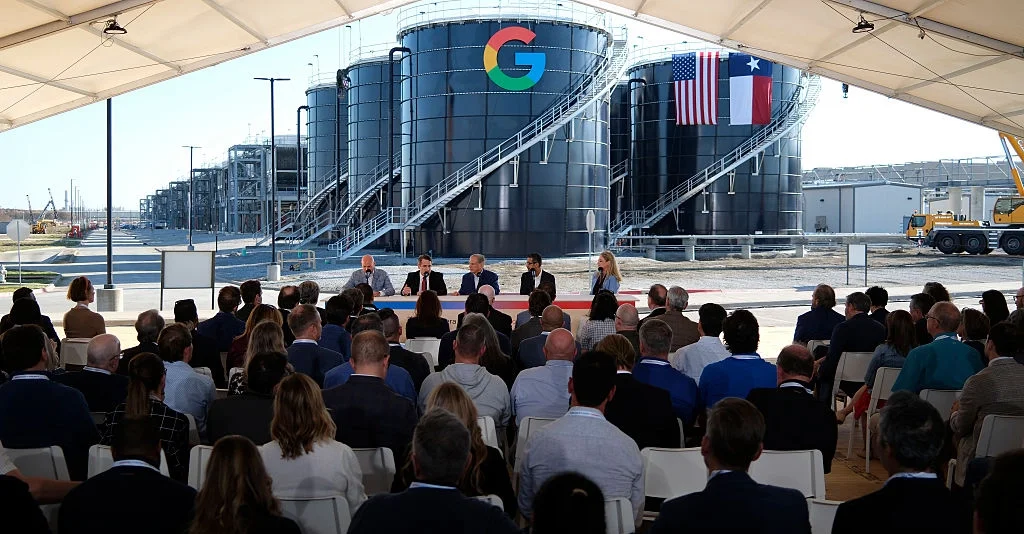
Texas Gov. Greg Abbott and Alphabet and Google CEO Sundar Pichai lead a panel at the Google Midlothian Data Center on November 14, 2025 in Midlothian, Texas. They announced plans to invest $40 billion dollars in new Texas data centers through 2027. As of April 2026, according to a Texas state air permit application, a new data center in Armstrong County, Texas will be partly powered by private natural gas turbines that will emitmore than 4.5 million tons of greenhouse gases each year. This is more than ten times higher the yearly emissions of an average natural gas plant, and more emissions per year than an average coal plant. (Photo by Ron Jenkins/Getty Images)
JAI DULANI: We also have to demand a public process. Big Tech is undermining our democracy by negotiating all these deals in secret. Communities are kept in the dark about the real impact of data centers. The process is pushed through very quickly, very opaquely. Local officials are complicit in hiding critical information and making these backdoor deals with Big Tech. And so by shutting out transparency and public input, they're threatening our future and the future of our planet. Just a few months ago, a $2.4 billion data center was pushed through in Marion county, a majority-Black rural county in South Carolina, during a winter storm with residents not even aware the proposal was on the table.
AMIRIO FREEMAN: You’re bringing into relief how many aspects of AI are underknown. You already mentioned the AI industry downplaying how data centers cannibalize the planet. I'm also thinking about how we overlook the exploited, often overseas labor, such as data annotation, that goes into making these technologies possible.
As someone who works in media, who is thinking about framing and messaging, how do we build stories that accessibly dig into the more opaque and under-discussed sides of AI? How do we break down the technical language and ideas embedded in many AI discussions and present stories that are emotionally resonant and allow people to engage with these underknown realities? There's so much at stake: democracy, our livelihoods, the future habitability of the planet. It’s all on the line. So how do we build counternarratives that break through?
JAI DULANI: In The AI Con, Emily M. Bender and Alex Hanna really break down how AI is a marketing term. So one thing we can do is be really specific about what we mean and what we're referring to when we’re discussing AI. Whether that’s a large language model or a chat bot, an automated decision-making system, a classification system, a recommendation system—the more specific and precise we can be, the more we can know what's at stake.
Take predictive policing—which uses data and algorithms to predict who will commit a crime and where. Using data from the criminal legal system as a basis for prediction will reinforce the structural racism of policing and the policing of poverty. The specificity of what predictive factors are being used and how is critical in making these life-altering decision making processes transparent and accountable.
“We have to make it more common sense that AI is not intelligent —it is a machine that will replicate human bias. And it’s not even artificial.”
And so as media makers, we have to make it more common sense that AI is not intelligent —it is a machine that will replicate human bias. And it's not even artificial. Like you said, there's a hidden global workforce behind AI doing deeply traumatic, exploitative work. That labor is hidden, and there’s nothing artificial about it because it’s the people who have to annotate this data and live in communities polluted by extractive AI industry.
So in order to create emotionally resonant narratives, we have to really flip the script on who the protagonist is. Is it the supposed genius tech billionaires who are going to save us all? Or is it everyday people who face algorithmic bias in hiring, housing, healthcare, and credit decisions?
That’s why you need to center directly impacted communities. That’s why the work of movement building organizations such as MediaJustice and independent media organizations like Counterstream are so critical! We have to uplift the names, the faces, the stories of people being impacted by the industry rather than the handful of people who are profiting from this industry. And we have to collectively hold the industry accountable.
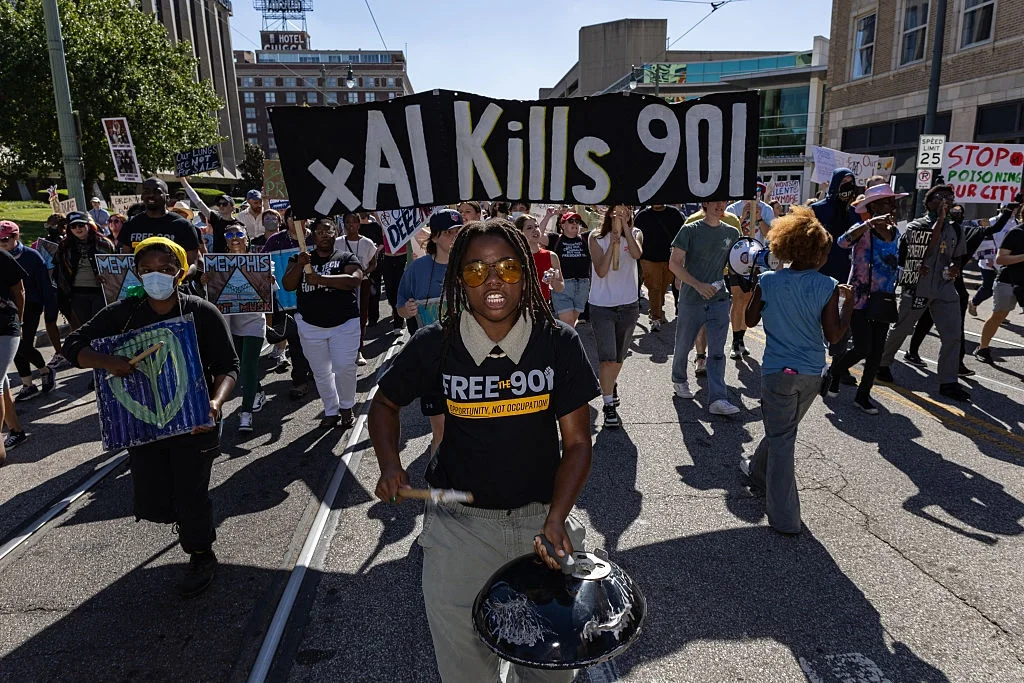
Trinity Williams, the community engagement organizer with the Equity Alliance, leads the protest chant, as protesters march through downtown Memphis, Tennessee, in opposition to the increase of federal law enforcement agents, the coming deployment of the National Guard and xAI, an AI company owned by Elon Musk that is locally based, during the "Get Out of Memphis" protest on October 4, 2025. The protest was organized by Tigers Against Pollution, a student led activist group based in Memphis. (Photo by AUSTIN JOHNSON/AFP via Getty Images)
AMIRIO FREEMAN: That last bit is making me think about your Truthout piece, “Big Tech Data Centers Compound Decades of Environmental Racism in the South.” One quote that I loved in particular is from a community member in South Fulton, Georgia, Wanda Mosley. As Mosley says of the growing grassroots resistance to AI data centers:
“They don’t understand what they have started. They don’t understand the coalition that we’re about to build, because all of us have high electricity bills. All of us have high water bills. And so, people who don’t normally rock together, oh, we about to rock together, and we are about to make some changes in Georgia.”
I just love that quote. It’s energizing and electrifying, and makes me curious about how we focus our media attention on folks like Wanda to shift where the AI industry is taking us.
Within the media we make, how do we move the culture away from centering the singular white male genius—which is reflective of the myth of individuality that’s so pervasive in American culture—and toward uplifting the collective? How do we center communities on the ground who are resisting as the true protagonists we should be learning more from, hearing more from, platforming more? And for those of us who are either from frontline communities or working with them, how do we co-create stories with community members like Wanda that are reciprocal, authentic, and dignified?
JAI DULANI: At MediaJustice, we released a report called “The People Say No: Resisting Data Centers in the South.” We wrote this report because we wanted to arm frontline communities with relevant research that's going to help communities organize, help cut through the propaganda, demystify opaque processes, and help call out the corruption and lack of transparency. Rising electricity bills, toxic pollution, and being put in a position to compete with corporations for water is what communities are facing.
After that report was released, we hosted two regional trainings that brought together over 180 organizers who are in these fights. It was about breaking that isolation, talking about strategy together, understanding how there isn't exactly a one-size-fits-all solution to the data center crisis because everything is so location-specific. What are the certain zoning laws in this area? What City Council vote is happening over here? What are the points of intervention that community power can have? From demanding local officials be accountable to local interests and concerns to demanding a public process, MediaJustice also released an accompanying toolkit with our report to highlight case studies, fact sheets, and messaging tools.
It is just so important to be in solidarity with communities, and to be in true partnership. We must ask organizers, “what do they need amplified right now in their fight?”
“I think a big pillar of white supremacy, which mainstream media is embedded in, is to be ahistorical and to decontextualize everything. And so when we talk about data centers in the South and we go into examples like Elon Musk and his data center in Memphis, Tennessee, we have to bring up that Memphis was already leading Tennessee in emergency department visits for asthma.”
I think a big pillar of white supremacy, which mainstream media is embedded in, is to be ahistorical and to decontextualize everything. And so when we talk about data centers in the South and we go into examples like Elon Musk and his data center in Memphis, Tennessee, we have to bring up that Memphis was already leading Tennessee in emergency department visits for asthma. They received an F from the American Lung Association for ozone pollution in 2025! And so the harm being done now is compounding decades of environmental racism.
We have to be aware of the historical context and uplift that because again, tech is not neutral. These are real people, real communities. There's historical context here of who lives here. Nearly half of the residents in Boxtown, where Musk’s data center is, have an annual household income below $25,000. The cancer rates there are four times the national average. So why are you coming here? We know why you're coming here, and we're gonna call that out.
AMIRIO FREEMAN: Historical context is so critical, which leads us to this question of media literacy. How do we hold ourselves accountable as media consumers, especially in this moment when it feels like so many traditional institutions that we look to for media are being absorbed by Big Tech giants
I'm thinking specifically of Jeff Bezos, who has his own AI startup. He purchased the Washington Post over a decade ago. That has me thinking about what it means when so many media sources we used to trust or rely on are being controlled by those with such an investment in advancing AI. What advice do you have for readers seeking out reporting on AI that is unbought? Where can folks turn to? And how do we build up our media literacy so we can go, Okay, I'm seeing how the AI industry’s media playbook is being used in this article, and I know that I can't accept this reporting at face value?
JAI DULANI: That’s a great question. Just a couple of weeks ago, MediaJustice released a report called Media Capture: Who Controls the Story Controls the Future. In it, we lay out the situation we're in right now. Media consolidation is not a new problem, but the tech oligarchy has captured the media in many ways. There are people doing amazing reporting, you know, folks like More Perfect Union, that really center the working class perspectives that are impacted by Big Tech. The Nation also just put out an article, AI Is the New AIPAC, talking about how people in the AI industry are trying to influence the midterm elections by funding candidates who are pro-data centers.
There are people who have been doing independent media work and media watchdog work for decades, like Janine Jackson at CounterSpin, which is a weekly radio show by FAIR, which stands for Fairness and Accuracy In Reporting. Truthout, the Intercept, and Hard Reset, are also great sources. I also think community organizations on the ground are sources we can trust.
AMIRIO FREEMAN: In addition to being a researcher and journalist, you're a multimedia artist and poet. I always appreciate folks who are so expansive and expressive in their work. How is AI impacting the creative communities you are a part of? And how have they been responding?
And I want to name that this is a nuanced conversation. As Karen Hao notes in Empire of AI, AI doesn't have to be harmful. How it's being advanced right now, however, is completely untenable and unsustainable, but there could be a future in which we take this technology back in ways that support our journalism communities, our creative communities. So what are you seeing on the ground right now in terms of who you're in relationship with?

Demonstrators protest against the Trump administration and billionaire class outside the New York Public Library in New York City, U.S., May 7, 2025. (Photo by Mostafa Bassim/Anadolu via Getty Images)
JAI DULANI: The rise of AI has really affected news outlets. There's a huge financial drain because of AI-generated search summaries. In 2025 alone, they cut referrals to publisher websites by about 25%. Because the platforms have a dominance around how news gets distributed, big tech billionaires have captured audiences at scale.
And as you know, news doesn’t have to actually be newsworthy or accurate to be profitable. That’s why synthetic news generated by AI is growing. Fake headlines and pro-Trump propaganda and climate disinformation are all present.
“Because I think a big problem is that when Big Tech owns the outlets that are supposed to be reporting on them, the coverage isn’t holding them accountable.”
In the artist communities that I'm a part of, we're just trying to sustain these beautiful community-based, community-led institutions that support artists, that support the craft and skill of storytelling and independent journalism, and that have really strong values rooted in community liberation. And because these organizations have been around for a long time and have been fighting media bias and systemic racism for a long time, I think it's just so important to continue investing in these organizations that support artists of color, support independent media, support investigative journalism. Donating to these institutions—especially in light of massive cuts from the National Endowment of the Arts— and amplifying their work and fighting media monopoly are all critical. Because I think a big problem is that when Big Tech owns the outlets that are supposed to be reporting on them, the coverage isn't holding them accountable. We need more people to expose corruption and hold Big Tech accountable so that we're not all just being fed propaganda and letting things happen without any resistance.
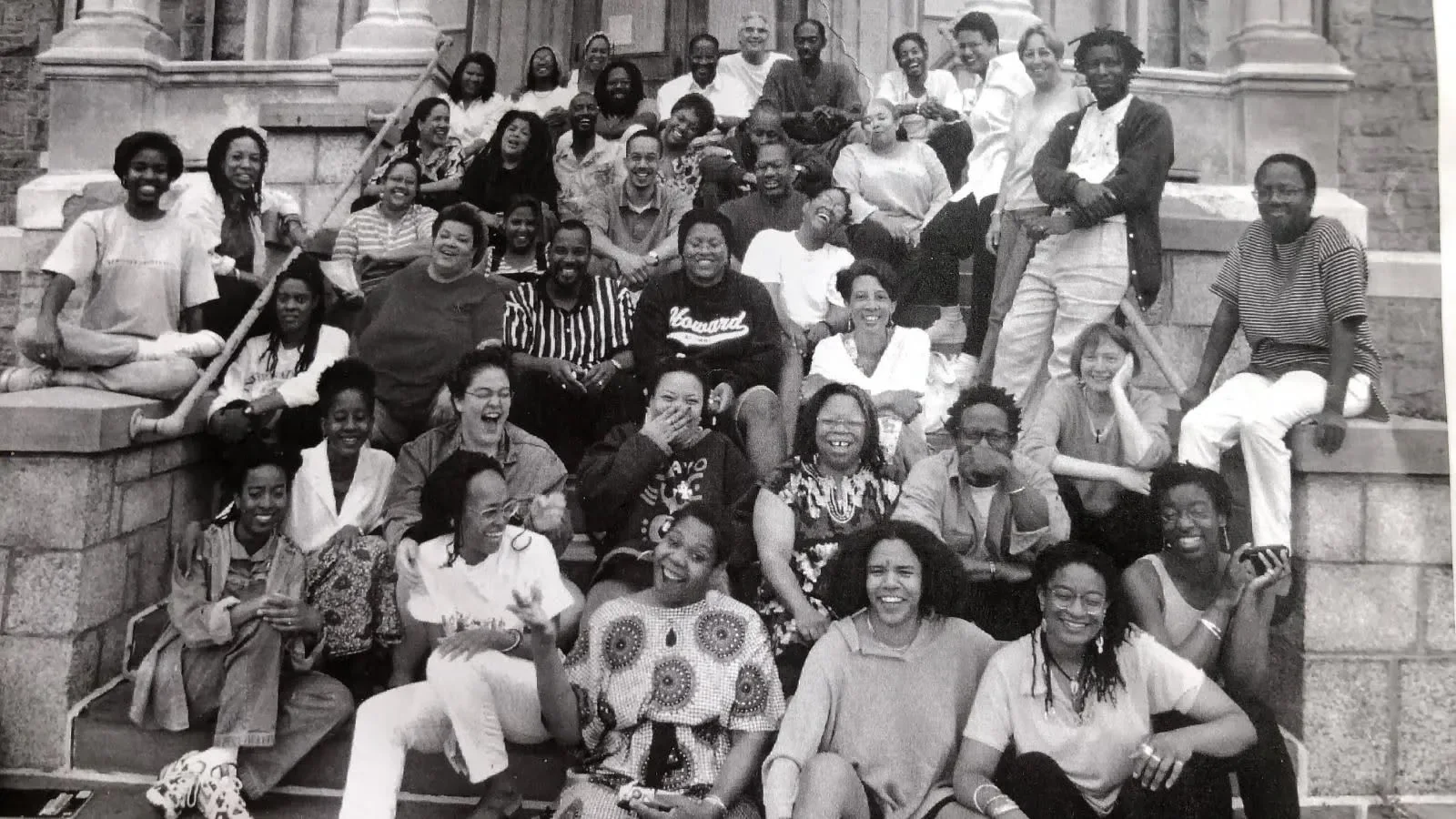
The inaugural cohort of Cave Canem, a nonprofit organization founded in 1997, committed to cultivating the artistic and professional growth of Black poets.
JAI DULANI: When we educate ourselves, it's very empowering. Like Karen Hao’s book is amazing, right? It’s so clear, and provides us with a grounded power analysis about fighting the power and not necessarily the technology itself.
The crises created by AI are rooted in issues of ownership and governance. In the hands of the ruling class, of big tech billionaires, AI is used for warfare and surveillance. War is profitable. The deportation and detention machine is profitable. That's what AI is being deployed for, and that’s why there is so much investment: it’s lucrative for the 1%. And they don’t care about the impact the industry has on people or the planet.
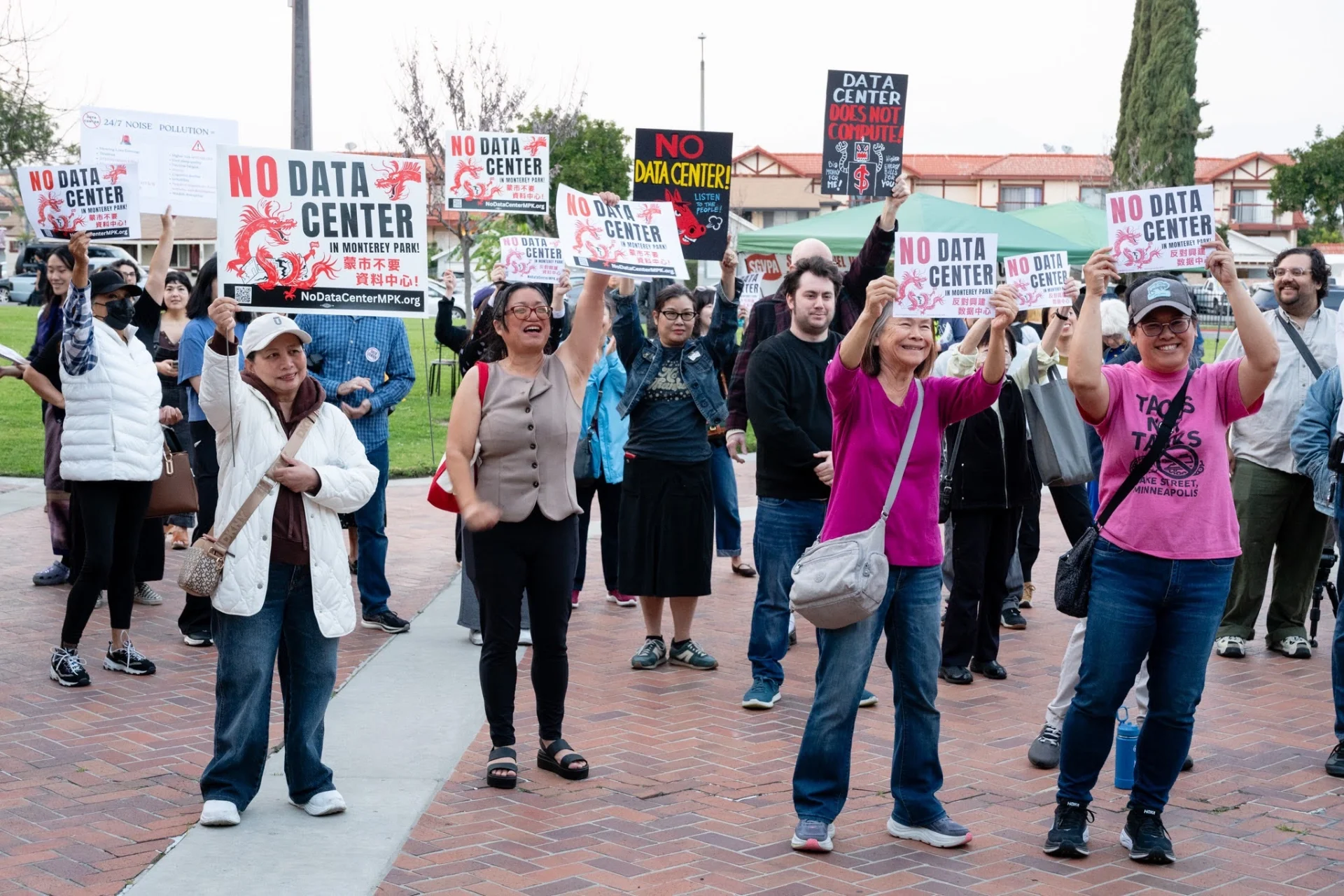
Residents protest against a proposed data enter project in Monterey Park, CA. Photograph by Ghawam Kouchaki.
JAI DULANI: So I think the more we can join organizing forces that are trying to curb the oppressive power that Big Tech has, the more we can confront systemic power that we need to be confronting. There is a fight right now against a data center in Monterey Park that would be the size of four football fields and is expected to consume three times the energy used by the entire city. The community is fighting back by trying to pass a ballot measure to ban data centers and folks can donate to their organizing efforts. There is another data center fight right now in Taylor, TX where they have an ordinance petition drive to demand updated zoning. They have a gofundme right now to support the costs of yard signs, flyers and petitions. There’s also Great Lakes Neighbors United, who have a Save Port Washington campaign, and are currently trying to get residents the power to vote on large tax incremental financing districts (TID) so that local officials don’t sell them out to data center developers. What we’re seeing is that folks across the country are using local governance strategies to fight data center expansion in their communities. It is amazing to see so much resistance to Big Tech’s extraction efforts and so critical to uplift each other and be in community with each other.

Amirio Freeman (any pronouns) is an essayist, interviewer, and editor who writes about Blackness, queerness, and plants. Amirio is from coastal Virginia and currently resides in Philadelphia, PA. You can find more of their work at amiriofreeman.com.

Jai Dulani (he/him) has worked in movements for racial and gender justice for over 20 years. He is a senior research specialist at MediaJustice. Dulani is also a multi-media artist and poet.
Peace & Riot is made by real people — not AI.
Journalists, photographers, editors, and contributors doing original reporting from the frontlines.
That work is under threat. Newsrooms are shrinking. AI is training itself on what journalists have already built, and replacing it with something hollow.
Independent, human storytelling is being squeezed from every direction. If you value work built on lived experience, not stolen data — help keep it alive.
Donate to power more issues like this one.