
SPRING 2026
Artmaking as Resistance and Reclamation
How creative practitioners can challenge AI
Yessenia Funes and Kumi Naidoo in conversation
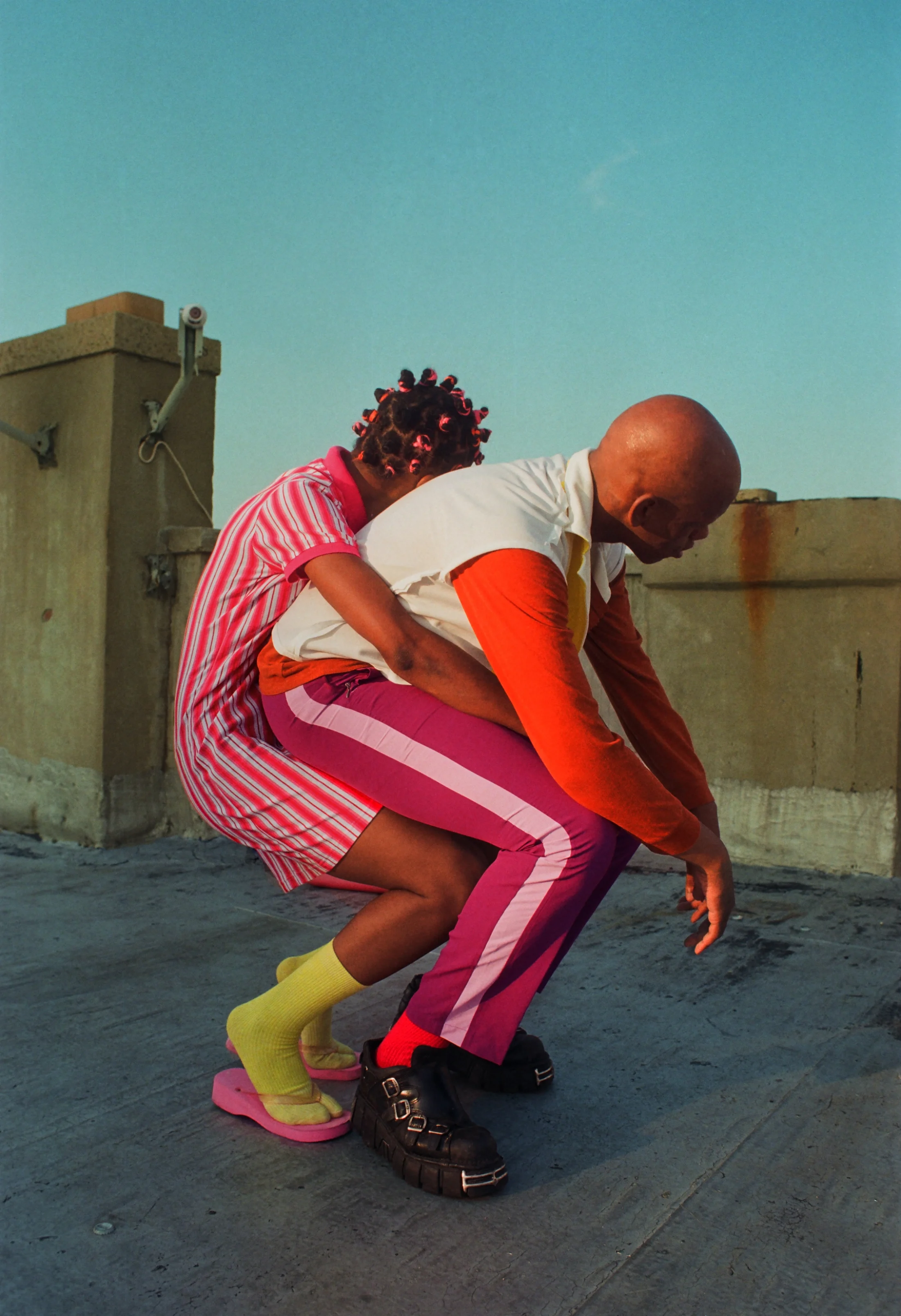
Brooklyn, 2016. Arielle Bobb-Willis. This issue’s photographs were chosen for their artistry, human perspective, and emotional depth. While AI can try to mimic and steal their appearance, it cannot replicate lived experience, intuition, or the human truths that make them meaningful. Learn more about this issue’s featured photographer here.
We are living in the era of extractive AI. These technologies might fracture our perception of reality (see: AI slop) but they also mirror the sense of dislocation many of us feel in our unpredictable and unstable world.
So when the conditions we are living in feel more terminus point than transformative portal, we turn to creatives—like journalist Yessenia Funes and artist-activist Kumi Naidoo—to understand how to revive our imagination and restore our focus. Because if we are to challenge the rise of fossil fuel-powered AI, we will need not only statistics, but also story.
Yessenia Funes and Kumi Naidoo first met as guest speakers for Climate Future Studios, a youth-led initiative that seeks to strengthen narrative power in the climate justice movement. Inspired by a shared commitment to art-as-activism, Kumi and Yessenia sit down together to explore the intersections of extractive AI, environmental justice, and creative practice.
KUMI NAIDOO: If I look at my own journey from the streets of apartheid South Africa to global climate advocacy, I've come to see that activism without storytelling is like a drum with no rhythm. It makes noise, but it does not move people. The truth is, art has always been at the heart of resistance. During apartheid, songs, poetry, theater were not luxuries. They were weapons of hope. They helped us imagine freedom before we could actually experience it.
There wasn't one defining moment when I realized creative work and environmental work were inseparable. It was a slow awakening. But one thing became clear to me along the way, that facts alone do not change the world. Stories do.
Storytelling has the power to move people to courageous action at a time of climate crisis, and we need, I would say, more courage than ever before. So when we speak of attention activism, we are really speaking about reclaiming what capitalism and digital systems have fragmented, which is our ability to care collectively and consistently.
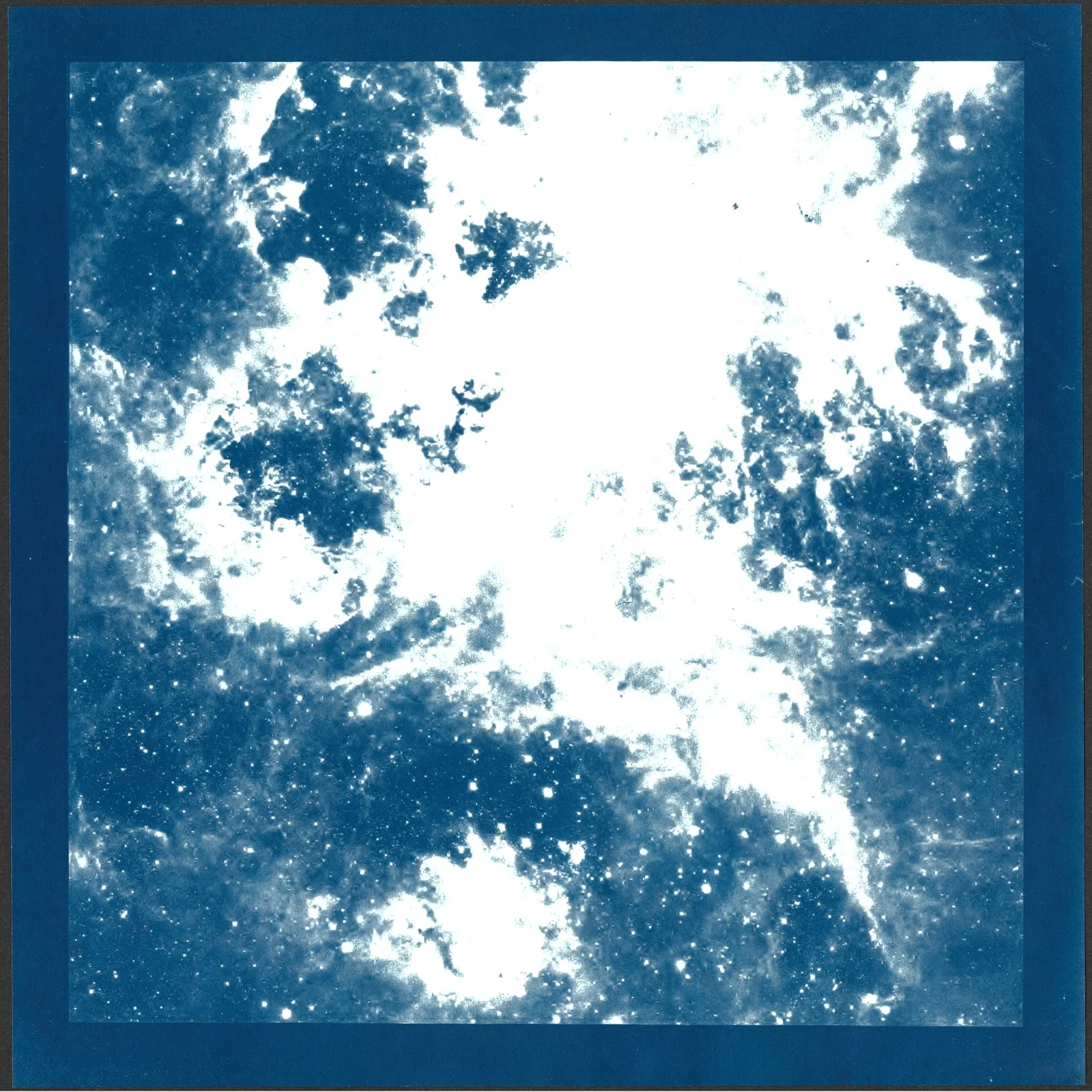
Mak Harrison is a Climate Futures Studio fellow. Her cosmic cyanotypes “invites the viewer to imagine a future where freedom and access to the stars is not inhibited by light pollution.”
YESSENIA FUNES: Thinking about my own creative work and environmental work, I had a similar experience where there wasn't that single defining moment. For a long time, I didn't even think of myself as a creative person or as an artist (which I think is something a lot of us feel, that I’m not creative enough).
But there was a turning point for me when I was the Climate Director at the independent climate and culture magazine Atmos. At Atmos, they gave me a lot of autonomy to write more creatively than publications had in the past, and my understanding of what journalism can be really shifted dramatically while working there, as did my personal relationship to creativity and the arts.
When I was in college, I remember taking one of those Intro to Drawing classes, and that was very meditative for me. And I remember the professor being very sweet and saying you should consider majoring in art. But along the way, I forgot about that. And so being able to find my way back to creative practices has been very, very rewarding.
Outside of your artivism work, do you create any art on your own, individually?
KUMI NAIDOO: So I write a little poetry, not too much. And I write books too. One is an autobiography of my childhood activism called Letters to My Mother: The Making of a Troublemaker and the Australia Institute also recently published an essay of mine, What We Owe the Water: It’s time for a Fossil Fuel Treaty. And then I sing badly.
YESSENIA FUNES: You sing badly? I'm sure it's beautiful.
KUMI NAIDOO: I usually sing at conferences. I have a couple of sing-along songs that I do when a meeting needs some energy. I will ask people a question. I say, where do your ancestors come from? And then people will shout different places. And then I say, go as far back as you can. And usually there will be some white colleagues who will eventually say Africa, right? Then I'll go to them and say, why are you saying Africa? And they'll say, of course, because humanity started in Africa, in the Rift Valley.
So then given that we are all Africans, by root, by history, I will teach you a song that only has two words in it, pambili Africa, which means forward with Africa. Now I meet people, some in different places, who will sing me the song, which is quite nice. Shall I sing it for you quickly?
YESSENIA FUNES: Yes, I would love to hear it. Now I'm so curious.
KUMI NAIDOO: So it's very simple, just two words. Pambili, Pambili, Pambili Africa, Pambili, Pambili, Pambili Africa—
YESSENIA FUNES: You do sing! You are a singer!—
KUMI NAIDOO: So you sing that three, four times, and everybody stands up and claps—
YESSENIA FUNES: It sounds energizing, and it almost sounds like family. That’s what I hear when you're singing it!
Part of what we’re here to talk about is artificial intelligence, AI, and hearing you share such a beautiful song, a song that AI could not devise and sing for us on its own—I'm curious to hear from you what your relationship is to AI these days. I know it's increasingly infiltrating our spaces. We're here on Zoom with our AI meeting notes, using an AI transcriber. So I would love to understand your relationship to AI: how you interact with it, and what your thoughts are about it.
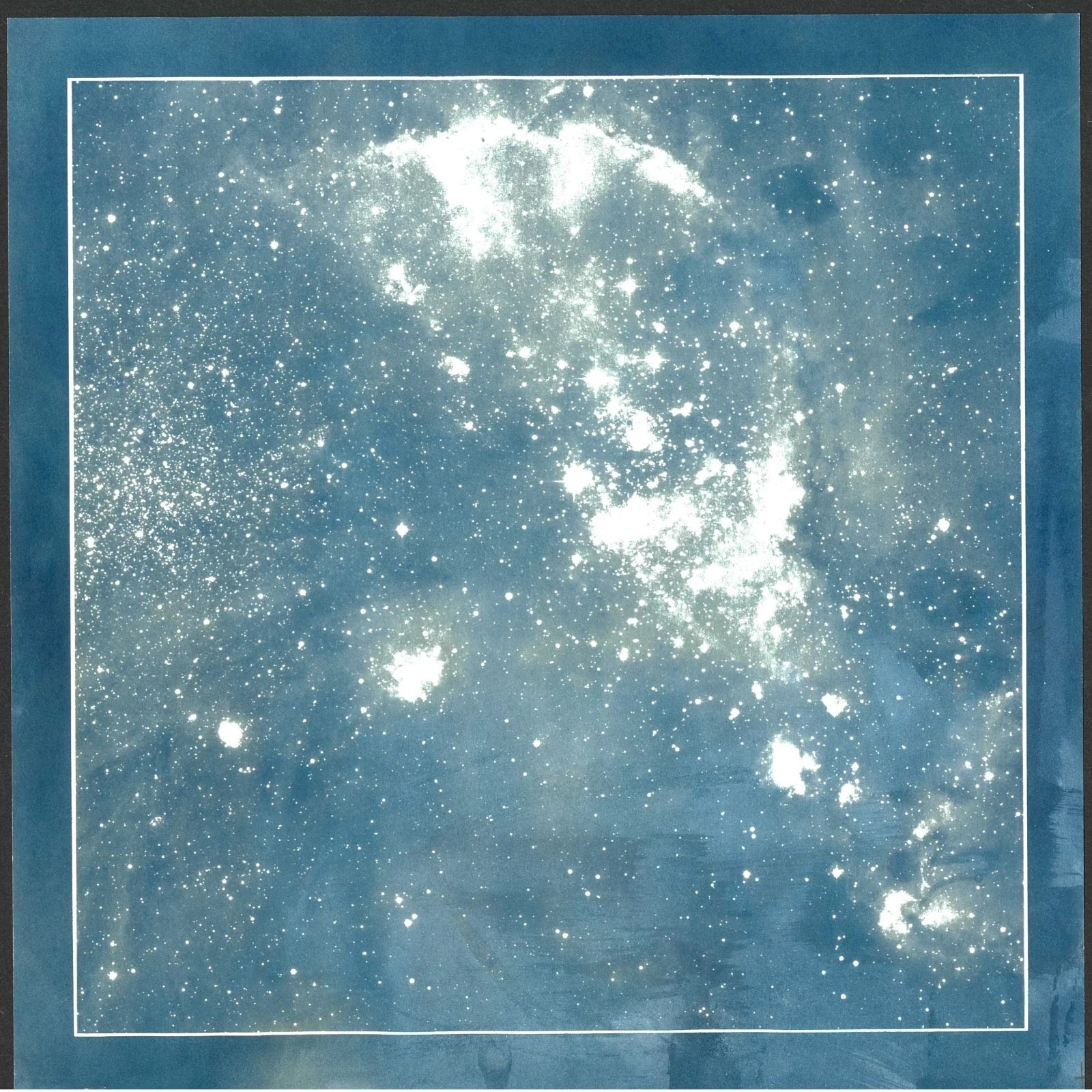
Mak Harrison is a Climate Futures Studio fellow. Her cosmic cyanotypes “invites the viewer to imagine a future where freedom and access to the stars is not inhibited by light pollution.”
KUMI NAIDOO: We are living through a convergence of crises right now, right? We are living through what some have called a polycrisis, which means we are experiencing the confluence of climate breakdown, rising inequality, democratic erosion, and now the rapid acceleration of technologies like AI that are reshaping society faster than our ethics.
So, in the moment of history that we are in, pessimism is a luxury that we simply cannot afford, but neither can we afford denial of how deep the crisis is. It’s clear that AI is already influencing elections, public discourse, cultural production and the very narratives we use to understand reality. If we do not engage now with this frightening and powerful world of AI, we risk allowing the same systems that created the climate crisis—which is greed, extraction and inequality—to shape the future of intelligence itself.
The window for shaping these systems, I believe, is still open, but it is closing very, very fast. Let's be clear about that. AI is now baked into our lives in ways that we're not even conscious of. If you use GPS, that's AI, right? And AI is not neutral. It is powered by extractive systems, mining rare materials, consuming vast amounts of water and energy and, sadly, often in places where communities already face water scarcity. Once again, the Global South is paying the price for technologies largely controlled by the Global North.
But there's also another cost, less visible but equally dangerous, and it's what we could call the erosion of attention. To a large extent, our movements depend on sustained attention, on people staying with discomfort long enough to want to act. But AI-driven systems are designed to fragment attention, to keep us scrolling rather than organizing. So we face a double challenge and injustice: firstly ecological harm from the infrastructure of AI on our water, energy, land and so on, and then secondly, the psychological and political harm from the impact of AI on our ability to focus and mobilize in creative communities, though this sometimes shows up as burnout, as comparison, as a subtle pressure to produce faster, not deeper.
“The question is not whether we use AI, but whether AI uses us.”
And yet, I think right now, we must resist the temptation to become anti-technology. The question is not whether we use AI, but whether AI uses us. We know that AI has made some positive contributions to health, to education, to transport, right? So the challenge for us is, how can we take the positive things that AI can offer and limit the harm of the multiple dangers, especially around who owns AI, the fact that it's a handful of people that control it, the fact that our governments don't seem to have a backbone to put in place proper regulations, and the reality that the proliferation of data centers is driving environmental devastation and polluting communities. These are the challenges that need to be addressed urgently right now, and people will need to mobilize.
And if you look at artists, AI is impacting them. They're losing their copyright, right? The things that they could get paid for in the past are now suddenly accessible for free. And it doesn't mean that some cultural creatives are not using AI. I know some are, and I don't begrudge them if they use it in creative ways. But how do we maintain the soul of culture? How do we protect creative processes from being synthesized and digitized?
The reality right now is that there are far too many negative manifestations of AI presenting themselves in the world. AI is decimating our intelligence, data, privacy, and planet. And these are serious issues that have to be addressed with urgency.
YESSENIA FUNES: We’re seeing now that the U.S. government is using AI for war, which is terrifying, as well as seeing the ways that AI can be manipulated to make wartime decisions.
It’s really refreshing to hear someone talk about the opportunities within this technology. Like, I love thinking about the potential that AI could have, but as you said, what we're actually seeing right now is a lot of negative manifestations of what AI is, rather than working toward building positive iterations of AI.
I'm a writer, and one of my old employers at some point was relying on AI to write news articles. And I remember thinking, an algorithm is now doing the work that a person used to do. Eventually, they stopped because there were errors.
KUMI NAIDOO: These were news stories, analytical stories?
YESSENIA FUNES: These were news stories. Many mainstream media platforms are experimenting with whether you can just have AI write news for people, rather than people writing news for people. And as artists, it's incredible to see how hard it's been for illustrators, for animators, to find work.
“Our government is letting AI companies, these big tech companies, do whatever they want at cost to our environment, our health, but also our soul.”
It's heartbreaking, but like you said, it's all a choice, right? There are ethics and regulations that can be put in place, and none of that is happening right now. Our government is letting AI companies, these big tech companies, do whatever they want at cost to our environment, our health, but also our soul.
I think that point around soul is so important. It's what makes us human. And so I'm curious, with your attention activism, and the ways that AI is really robbing the public of attention that they could be putting toward community, mutual aid, family, art, how do you see that attention activism relating back to environmental justice? That is a big thread in both of our works.
KUMI NAIDOO: The reality right now is that nobody knows the answers to all the questions, and nobody should pretend that they do. So let me offer you some thoughts, not as prescriptions, but as invitations, right?
First, I would say that we need to learn, and I know I need to learn, to slow down and deepen in a world that rewards speed. We need to choose depth, create work that lingers, that unsettles, that invites reflection, not just fear. Action. That's the first point.
The second, I would say, is to do your work in community. Our culture celebrates individual brilliance. But collective power is what changes systems. The most powerful interventions and art I've seen comes from communities, not from individuals.
The third way in which we reclaim our attention is to be able to separate substance from the superficial. I would say we need to practice what Martin Luther King Jr. called creative maladjustment.
He basically said we all want to be well-adjusted and not suffer from mental illnesses. But he also said, and I’m paraphrasing here, you know, my friends, I refuse to be well-adjusted to racial discrimination, religious bigotry. I refuse to adjust to economic systems that will take necessities from the many to give luxuries to the few, when millions of God's children are smothering in an airtight cage of poverty in an affluent society.
He was talking about the U.S. in the mid 60s, right? If that was relevant then, it's a thousand times more relevant today, not only in the U.S., but also in every country around the world where inequality has become completely unsustainable, completely immoral, completely unacceptable, as COVID showed.
We must refuse to adjust to injustice, and if AI pushes us to conformity, let art and our creative practice push disruption.
The fourth thing we need to do is also to reclaim joy and imagination. Oppressive systems want us to be tired, cynical and divided. Joy is resistance. Imagination can and should be strategy.
Fifthly, we must become better now at building alternatives, not just at critiquing the current, broken status quo. So we must challenge harmful uses of AI, yes, but we also have to imagine and build ethical, community-centered technologies and narratives.
And finally, I would say, we’re not just fighting against something. We are fighting for something. And what are we fighting for? For dignity, for justice, for a liveable future. As Arundhati Roy says:another world is not only possible, she is on her way.
YESSENIA FUNES: It's my favorite quote in the world.
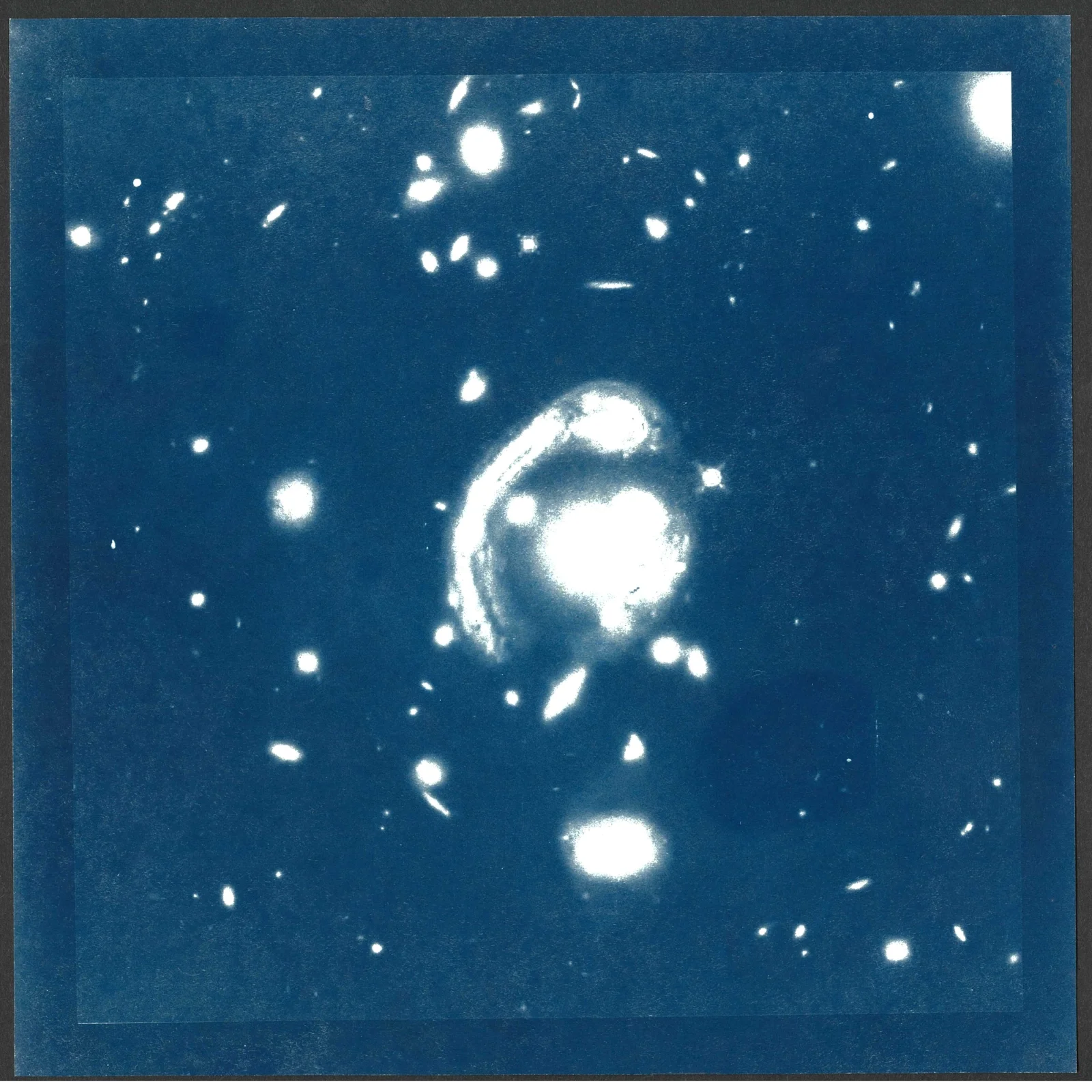
Mak Harrison is a Climate Futures Studio fellow. Her cosmic cyanotypes “invites the viewer to imagine a future where freedom and access to the stars is not inhibited by light pollution.”
KUMI NAIDOO: The question is whether our creativity, our courage and our solidarity will be enough to meet this other world that is possible, that has to be possible, because I refuse to accept that the world we live in right now is the best that humanity can create for itself. And I therefore believe deeply that if we act with the largest number of people together, we can build serious alternatives.
YESSENIA FUNES: And now is really the moment for this to happen. As you mentioned earlier, we’re seeing the culmination of so many crises: ecological collapse, fossil fuel pollution driving climate change, the rise of fascism, the unregulated development of AI…
It feels like there's never been a greater moment, especially as we're in the midst of defending our revolutions, defending all these victories that have been made over the last few decades. It’s time to take these achievements home and not succumb to the disparity and exhaustion and complacency that our governments are wanting of us. They want us to believe that there's nothing we can do. We're doomed. That is the narrative that I hear from so many people in my life.
But I think art is really the way to shake us out of that and to reawaken those parts of ourselves that are so integral to our shared human experience. We’re born with that light. Children always have that desire to create and to draw. I have so many nieces and nephews, and every single one of them, without hesitation, gives me multiple drawings every time I see them, and we lose that creative expression, right? We lose that over time. It's snuffed out of us by our suffering and by the forces of capitalism. Art is the way to reawaken that part of ourselves that has the energy and the audacity to fight and to demand more of this world, to challenge authority. And what's so exciting to me about the work that you do, is bringing that lens of art into activism, into radical imagination, into revolution.
KUMI NAIDOO: If you look at arts and culture historically, one of the most important roles that artists have always played is that they have helped us imagine worlds yet to be born. Think about it: what is the biggest missing ingredient to help us move the world forward? It's an absence of imagination, an absence of being able to imagine a world that is not addicted and dependent on fossil fuels.
YESSENIA FUNES: I wonder if we can just leave the readers with one point around what other creatives who work in the climate justice space can do to challenge AI overreach, and if there are any personal practices or perspectives that you employ that help inform your artmaking and your climate activism during these times.
KUMI NAIDOO: One closing message would be, don't let this challenge of the moment we find ourselves in—which is leading, let's be honest, to a massive global mental health crisis, climate anxiety and eco anxiety and anxiety around the rise of fascism and all of that—don’t let this moment make you withdraw.
What we have to do, and I know I have to do this, is to invest in taking the time and care to learn as much as you can, because this world is just so fast. People who are older, like myself, we need to make a special effort to really understand this world. Otherwise this world will eat us up, right?
And have fun while you are trying to figure things out, because the architects of systems of oppression benefit from us feeling down, feeling that change is not possible.
I would like to leave people with something that sustained many of us during the anti-apartheid struggle. It’s a quote, often attributed to Mandela, that it always seems impossible until it is done.
“When they look at what’s happening with the U.S., what’s happening in Iran, Israeli invasion and attack and war—people can feel very down at this moment. But on the positive side, I do not remember any moment in more than 45 years of activism where the appetite for big, structural and systemic change is as high as it is today.”
For many of your readers, when they look at what's happening with the U.S., what's happening in Iran, Israeli invasion and attack and war—people can feel very down at this moment. But on the positive side, I do not remember any moment in more than 45 years of activism where the appetite for big, structural and systemic change is as high as it is today. I'm not saying it’s the majority of people, but a growing number of people are looking at the problem and saying you know what, we can't continue to rearrange the deck chairs on the Titanic while humanity sinks. We can't continue to simply treat the symptoms of the problem without treating the root causes of the problem. We can’t just be mopping up the floor without turning off the tap of fossil fuels.
So take comfort that if you have reached a moment where you feel that the systems around us are seriously broken and require not just system recovery, system protection, system maintenance, but also system innovation, system transformation and redesign—if you have that view, then hold some strength from the fact that there are many, many more people today who are in alignment with you. Rethinking about how we reshape these systems in a fundamental way is to realize our liberation.
Thank you very much Yessenia for having me in this conversation.
YESSENIA FUNES: Thank you, Kumi. I'm so, so glad. And on that point about having fun: People need to have fun offline. Log off, stop scrolling, touch some grass, dance with your comrades. Whatever it is, just have fun in the real world.
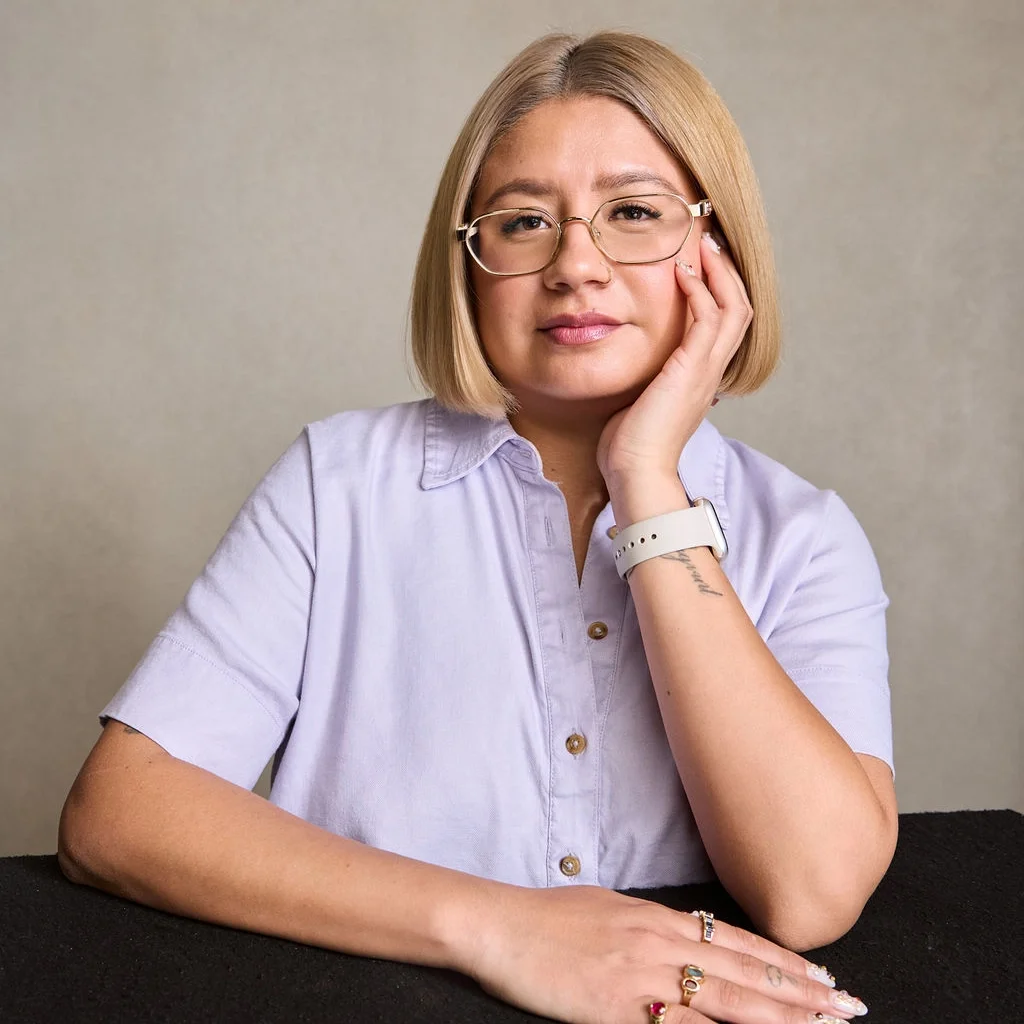
Yessenia Funes is an independent journalist covering environmental issues through the lens of the most oppressed. She publishes a creative climate justice newsletter called Possibilities. Her writing can be found in outlets like Yale Climate Connections, Vox, New York Magazine, and more.
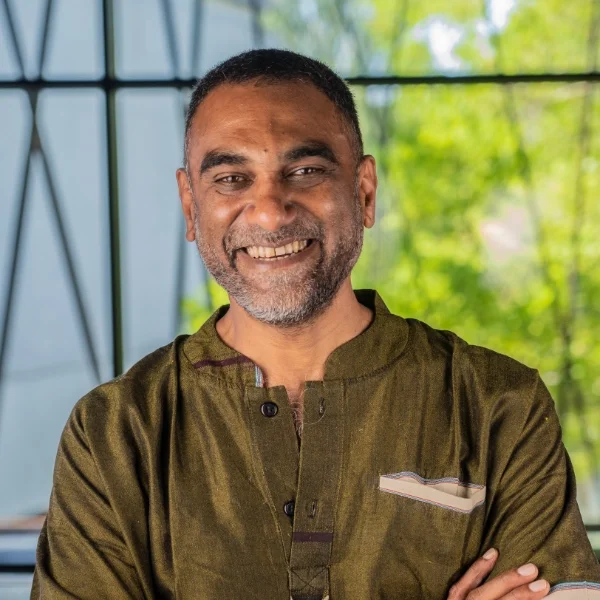
Kumi Naidoo is a South African human rights and environmental justice activist, who currently is the President of the Fossil Fuel Non-Proliferation Treaty. He co-founded the Global Artivism Initiative, through the Riky Rick Foundation for the Promotion of Artivism. He is the former Secretary-General of Amnesty International and former Executive Director of Greenpeace International. Kumi is also the host of the podcast Power, People, and Planet.
Peace & Riot is made by real people — not AI.
Journalists, photographers, editors, and contributors doing original reporting from the frontlines.
That work is under threat. Newsrooms are shrinking. AI is training itself on what journalists have already built, and replacing it with something hollow.
Independent, human storytelling is being squeezed from every direction. If you value work built on lived experience, not stolen data — help keep it alive.
Donate to power more issues like this one.